











Regulating video games

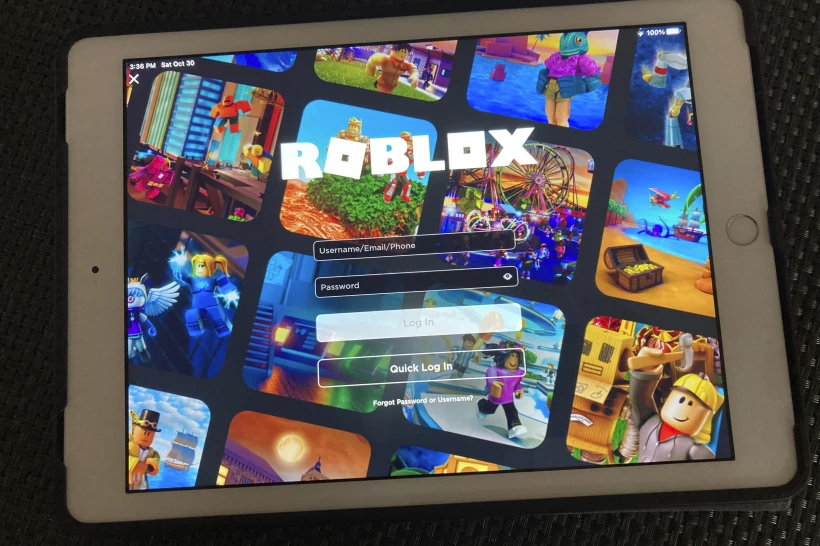
Should violent computer games be banned? Can police intervene when parents fail to detect predators lurking in interactive game platforms?
These questions have surfaced anew amid a recent police operation that uncovered a possible mass shooting plot, with schoolchildren recruited through a popular online platform that hosts computer games.
The police, through surveillance and monitoring by its Anti-Cybercrime Group (ACG) have tracked seven minors—five boys and two girls—who were purportedly planning to attack their school in Laguna last month, after being induced by an individual in an online game.
According to the ACG report, the 15-year-olds were allegedly sharing images and videos of previous school shootings, discussing plans to use bombs and fire extinguishers to blind people, and wearing shirts alluding to the scientific concept of natural selection and Nazi leader Adolf Hitler.
Last week, ACG director Brig. Gen. Wilson Asueta said the police will coordinate with local internet service providers and request that they take down the offending platform. He added that the police would step up monitoring of other online gaming sites, including Roblox, whose interactive features have reportedly been used to target minors.
Fantasy from reality
In a statement on Sunday, Philippine National Police chief Gen. Jose Melencio C. Nartatez Jr. said the Cybercrime Investigation and Coordinating Center will probe alleged unlawful activities on Roblox, which has been given 30 days to strengthen its child safety measures to avoid it being used for “sexual predation, grooming, and exploitation of minors.”
According to IconEra, an online gaming forum and community focused on discussing video game news, the Philippines has a 6-percent monthly share of Roblox participation, with 5.1 million daily active users. Roblox’s user base includes a large number of children and teenagers, with mobile phone accessibility driving the numbers. The under-13 year-olds register the highest engagement level at 38 percent worldwide, which translates to 32.5 million daily active users.
Given such demographics, Nartatez has also asked schools to be proactive at the frontlines in values formation, safety awareness, and crime prevention. But while police work and surveillance address possible crimes linked to online games, several groups have also warned against other dangers related to virtual gaming. In particular, the American Academy of Pediatrics noted that children under the age of 6 cannot distinguish fantasy from reality, and that first person shooter games are not appropriate for children of any age.
Parental supervision
Furthermore, a study by the American Psychological Association pointed out that violent video games may be more harmful than their movie or TV counterpart because they are interactive, very engrossing, and require the player to identify with the aggressor.
The PNP’s proactive stance notwithstanding parental supervision and guidance should be at the forefront of efforts to keep children away from online games that encourage violence, Asueta said.

Admittedly, parents might be overwhelmed by the complicated nature of video games, but there are simple steps they can do to guide young kids who are more impressionable and vulnerable to predatory importuning online.
For a start, parents can try playing the games with their children to know exactly what content their youngsters are exposed to, and for them to assess suitability and the child’s reaction. Limiting screen time can cut down exposure, while apps for automatic content filtering could screen out violent games. As well, age matters when it comes to video games, which must be avoided among preschool-aged children.
Practical strategy
Parents can open their own accounts in the gaming platform Roblox to monitor it firsthand. Another practical strategy is to keep the kids’ computers in the more public living area instead of behind closed bedroom doors. Parents can then set a time limit on their online interaction. Introducing alternative activities and hobbies can also help relieve stress among children and shorten their screen time.
As for the state banning Roblox and other risky gaming apps, a middle ground might work better: pushing for mandatory, stricter age verification, and stronger child safety standards as done in Australia and New Zealand. Faced with similar bans in other countries, Roblox has subsequently tightened its privacy settings for users under 16. Other gaming apps should also be compelled to enhance their artificial intelligence monitoring, remove user-generated “dating” games, and enforce stricter real-name verification.
Video games—some of which involve strategy, teamwork, and problem-solving—have steadily grown in popularity among youngsters. But their enjoyment must be balanced with close parental monitoring to support the child’s mental health, emotional state, and appropriate response to stressful situations.