






Respecting Sandiganbayan

Should detained Senators Jinggoy Estrada and Rodante Marcoleta be allowed to vote in the impeachment trial of Vice President Sara Duterte? According to our anticorruption laws, the answer is a hard no.
Republic Act No. 7080, or the Anti-Plunder Act, provides that: “Any public officer against whom any criminal prosecution under a valid information under this Act in whatever stage of execution and mode of participation is pending in court, shall be suspended from office.” The same provision is contained in Republic Act No. 3019 or the Anti-Graft and Corrupt Practices Act, which mandates that officials charged with graft or criminal offenses under the Revised Penal Code shall be suspended while their cases are pending.
These laws became operational in the case of Estrada, who is facing graft and a nonbailable charge of plunder before the Sandiganbayan’s fifth division for allegedly receiving P573 million in kickbacks from flood control projects in Metro Manila, Oriental Mindoro, and Bulacan under the 2025 budget. He is also charged with graft before the Sandiganbayan’s second division in relation to the P213 million flood control budget in Bulacan.
A ‘compelling’ reason
On June 16, the second division ordered a 90-day preventive suspension of Estrada “from his present position as senator” and “from any other public office which he may now or hereafter be holding.” This was followed by a July 10 resolution junking his motion to dismiss the charge against him.
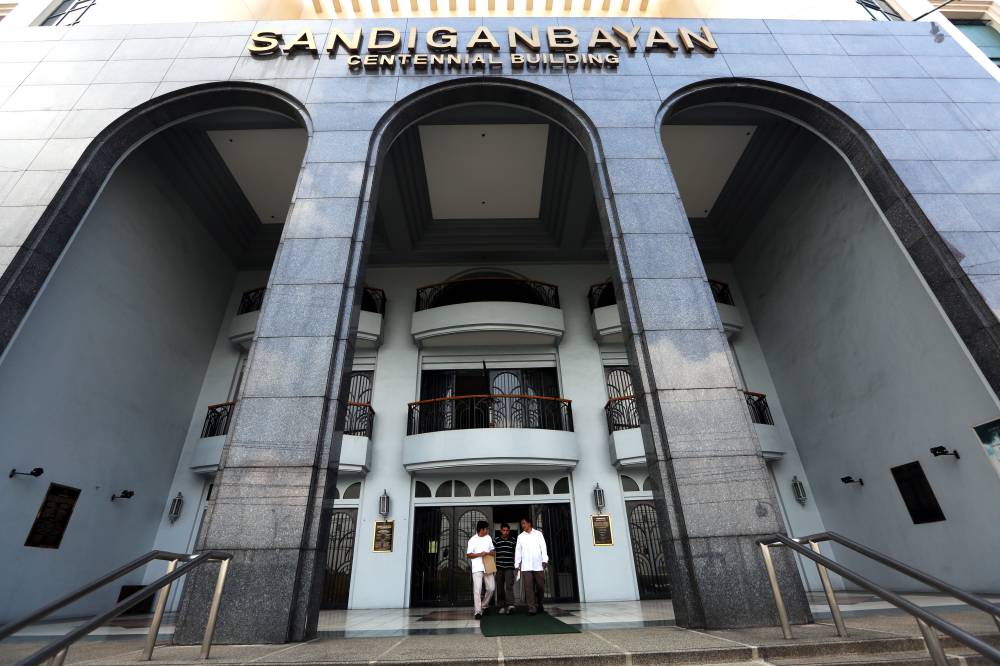
Estrada was dealt another blow by the Sandiganbayan’s fifth division, which flatly denied his motion to be allowed to participate in the impeachment trial of the Vice President. The senator argued that since two-thirds or 16 votes are needed to convict the Vice President, his participation as a senator-judge is a “compelling” reason for his temporary leave from detention.
But the antigraft division ruled that: “While an impeachment trial is of paramount constitutional importance, its significance does not, by itself, provide a basis for the grant of his request.”
The court also rejected Estrada’s argument that former Sen. Antonio Trillanes IV was granted temporary leave by a Makati court when he was detained. But the court said Trillanes’ circumstances were different, and he was only allowed to leave detention briefly on four occasions. On the other hand, it noted that the impeachment trial will last for 92 days with three trial days per week. “Such a prolonged and recurring arrangement cannot, by any stretch of the imagination, be considered an emergency or compelling temporary leave from detention,” the court said.
‘Inclined to agree’
It would be reasonable to expect the same outcome for Marcoleta, who is also charged with plunder for failing to declare a P75-million campaign donation. The Sandiganbayan’s third division has already asked Marcoleta to explain why he should not be suspended from his position as senator.
But Marcoleta turned to the Senate impeachment court, asking it to find ways for himself and Estrada to participate in the trial. He pointed out a rule during the impeachment trial of former President Joseph Estrada which allowed senators to vote even if they were not physically present.
Sen. Francis “Chiz” Escudero, the presiding officer of the impeachment court, referred Marcoleta’s letter to the Senate to decide whether to amend the rules. He then aired his view that he was “inclined to agree” to Marcoleta’s wish unless he is suspended as senator.

Though with a caveat, Escudero’s view would seem to give hope to Senate Minority Leader Alan Peter Cayetano’s proposal that the chamber should exert efforts to allow his fellow minority senators to participate and vote in the impeachment trial. The two senators were part of Cayetano’s bloc, which wrested the Senate leadership in a chaotic week last May that included a shooting incident inside the chamber’s premises.
Special treatment
It would indeed be a stretch to allow Estrada and Marcoleta, both detained at the New Quezon City jail in Payatas, to vote. This would entail unusual logistical arrangements for their physical or online participation, for how can they honestly vote if they are not able to substantially participate in the lengthy proceedings?
As Palace press officer Claire Castro pointed out, this would set a bad precedent and accord special treatment for the senators detained on nonbailable charges. “If they are allowed and receive special treatment, then perhaps everyone who is employed should also be allowed to continue working while in detention,” Castro said.
The more fundamental issue is whether the Senate could trump the antigraft laws and the constitutional mandate of the Sandiganbayan. The prudent thing for the Senate to do is to wait for the Sandiganbayan’s ruling before taking up Marcoleta’s request, and to respect the antigraft court’s jurisdiction and processes to fulfill its own role in seeking accountability of erring public officials.