







Rizal: HUMSS or STEM?

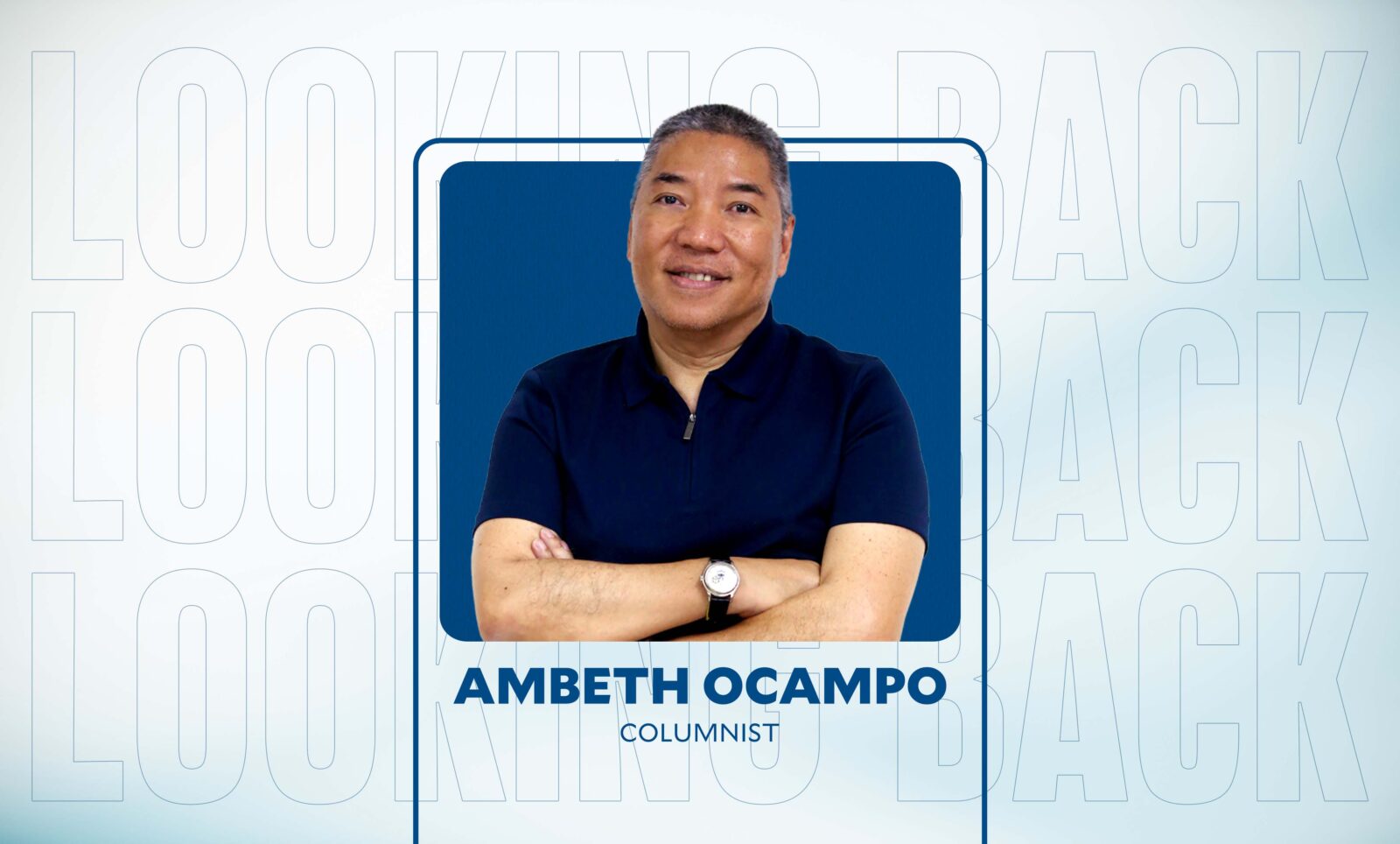
Will withhold comment on the move to gut the college curriculum of the remaining general education (GE) courses legislators consider “useless.” I’m still figuring out the “public consultation” on the issue held online last Tuesday, which is just that—consultative, not deliberative.
For the moment, two questions. First, we all know that K-12 did not deliver college or work-ready graduates. Instead of fixing K-12, why is the solution messing up college-level GE? Second, how much oversight should our legislators, Commission on Higher Education, and Department of Education have on the system? Shouldn’t regulators provide a minimum, or desired, learning competencies and allow educational institutions to implement them based on their traditions, strengths, and needs? In my four decades of teaching, I have seen how minimum learning competencies were reworded and reduced to mere desired learning competencies. The minimum became the low standard instead of a bar to surpass. No wonder we have a crisis in education.
Continuing from the last column on Jose Rizal’s grades, let’s look back, not for nostalgia, but to see what worked then, where we stand now, and decide what to do next. I often wonder what Rizal would be like if he had a smartphone, Google, and artificial intelligence? Would he be less impressive? Some Rizal descendants confided to me that when they were in grade school, they kept their relationship to the hero secret, not because they were ashamed of Rizal, rather, they were scared to be measured up to him. A grandniece admitted she wanted to play rather than study; she hated being asked to be like her overachieving granduncle.
Rizal once said, “Man is multiplied by the languages he speaks.” His mother tongue was Tagalog, then he learned Spanish before going to Manila for high school at the Ateneo Municipal de Manila, where he excelled in three courses: Latin, Spanish, and Greek. To this was added a course in French. When he went abroad, Rizal’s base, Latin and Greek, helped him jump-start learning Italian, German, and English. While in exile in Dapitan, Zamboanga del Norte, he learned Cebuano.
Many Filipinos are bilingual at birth, that is, if each parent insists on their children learning the mother tongues of their parents. I was limited from childhood because my mother thought English was the way to go, I was not spoken to in Tagalog, and during childhood summers with my cousins, I was discouraged from learning Kapampangan, my father’s tongue, because my mother feared I might develop a regional accent. The real reason was that my mother never learned it. Growing up, I overheard my aunts talking about my mother to her face. She never understood her in-laws. In my father’s waning years, I noticed that speaking to him in his mother tongue, no matter how badly, always made his face light up. From a base of English, Tagalog, and Kapampangan, 12 units of college Spanish and six units of French were added. A Goethe-Institut grant added German to the mix, and years in Japan gave me enough “survival” Nihongo to ask for directions, order from a menu, and understand simple conversations from context clues.
Rizal’s Ateneo subjects were: Universal History, History of Spain and the Philippines, Arithmetic and Algebra, Rhetoric and Poetry, Geometry and Trigonometry, Philosophy, Mineralogy and Chemistry, Physics, Botany, and Zoology. This was the enhanced K-12 of his time, more substantial than our current crowded curriculum. All his grades in high school were “Sobresaliente” or Excellent.
Rizal’s grades from the University of Santo Tomas (UST) took a dip. Of the 21 courses, he had one “Aprobado” (Passed), eight “Bueno” (Good), six “Notable” (Very Good), and six “Sobresaliente.” If this class standing is not swept under the rug by the teacher, it is explained away two ways: first, that he liked the Jesuits more than the Dominicans; second, that as a mestizo or indio, he was a victim of racial discrimination. We should take the grades as is and put them in context rather than inventing excuses. Remember, Rizal’s family were favored tenants of the Dominican Hacienda in Calamba, but in later life, the Rizals lost in an agrarian dispute against the Dominicans that led to them being forcibly evicted from Calamba. Paciano and two brothers-in-law were exiled to the Southern Philippines.
Comparing Rizal’s UST and Ateneo grades: remember, Ateneo was a high school, while UST was a college. Ateneo subjects were GE, heavy on the humanities, while UST subjects were premed subjects: Anatomy, Histology, Hygiene, etc. His lowest grade, a passing mark, was in General Pathology. He excelled in non-Science subjects: Cosmology, Metaphysics, Theodicy, and History of Philosophy, as well as “The Art of Prescription.” Was his penmanship legible to the pharmacist? His prescriptions literary?
It is clear that Rizal’s inclination and aptitude were in the humanities (HUMSS today), not in the sciences (STEM). Why take up medicine? Because his mother was going blind? Wasn’t it simpler to send her abroad for treatment? Cheaper than spending on a five-year medical education abroad? Rizal taking medicine was a complicated solution to a simple problem. Knowing his aptitude would have made his life simpler and happier.

—————-
Comments are welcome at [email protected]
******
Get real-time news updates: inqnews.net/inqviber

Why Manila must keep talking to Beijing