






The grace of an empty space

Last Sunday, I served as one of the lectors for Fr. Arnel Aquino, SJ, at an Easter Mass at Our Lady of Pentecost Parish.
In his homily, Father Arnel spoke of our fears of emptiness. This horror vacui (dread of emptiness) could be traced, he surmised, to having been created out of nothing, so that we all have a deep-seated fear of returning to the void.
Emptiness is not always about loss, Father Arnel continued. Consider, for instance, the stone rolled away to reveal the empty tomb of the Resurrection. In that emptiness, we can see an exhaled breath. Mercy and grace. The signature of victory and new life.
Grief walked in at sunset as the tomb darkened with death on Good Friday. On Easter, the empty tomb caught the dawn’s first light as joy walked out.
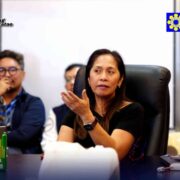
Listening to his homily brought to mind my own experiences with facing the emptiness and uncertainty of great, unexpected shifts. It was timely since I received an award two weeks ago from the University of Santo Tomas’ department of biological sciences.
I was one among many honorees at the inaugural Science, Technology, and Society Summit. There were people from the government and private organizations, young scientists and media veterans, writers, and public speakers, all of whom had contributed in one way or another to the visibility of science in the public eye.
I received the award for my practice and research in science communication—a field I’ve worked in varying capacities since 2002, at a time when I thought I had definitively carved out my future as a bench scientist.
When I accepted the award, I thanked my many mentors and guides, and alluded to the shift I had once made from my already burgeoning career in molecular biology and biotechnology to science communication.
“If you’re not sure that you’re on the right track,” I said during my speech, “keep on going. Don’t be afraid. The tunnel might be long, but you will reach the end. And one day, when you have walked through the darkness and come to the light, may you find yourself a beacon for others.”
I have indeed written of that time in my life as an emergence from a miserable darkness. In a piece I wrote years ago for Ateneo’s The Guidon, I saw the darkness as a blessing, for it was when I could most clearly see the stars.
After Father Arnel’s Easter homily, I also recognized it as confronting emptiness. I had spent 10 years as a student and researcher, but I could not see myself working in a laboratory for the rest of my life. I knew the concepts of my field well. I just couldn’t put them into practice without feeling defeated at every little mistake.
It was as though I had crafted a future in my imagination, where I would work on DNA and contribute to wildlife conservation genetics and forensics (my specialties at that time)—but the haven I had fashioned had become an empty shell. It had turned into a home for someone else, a house in which I could not live.
It was not a sudden realization, but a long, slow awakening that prodded me every time I despaired at my work. It was like a child poking at me, insisting that I pay attention to the emptiness because I was looking too hard at the nothingness instead of the space on which newness could be built.
That prodding, poking child kept coming back, however, as a joyful specter at other times: every time I stood in the classroom and explained difficult concepts and saw my students’ eyes light up with understanding; every time I spoke about genetics to nonscience audiences and I could see people happily taking notes; every time someone read my novels or short stories and told me that I had made scenes play out in their heads; and on that afternoon that I spoke about forensic molecular biology to students attending the National Conference of the Philippine Society for Youth Science Clubs.
I received a standing ovation at the end.

It was in that moment, with tears in my eyes and my heart finally at peace, that I finally understood my mission. It was to tell stories.
Everything followed smoothly after: a stint as a science communication specialist with an international group, a Ph.D. with a concentration in science and risk communication at Purdue University, and today, an academic career at Ateneo. I still do research and teach—two major pillars of the academe, neither of which my heart will give up, both of which tell the stories of the many worlds of which I am a part.
As I look back on that shift of careers, I can also see another speech unfolding.
Recognize when the room you have built is a tomb for your true dreams. Recognize the mission when it comes. Pray for the strength to both accept and carry it out. Embrace the emptiness. Listen to it. As Father Arnel said, at the end of his homily: God has made emptiness a favorite place to begin again, and again, and again.
There, too, is space to keep dreaming and see yourself changed, through discomfort, into your best self. There is space for the true beginning of your life to be written—again, and again, and again.
—————-
iponcedeleon@ateneo.edu