









The House on trial, again


Here is a reality check: The nation can ill afford a perennial impeachment season.
A Congress preoccupied with proceedings to remove both the President and the Vice President is a nightmare scenario for any administration. It is, for one, a needless distraction to a bureaucracy engrossed in the pressing task of curbing corruption; for another, it reinforces the widely held notion that politics prevails over governance in this country.
Viewed from that lens, the House justice committee’s rejection of the first serious attempt to impeach President Marcos was the pragmatic and prudent call. By voting to declare the complaints insufficient in form and substance, the panel in effect bought the government a year of breathing room, barring a disastrous collapse of the ruling House coalition.
Such reasoning, of course, reflects a utilitarian view of impeachment as a partisan process more than a legal one, driven primarily by the numbers game in the legislature.
But practicality is not equal to accountability, which is the signpost that should have guided the justice committee’s decision. It is to be judged not solely by political repercussions but by how faithfully it applied the rules and safeguarded the credibility of impeachment as a tool for checking abuse of power.
Constitutional threshold
The House justice committee found that the complaints failed to meet the minimum constitutional threshold for impeachment and dismissed arguments that Mr. Marcos betrayed the public trust through anomalies in the national budget, including the misuse of unprogrammed appropriations.
The panel emphasized that the standby funds were not prohibited by law and had existed across administrations since 1989. To call this an impeachable offense, lawmakers noted, would be to indict nearly every president over the past four decades. The panel was likewise unconvinced by claims that the President was liable for a budgeting formula developed in the public works department, as there was no evidence that he created or approved it.
More contentious were allegations that the President knew of and benefited from kickbacks tied to insertions in the current budget, based largely on unsworn video statements by former Ako Bicol party list Rep. Elizaldy Co, now a fugitive from the law.
A majority of the panel members warned that allowing complaints to proceed on the basis of hearsay would lower the bar for impeachment to a dangerous degree.
But Mamamayang Liberal party list Rep. Leila de Lima argued that this stage of the process required only facts that could constitute an impeachable offense. “I think some people are confused … when we talk about sufficiency of substance. We don’t yet have to delve into the evidence. Those are dealt with in the next stage,” she said.
Not an absolution
University of the Philippines law professor Paolo Tamase agreed, saying the determination of sufficiency in substance “is supposed to be a low bar.”
As the debate unfolded in public forums, the President expressed relief at the conclusion of what he called “a political move as usual.” But Mr. Marcos should not make the mistake of believing that his survival this time signals an absolution. Rather, it is a warning that this brief respite must translate to political stability and policy reform in the immediate term.
Now comes a more complex challenge for his administration and Congress.
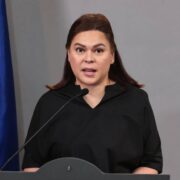
Fresh impeachment complaints against Vice President Sara Duterte raised serious and specific allegations, such as the alleged misuse of confidential funds, the submission of implausible accomplishment reports and fabricated liquidation documents to auditors, and a willful refusal to recognize congressional oversight during budget deliberations.

A second complaint went further, accusing her of constitutional violations, graft and corruption, unexplained wealth, and tolerance of extrajudicial killings.
Conflicting interpretations
Unlike the Marcos cases, these complaints were filed amid unresolved procedural uncertainty due to conflicting interpretations of Supreme Court rulings on the one-year impeachment bar. The issue has divided lawmakers on when the prohibition actually lapsed. Thus, the justice committee chair’s decision to seek clarification from the high court is a wise move to erase any legal ambiguity.
In the meantime, the House must act swiftly but not carelessly on the complaints against Duterte, and it must do so without sacrificing transparency. For the impeachment process to retain its legitimacy, the proceedings against the Vice President must be handled with care and the strictest fidelity to constitutional standards. It must not be rushed to satisfy political appetites nor stalled to protect the powerful.
Therefore, the rules that applied to Mr. Marcos must necessarily apply to Duterte, for in the eyes of the public, the one on trial is neither of the nation’s two highest officials–or at least not yet–but the House of Representatives itself.
******
Get real-time news updates: inqnews.net/inqviber