
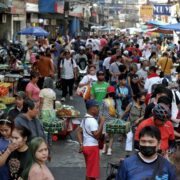

The peace we cannot take for granted


September is National Peace Consciousness Month. For many Filipinos, the observance often brings to mind peace agreements, ceasefires, and efforts to end armed conflict. This year, however, headline stories from Mindanao invite us to think more carefully about what peace means.
The first parliamentary election in the Bangsamoro Autonomous Region in Muslim Mindanao marked a historic moment in the region’s political development. For many Bangsamoro communities, the election reflected years of negotiations, compromises, and institution-building that followed decades of conflict. Yet the election period was not entirely free from violence. Reports of election-related shootings and deaths served as a reminder that peace remains a work in progress even in moments of political achievement.
Meanwhile, a shooting inside a school in South Cotabato claimed young lives and left families, teachers, and students searching for answers. The incident unfolded in a place where students had arrived expecting another ordinary school day. As often happens after such tragedies, public discussion quickly turned toward blame. Was it the family? The school? Social media? The community? These questions are understandable. When confronted with violence, people naturally seek explanations.
Human actions, however, rarely emerge from a single cause. A young person is shaped by family, friends, community, experiences, disappointments, hopes, fears, and countless encounters that no investigation can fully capture. Recognizing this complexity does not diminish personal responsibility. It simply cautions against explanations that reduce tragedy to a single factor. Reducing a tragic act to a single explanation may offer a sense of certainty, but certainty is not always the same as understanding.
The same can be said about peace.
At first glance, the parliamentary election in the Bangsamoro and the school shooting in South Cotabato appear unrelated. One belonged to the political sphere. The other occurred inside an educational institution. Yet both reveal different arenas where peace is tested. One concerns the institutions that manage political disagreement. The other concerns the relationships that shape everyday life. Although they unfolded in different settings, both remind us that peace is sustained in public institutions and in ordinary human encounters. Together, they raise the same question of what conditions make peace possible?
The question is hardly new. Every generation confronts it in different ways, whether in moments of political transition or in the aftermath of tragedy. In many universities, students encounter moral philosophy, where character is understood as something formed through habit. People become what they repeatedly do.
Communities do as well. Habits of dialogue, respect, patience, and cooperation shape the character of a society. Habits of exclusion, humiliation, and indifference shape it, too. In this sense, peace is not simply an event. It is a practice. If habits shape character, then peace cannot be understood solely through moments of crisis or achievement. It must also be understood through the everyday practices that shape how people relate to one another.
However, institutions alone cannot carry the entire burden of peace.
Social conditions, public policies, institutions, and individual choices all matter. A law can establish procedures. An election can create representation. A peace agreement can open political space. Yet none of these automatically teach people how to listen, how to disagree without hatred, or how to recognize the dignity of those who think differently.

Many communities have long emphasized the importance of mediation, dialogue, and collective responsibility in maintaining social harmony. Peace endures when relationships remain strong enough to manage disagreement without violence. It is found in conversations that repair misunderstandings and in the recognition that one’s dignity is connected to the dignity of others.
National Peace Consciousness Month therefore invites us to think about peace in our nation. This year, it may also be asking us to think about peace in our classrooms, hallways, homes, and daily encounters. Peace does not begin when a conflict erupts. It begins long before that. It begins in the habits we cultivate, the relationships we sustain, and the dignity we extend to others. The challenge is not simply to identify who failed whenever violence occurs. The more difficult task is to ask whether we are creating communities where respect, responsibility, and human dignity are practiced every day.
That question is harder to answer. It is also the one that matters. Peace agreements, elections, and public policies remain essential. Yet the long work of peace also depends on how we treat one another. Whether peace endures beyond agreements and elections may depend on that everyday work.
—————
Francis “Isko” N. Reginio is an academic and social advocate specializing in policy analysis, human capital development, and community empowerment.