







‘Trump’s blunder’: Are we at China’s mercy?


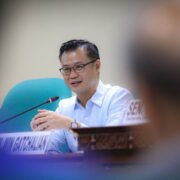
The Philippines is in crisis along with the rest of the world because President [Donald] Trump’s brinkmanship [against Iran] did not work. In fact, it has boomeranged,” thundered Sen. Panfilo Lacson amid the escalating conflict in the Persian Gulf that has set the world economy ablaze. “He should be held to account by the whole world, including his own country, the USA,” he added just months ahead of the crucial midterm elections.
For the American people, the Iran war is arguably the most unpopular of any major American military assault on any sovereign nation in the past century. It’s likely just as unpopular as the 1956 tripartite British-French-Israeli war against Egypt over the Suez Canal’s ownership. Lacson rightly emphasized how mature and meaningful diplomacy could have averted the whole pandemonium. One authoritative report, which drew on conversations with direct participants in the Iran-United States indirect talks in Oman earlier this year, suggests that not only was Tehran open to an indefinite and intrusive inspection regime to ensure it never develops nuclear weapons, but that even a nonaggression pact was on the table. Based on a six “guiding principles” draft for an Iran-Trump potential deal, the report says, both sides agreed to arrive at a mutually acceptable outcome on the following key elements: fuel production, non-accumulation of enriched uranium, full verification, sanctions relief, economic cooperation, and peaceful coexistence.
It’s also quite telling that British National Security adviser Jonathan Powell, who had attended the nuclear talks as a facilitator along with Qatari and Omani hosts, also saw a huge chance for diplomatic success. A Western diplomat with direct knowledge of the negotiations told the media, “Jonathan thought there was a deal to be done, but Iran was not quite there yet, especially on the issue of UN inspections of its nuclear sites … The UK team was surprised by what the Iranians put on the table…“
Ecstatic following his seamless “regime change” operation in Venezuela, and reading weakness into Tehran’s domestic troubles and earlier efforts to avoid direct military confrontation with Washington, Trump torpedoed diplomacy in favor of a massive operation that still, a month into the conflict, lacks both legal justification and a strategic endgame. Capitulation was never an option for Iran. As former pragmatist President Hassan Rouhani, who successfully negotiated the 2016 nuclear deal with the Obama administration, noted, “[The nuclear issue is about us] as a nation, our demand for dignity and respect and our consequent place in the world. Without comprehending the role of identity, many issues we all face will remain unresolved.”
For Lacson, the Persian Gulf War is a product of “the narcissistic arrogance of one ‘leader of the free world,’” who seemingly had little regard for the devastating impact of the conflict on the rest of the world, including frontline allies in Asia. The Filipino statesman’s sentiment is not isolated. A recent authoritative survey—which polled thousands of randomly selected respondents from major Global South nations of Nigeria, Kenya, Pakistan, Egypt, Saudi Arabia, and South Africa—found that only 18 percent saw the US as promoting regional stability, with almost a third of respondents holding it accountable for the current crisis. The largest blame was accorded to Israel (38 percent).
Against this backdrop, one can understand President Marcos’ warning that key US allies, such as the Philippines, are confronting a “very, very serious restructuring” of relations with China, which has emerged as the biggest winner of America’s largest strategic blunder yet. China is not only carefully learning military lessons from Iran’s defense strategy against rapidly diminishing high-end Western weapons, but it’s also in a strong position to provide energy and economic assistance to beleaguered US allies elsewhere. An “electro-state” that is increasingly energy self-sufficient, China can provide both renewable energy and electric vehicles on a scale like no other nation on Earth.

I’m deeply skeptical, however, of the need to restart any joint exploration agreement with China in the West Philippine Sea, since it not only violates our sovereign rights per international law and our Constitution, but it also provides no reprieve for our short- to medium-term energy crisis. Instead, we should learn from other middle-sized nations, such as Malaysia and Vietnam, that unilaterally explored and exploited energy resources in the South China Sea despite constant Chinese harassment. We should also build our own strategic oil reserves as well as refinery capacity, lest we be at the mercy of markets and foreign suppliers.
—————-
richard.heydarian@inquirer.net