










Turning waste from risk to resource


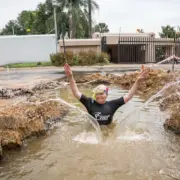
The deadly landfill collapse in Cebu should end the illusion that our waste crisis is manageable. As of 22 January, 36 people were confirmed dead and 18 injured. Mountains of trash—swollen beyond capacity and destabilized by storms and seismic stress—gave way. Rescuers clawed through toxic sludge and unstable refuse. The same garbage failure resurfaces every typhoon season, when floods choke cities because drains and rivers are clogged with plastic and untreated waste.
The Philippines generates about 22.9 million tons of solid waste each year, with over 40 percent mismanaged—dumped, burned, or leaked into waterways. We rank among the world’s top sources of plastic pollution entering the oceans, releasing more than 350,000 tons annually. This poisons fisheries worth billions, erodes tourism, and worsens flooding that Philippine Atmospheric, Geophysical and Astronomical Services Administration has repeatedly linked to debris-clogged drainage. Cleanup and ocean remediation alone cost an estimated P20 billion a year, excluding flood damage, health impacts, and lost productivity. Waste is no longer just an environmental issue; it is a national economic liability.
Critics rightly fear that waste to energy (WTE) could become a license to pollute. But the answer to poor enforcement isn’t a total ban—it is the institutionalization of “gold-standard” safeguards that treat environmental compliance as a nonnegotiable prerequisite, not an afterthought.
The Clean Air Act does not impose a blanket ban on incineration. The Supreme Court has ruled that what is prohibited are technologies that emit poisonous and toxic fumes beyond allowable limits. Emissions-compliant thermal treatment is therefore legal—but only under strict standards, continuous monitoring, and real enforcement. WTE is allowed, but only if done right.
WTE is not a substitute for waste reduction, recycling, or composting. It is meant to process residual waste—the 20 to 30 percent of municipal garbage that cannot be economically recycled or composted under the Ecological Solid Waste Management Act of 2000 (Republic Act No. 9003). Cities already dump, bury, or allow this waste to leak into waterways. Pretending residual waste will disappear has already proven deadly, from Payatas to Binaliw.
WTE facilities can generate 500 to 900 kilowatt-hours per ton, extracting value from waste instead of paying P1,100 per ton or more to landfill it.
With power demand growing 4 to 5 percent annually, cities need firm, dispatchable supply. WTE provides baseload power, especially during typhoons when waste volumes and electricity needs spike. Beyond power, pyrolysis and gasification can convert residual waste into high-value fuels like synthetic diesel and industrial feedstocks, yielding hundreds of liters per ton. Operating in low-oxygen environments, these systems allow tighter emissions control while reducing landfill volume and methane risk. Japan and South Korea already use them for nonrecyclable plastics—turning waste into fuel rather than burying it.
So why do WTE proposals keep failing?
Projects in Quezon City, Baguio, Angeles, and other urban centers were shelved amid backlash, procurement disputes, and regulatory uncertainty. Since 2016, more than a dozen WTE-related public-private partnerships (PPP) have failed to reach financial close. Not simply NIMBYism, but a governance flaw.
WTE plants require 15 to 25 years of guaranteed feedstock to be bankable. Local chief executives, however, serve three-year terms. Few are willing to sign long-term waste contracts that successors can politicize. Investors will not finance projects hostage to electoral cycles. The result is paralysis: garbage piles up while projects die on paper.

Making WTE work requires national action using existing laws. WTE that meets environmental standards should qualify for clear incentives—not regulatory limbo. A joint administrative order involving the Department of Environment and Natural Resources, Department of Energy, and the PPP Center is needed to harmonize standards and provide a “Green Lane” for projects that meet global emission limits. To prevent “locking” local government units into contracts that discourage recycling, feedstock agreements must be conditional on segregation at source, diversion targets, protection of waste pickers, and full environmental compliance. We should adopt sliding-scale contracts where guaranteed volumes decrease as a city’s recycling and composting rates improve. This framework will provide standardized, bankable contract templates that protect LGUs from political risk while mandating real-time, public-facing emission data to rebuild community trust.
Garbage does not disappear because we refuse to confront it. It accumulates, it collapses, it floods, it poisons seas—and it shifts the cost to the poorest and the next generation.
—————-
Pete Maniego is an engineer, lawyer, economist, and past chair of the National Renewable Energy Board, Institute of Corporate Directors, University of the Philippines Engineering Research & Development Foundation, and Energy Lawyers Association of the Philippines.

The shortcut culture in teaching and learning