











‘Unwritten women’

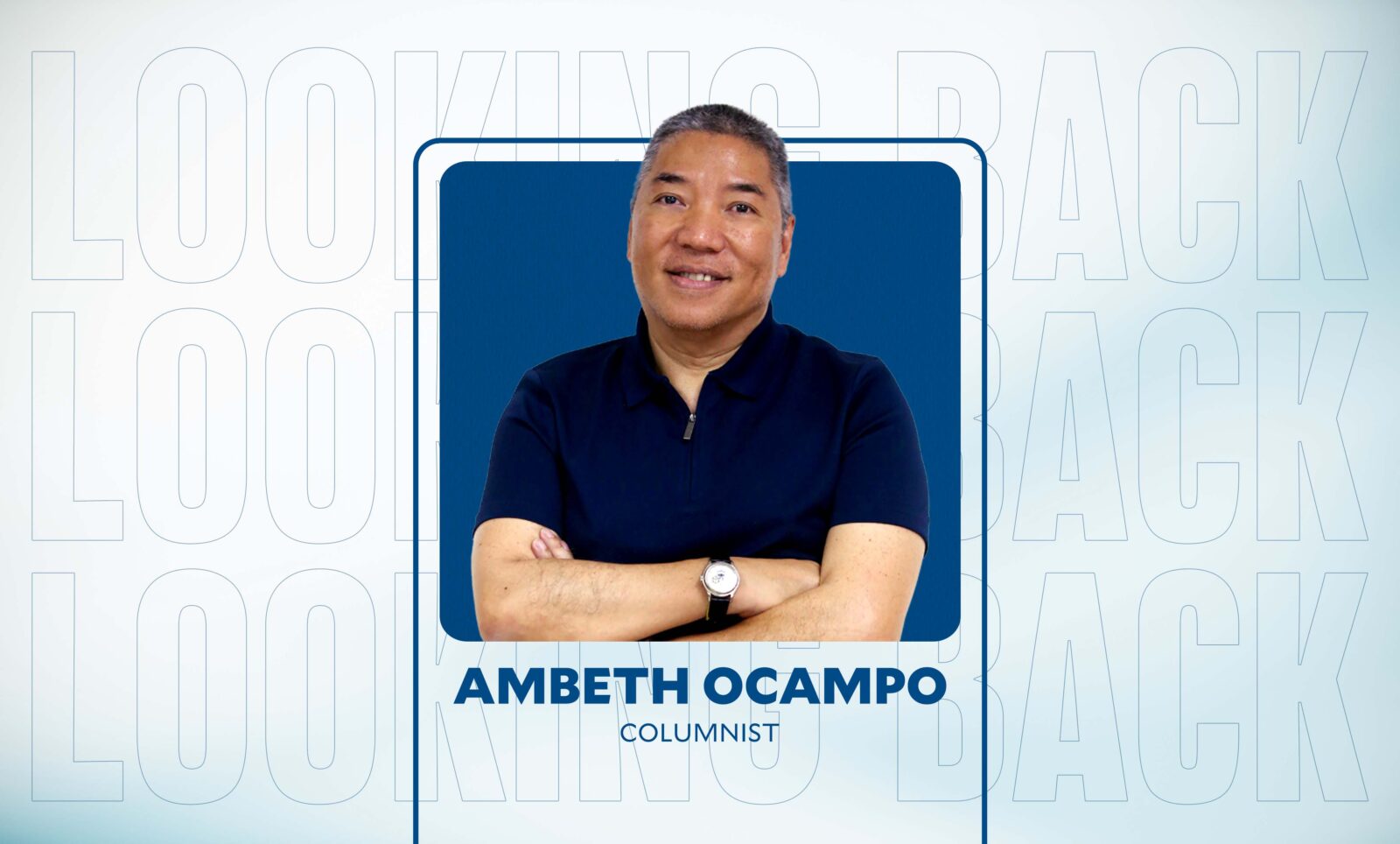
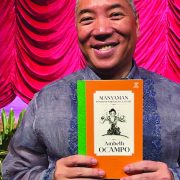
Unwritten Women,” from Good Intentions Books, gathers the stories of women who lived through dangerous periods of Philippine history but are left out of the narrative. Eight brave Filipino women are profiled, from Rizal’s mother, Teodora Alonso, to Letty Jimenez Magsanoc, who challenged the Marcos dictatorship.
I spoke at the book launch last Sunday, opening with an answer to the question, Why unwritten Filipino women? Because “his-tory” was about men, and written by men. Even our prehistory is stuck on male origins and needs to be corrected, preparatory to a paradigm shift. In 1962, Robert Fox discovered a skull cap in Tabon Cave in Palawan that became early evidence of human life in the Philippines. This skull cap is known today as the “Tabon Man,” aka the “Philippine Adam,” despite later research that determined that it is female, not male.
If we look at the earliest documents written in Baybayin preserved in the University of Santo Tomas archives, these relate to the acquisition of land. The first one, from 1613, documents a certain Andres Capiit who bought irrigated land in Tondo from Catalina Baycan. The second, from 1625, talks about Francisca Longar, wife of Andres Capiit, who bought land in Mayhaligue from Maria Silang. When we look back on Philippine history, we find it dominated by men. Where are these “unwritten women”? Why are they missing from history?
In my undergraduate Philippine history course, I direct my students to look beyond history and focus on historiography or the writing of history. From this, we learn that history is constructed. How it is related depends on the historian, and how it is understood depends on our context or better still, bias. Contrary to popular belief, history is not a mirror; it is a focused and selective spotlight.
When I was researching the late 19th-century painters Juan Luna and Felix Resurreccion Hidalgo, I realized that they are considered patriots or friends of Jose Rizal first, and secondly, as artists. One of the most charming portraits painted by the 19th-century Filipino master Antonio Malantic was once known as “Narciso Hidalgo and his grandson.” When the cute little boy grew up, went to Europe, and gained fame as a painter, the title of the painting has since been changed to “Felix Resurreccion Hidalgo and his grandfather.” The painting remains unchanged from the 19th century, but our view and focus are different. History is colored over time with tints from fresh archival data or current perspectives.
Having studied the work of Resurreccion Hidalgo, I know that he made two portraits of his mother, Maria Barbara Padilla, the first in 1888 when she was young, and again in 1897 when her hair was white, her face and neck matured by wrinkles. Archival documents prove that Barbara Padilla, aka “Doña Baritay,” aka the “Queen of the Pasig,” because of her storehouses fronting the river from Tondo to Binondo. From receipts issued by the City of Manila for street cleaning and lighting, we find the addresses of her numerous properties in Binondo, San Nicolas, Quiapo, and Santa Cruz. There are handwritten lists of receivables from property rentals in the names of various Chinese merchants, Manuel Earnshaw and P.P. Roxas, as well as payables to J.M. Tuason y Cia and Smith, Bell, & Company. In Barbara’s papers are receipts for insurance policies issued by the Imperial Insurance Company, fire insurance from “La Union Commercial de Londres,” as well as other policies issued by the North British & Mercantile Insurance Company and the Northern Assurance Company based in London. Barbara had inherited not just land from her father but a fleet of ships and cascos, which in her old age, she sold to Luis Yangco, whose firm survives today as Magsaysay Lines. How come Maria Barbara Padilla does not appear even as a footnote in Philippine economic history? Surely, there are more women who held the purse strings who should be brought out of the shadow of the historical men. In the early history of the Ayala Corp., there are three women who stand out: women from whom the fortune was born—Margarita Roxas and her daughters Carmen, who married Roxas, and Trinidad, who married Jacobo Zobel y Zangroniz.
Luna, La Union was originally known as “Namacpacan,” the Ilocano word that means “one who had given food.” It is said that inhabitants of this town, founded by the Spanish in 1690, provided food to weary travelers who stopped here on trips between Manila and Vigan. Online sources state that the change from Namacpacan to Luna in 1906 was to honor the patriots Juan and Antonio Luna. It actually honors their mother, Laureana Novicio, once billed as the “Greatest Mother in Philippine History.” Laureana bore three more illustrious sons than Teodora Alonso’s Paciano and Jose Rizal. Laurena produced: Manuel, an accomplished violinist; Juan, the famous painter; Jose, an eminent physician; Joaquin, a politician; and Antonio, the ill-fated revolutionary general.

There is enough material to fill 150 more volumes of “Unwritten Women,” which will transform his-tory into her-story.
—————-
Comments are welcome at ambeth.ocampo@inquirer.net

Asean must hold the line on Myanmar’s junta