









US sanctions on the ICC


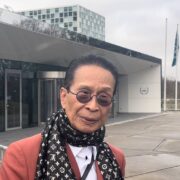
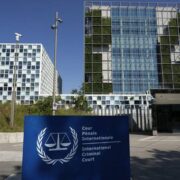
In another demonstration that the most powerful country on Earth has become an archenemy of international law, the United States has sanctioned two more officials of the International Criminal Court (ICC). Last week, the US imposed sanctions on ICC president Tomoko Akane and senior trial lawyer Abdoulaye Seye, who are from Japan and Senegal, respectively. There are now a total of 13 ICC officials who are subject to US sanctions, including nine of the 18 ICC judges, the former chief prosecutor, two deputy prosecutors, and one senior trial lawyer.
The main reason given by the US for the sanctions is that the ICC can “investigate, arrest, detain, or prosecute officials whose government has not consented to ICC jurisdiction.” The ICC investigation of US military personnel for potential crimes committed in Afghanistan is one of the oft-cited instances that forms the basis of the US complaint against a supposed overreaching jurisdiction of the ICC. The other cited instance is the investigation into and warrants of arrest issued by the ICC against top officials of Israel, a close US ally. Israel’s Prime Minister Benjamin Netanyahu and former Defense Minister Yoav Gallant are the subjects of ICC warrants of arrest.
It’s true that the ICC can prosecute officials of countries that are not members of the ICC. But that’s only half of the picture. By conveniently leaving out the other half of the picture, the US misrepresents the facts. The other half of the whole picture is this: the only instance that’s relevant to the US, when the ICC can assume jurisdiction over citizens of countries that are not members of the ICC, is when they commit crimes inside the territory of an ICC member country.
The assumption of jurisdiction by the ICC when an international crime is committed inside the territory of one of its member countries is known as the “territoriality principle.” This principle is the most fundamental and widely accepted rule of criminal jurisdiction in both international law and domestic legal systems. There’s no spineless country in the world that does not claim jurisdiction over crimes committed by foreign nationals inside its territory. The US itself applies the territoriality principle because it prosecutes crimes committed by non-US citizens inside its territory.
It is of no consequence at all that it’s not the domestic court of an ICC member country that assumes jurisdiction. It is within the sovereign right of any country to allow an international court, such as the ICC, to prosecute international crimes committed within its territory rather than conducting these trials themselves.
The two other instances when the ICC can exercise jurisdiction over citizens of a nonmember country of the ICC are as follows: 1. when a nonmember state makes a temporary or ad hoc acceptance of the ICC’s jurisdiction by submitting a special declaration accepting the international court’s jurisdiction for a specific situation, and 2. when the United Nations Security Council refers a situation to the ICC, which can apply even to nonmember states. However, neither of these two instances is relevant to the US. The potential liabilities of US citizens in the ICC are with respect to crimes committed in Afghanistan, which is an ICC member country. The criminal prosecution of Israeli leaders is with respect to crimes they are accused of committing in the State of Palestine, which is also an ICC member country.
It is also hypocritical for the US to question the establishment of the ICC as an international court that tries international crimes. This is because the US actively advocated and supported—even giving funding in many instances—many ad hoc or temporary international criminal tribunals, including the following: the Nuremberg Tribunal (for Nazi war criminals in World War II); the Tokyo Tribunal (for Japanese war criminals in World War II); the International Criminal Tribunal for the former Yugoslavia (for genocide, war crimes, crimes against humanity, etc.); the International Criminal Tribunal for Rwanda (for genocide, crimes against humanity, etc.); the Special Court for Sierra Leone (for crimes against humanity, war crimes, etc.); and the Extraordinary Chambers in the Courts of Cambodia, commonly known as the Khmer Rouge Tribunal (for genocide, war crimes, crimes against humanity).
The US is being double-faced when it claims that the ICC violates state sovereignty when it assumes jurisdiction over the citizens of independent countries. Look who’s talking. The US unilaterally waged a war against the sovereign country of Iran, abducted President Nicolas Maduro of the sovereign state of Venezuela, invaded the sovereign nation of Panama in 1989, among many other sovereignty violations it has committed.
The US wants the rest of the world to be liable for international crimes, but it wants immunity from the same crimes for its leaders. The US wants temporary international tribunals for specific countries, but it does not want a permanent criminal tribunal that can make any leader in the world—including Americans—liable for crimes they will commit inside the sovereign territories of the 125 member countries of the ICC.
—————-
Comments to [email protected]


The fourth shot must not be fired