









Walkable, bikeable, breathable metro


One of the country’s gut issues is the broken transport system, and for years, Filipinos have been lamenting about out-of-touch public officials, who have offered car-centric solutions instead of taking the ordinary commuter or pedestrian into consideration.
That is why new Metropolitan Manila Development Authority (MMDA) general manager Nicolas Torre III’s Facebook post on Feb. 8 struck a chord with many. The former police chief advocated for walking and biking, calling out those who put stigma on active mobility. He shared an anecdote from 2009 when a personnel would still take a tricycle for a three-minute ride or about a 200- to 300-meter distance because walking would make it seem that they were poor. Or when people would joke that he did not have money for gas, just because he would take the bike from Quezon City to Bicutan.
“It’s when I realized: This is not just about traffic. It’s about dignity. There is a stigma in walking and biking!” he wrote, adding, “Walking and biking are not signs of poverty—they’re signs of discipline and progress.” He also went on to remind the public that local governments spend millions to make Metro Manila walkable and bikeable, and that walking and biking indicate support for infrastructure built through taxpayer money.
‘Buwis buhay’
Torre is right: cities where one can walk or bike safely are progressive. This is common in many European countries, particularly in the Netherlands, where, according to its government, the population of at least 17 million people shares 22.8 million bicycles. In Japan, which ranks second in bicycle ownership in the world, biking is part of the daily commute—riding a bike to the nearest train station, leaving it there, then taking the train to work or school. Japan’s case is also a good example of transport connectivity, where commuters can seamlessly mix different modes in getting to their destination.
What is also common among these countries is the infrastructure that allows the public to walk or bike safely and conveniently. There are clear and permanently designated bike lanes as well as racks, pavements that are safe to navigate and won’t require anyone to sacrifice a life (referred to as “buwis-buhay” in Filipino), and crosswalks and traffic lights that are not mere suggestions but are actually honored and followed. These are just some of the bare minimum infrastructures that would allow for a walking and biking culture to thrive. Unfortunately, they are not strictly in place in the Philippines, even in Metro Manila, where bike lanes are known to appear and disappear like the millions of funds in government coffers, and pedestrian lanes do not guarantee safety for the road-crossing public.
Strong mall culture
The MMDA has earlier cited the deadly combination of reckless behavior on the road and inadequate infrastructure as the primary causes of the metro’s road safety crisis. And without the necessary infrastructure and strict implementation of rules, its ambitious plan to reduce road crash fatalities by 35 percent by 2028 is not likely to happen.
An active mobility 2019 survey by the Institute for Climate and Sustainable Cities showed that 93 percent of the respondents agreed that there should be more bike lanes in the city, while 63 percent did not think that there were enough sidewalks in the city where they lived. Those figures could have changed seven years on, especially after more bike lanes emerged during the COVID-19 pandemic era, but the government must be consistent in pushing for reforms that would encourage more people to embrace active mobility.
Beyond bike lanes and sidewalks, a walkable and bikeable city also features breathable spaces. The strong mall culture in this country only indicates the few available open spaces where the public can go, hot weather aside.

Pasig River Esplanade
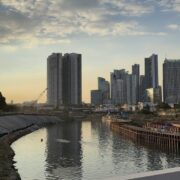
But there has been progress. The 9.29-kilometer Iloilo Esplanade, completed last year, and the 25-kilometer Pasig River Esplanade—parts of which are already open—are just some of the examples of recent developments that should set the direction for urban development in the country.
Nevertheless, Torre’s campaign is noteworthy. It will take only one passionate advocate with the resources and influence to champion a cause that addresses the country’s poor transport system for things to finally take shape.
But this should not be a culture vs infrastructure war. As the adage goes, “if you build it, they will come.” Last Friday, President Marcos led the inspection of the Metro Manila Subway Project, including the groundbreaking of two underground stations in Taguig City. Once completed, this could help ease Metro Manila traffic by providing commuters with more connectivity in their daily commute. And once this integrated transport plan—including busways, bike lanes, and subways—finally takes off, then the Filipino dream for a humane and dignified commuting experience will no longer just be a field of dreams.