










When gods obfuscate


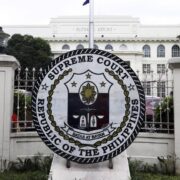
This piece could serve as a sequel to the column piece “When gods err” (8/8/25) that I wrote last year. I started off then by saying that the moniker “the gods of Padre Faura” refers to the Supreme Court justices ensconced in the neoclassical building on Padre Faura Street in Ermita, Manila, named after Spanish Jesuit Fr. Federico Faura, founder of the Manila Observatory. Whoever coined the phrase did it either as an expression of awe or as a left-handed compliment. In Greek and Roman mythology, the gods err like mere mortals do, but magnified in a way that could alter the course of events in the spheres where they dwell, etc.
The verb obfuscate in the title may sound just as obfuscating. It is not often used, but in everyday life, we do it, not knowing what to call it. To obfuscate means “to render obscure, unclear, or unintelligible.” Deliberately? It is quite the opposite of “to enlighten.” I think obfuscation is part of gaslighting.
So here we are again. When is the right time to file the articles of impeachment against Vice President Sara Duterte? Or why not file just yet? These were vexing questions that arose because of the Supreme Court’s recent second ruling on last year’s first attempt to impeach the VP. That first one ended up dead in the water because of “technicalities.” Recall that last year’s Supreme Court unanimous decision (13-0-2) declared as unconstitutional a process that belongs to its coequal branch of government, namely, the House of Representatives and the Senate. The technicality was about whether or not the once-a-year rule on impeachments in February 2025 had been followed. The Supreme Court’s decision in July 2025 was the answer to the VP’s petition to declare null and void the articles of impeachment against her that the House had sent to the Senate for trial.
On top of that, the Supreme Court imposed new provisions not found in Article XI (Accountability of Public Officials) of the Constitution, and the high tribunal did not call for any oral arguments from the parties concerned, just saying that their decision was “immediately executory.” Full stop.
The Supreme Court’s recent ruling is a reaffirmation of its former decision, but this time, there was again, for those filing the articles of impeachment, part two, a reason to be befuddled and confused. When exactly will the coast be clear? After Jan. 15 or after Feb. 5? Wrong timing on the part of the House could make their impeachment dreams go up in smoke—again, on mere technicalities. Could the Supreme Court be more precise, please? Why not say it clearly, directly? Or, is this latest ruling, in fact, an exercise in obfuscation? Why shroud it in mystery? Remember that word “forthwith” in the Constitution (which had to do with the filing) that caused so much discombobulation, and in the end, delay? (With all due respect, the framers of the Constitution should have opted for the words “right away” or “immediately.” The debates on it were like determining how many angels can dance on the head of a pin.)
At long last, the Inquirer’s headline and banner story three days ago: “Two impeach raps filed vs VP as 1-year bar ends” (2/3/26). “Civil society leaders and progressive groups filed two separate impeachment complaints, citing betrayal of public trust over the alleged misuse of confidential funds, culpable violations of the Constitution, graft and corruption, bribery, and other high crimes.”
However, Batangas 2nd District Rep. Gerville Luistro (Madame Thorough) wanted clarification on what may be conflicting interpretations of the ruling on the one-year prohibition. “Which date should we follow? Is it the reckoning period of Feb. 5 or that of Dec. 2? I hope this can be clarified by the Honorable [Supreme Court.]” I wanted to scream at the eager beavers, “Just wait for Feb. 6!” But I also thought, why couldn’t the gods of Padre Faura provide some clarity in their penned decision? Aren’t they wordsmiths to start with?
Whenever I am asked to speak to wannabe feature writers, one of the things I stress when they are in the writing phase—that is, beyond grammar, syntax, and style—is clarity. Do not obfuscate by using big words and jargon. As veteran editor Edward T. Thompson said: “A scientist, using scientific jargon, wrote, ‘The biota exhibited one hundred percent mortality response.’ He could have written, ‘All the fish died.’”

Best-selling author Kurt Vonnegut: “It may be that you, too, are capable of making necklaces for Cleopatra, so to speak. But your eloquence should be the servant of the ideas in your head. Your rule might be this: If your sentence, no matter how excellent, does not illuminate your subject in some new, useful way, scratch it out.” Hear ye, gods.
A favorite of mine, all in one sentence—for cadence, substance, imagery, and style—would be Jesus weeping over Jerusalem. In times of war and want, Winston Churchill’s crisp “Sink the Bismarck!”
—————-
Send feedback to cerespd@gmail.com