








‘When it rains, it pours’


We are all familiar with the saying, “when it rains, it pours,” and that’s what literally and figuratively happened at the start of this year’s rainy season. Following the aftereffects of three cyclones in July this year, which caused massive flooding in various parts of the country, President Marcos ordered an investigation into possible corruption in flood control projects. What followed from this initial downpour, marking the start of the rainy season in the Philippines, was the uncovering of a massive corruption scandal.
With investigations ongoing and the public clamoring for accountability and justice, Mother Nature wasn’t quiet or standing idly by either. Supertyphoon “Nando” battered Luzon on Sept. 22, while Supertyphoon “Uwan” hit most of the Philippines on Nov. 9, causing 33 fatalities and affecting 7.5 million Filipinos in 16 regions nationwide. This was followed by massive flooding in parts of the Visayas and Mindanao brought about by heavy rains from Tropical Depression “Verbena” on Nov. 25.
Apparently, it doesn’t need a typhoon to cause untold damage and disruption to lives and the economy because a heavy downpour can be just as devastating. I’ve experienced this firsthand in Metro Manila in the past few years. All it takes is a heavy dose of rain, and parts of the city get stuck and literally rendered immobile. There are a lot of issues related to this situation, and one that I would like to bring attention to is the implication for the education of our youth and the economy caused by the disruptions brought about by heavy rainfall.
In order to protect lives and keep people safe, the government at either the national or local level suspends classes and work. That is understandable and necessary. But we also need to understand its effects and realize that measures need to be urgently taken to mitigate and reduce the negative effects of such suspensions.
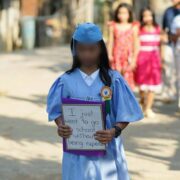
These suspensions have immediate and cumulative effects on education. Every closure erodes instructional time via missed lessons, canceled assessments, interrupted school feeding programs and, in many cases, months-long repairs when classrooms are damaged or used as evacuation centers. Poorer students are hardest hit because they have less access to distance learning or remedial support. The Department of Education has revised guidance and pushed learning continuity modalities to reduce losses, but frequent closures still translate into widening gaps in learning and higher dropout risks in disaster-affected areas.
Economically, short-term losses arise from transport paralysis, canceled markets, and workers staying home to care for children or recover their property. The agriculture and informal sectors suffer acute hits when storms arrive during planting or harvest windows. At the macro level, repeated storm damage contributes to a persistent drag on growth. World Bank analyses estimate that current annual losses from typhoons amount to a meaningful share of the GDP. Public budgets also feel the strain as relief, reconstruction, and school repairs divert funds from other priorities.
Climate change is proving to be a key amplifying factor. Regional science and the Philippine Atmospheric, Geophysical, and Astronomical Services Administration’s projections point specifically to increases in extreme daily rainfall in Luzon and the Visayas and to conditions that favor stronger cyclones or more intense rainfall associated with them. Attribution studies for the 2024 season have quantified substantial increases in the probability and intensity of clustered storms. Together, this means that many suspension-triggering events will become more likely, producing greater volatility in the frequency and geographic breadth of closures.
Fortunately, measures are being taken by strengthening learning continuity policies, issuing clearer suspension guidelines, and promoting alternative delivery modalities, while infrastructure programs such as the World Bank–supported Safer and Resilient Schools initiatives aim to repair and climate-proof school buildings so closures are shorter and less frequent. At the LGU level, disaster risk reduction plans, early warning upgrades, and evacuation protocols reduce loss of life and can limit school use as shelters when alternatives exist.
However, important challenges remain, such as funding limits, uneven digital access, weak municipal capacities, and the logistical complexity of retrofitting thousands of cyclone-exposed public schools. Failure to address these challenges will make suspensions and their socioeconomic costs harder to manage. But perhaps the biggest challenge is preventing for good the massive corruption revealed by the flood control scandal and making sure it doesn’t happen again. Because what good would any mitigation measure be to address climate change-related problems if it ends up as a ghost project, leaving the Filipino people high and dry with the consequences, or, in this particular scenario, wet and miserable?
—————-
Moira G. Gallaga served three Philippine presidents as presidential protocol officer and was posted at the Philippine Consulate General in Los Angeles, California, and at the Philippine Embassy in Washington.



Learning from successes in Manolo Fortich