









A new sweet spot is rising in Negros Occidental

In recent years, Negros Occidental has begun to make a name for itself, emerging as a destination for tourism and investments.
Amid its expansive landscapes, fresh air, and welcoming communities, the province is brimming with opportunities and untapped potential waiting to be realized.
Growing economy
Latest reports showed that Negros Occidental’s economy grew by 5.1 percent in 2024, driven primarily by services, which accounted for over 50 percent of output. This was followed by industry (30.2 percent) and agriculture, forestry, and fishing (18 percent).
Industry posted the strongest expansion at 11.9 percent, supported by robust construction activity, stable manufacturing performance, and continued public infrastructure investments.
Capitalizing on this momentum, the provincial government of Negros Occidental even unveiled in January transformative plans aimed at accelerating development in 2026.
The province’s growing economy is also helping fuel renewed confidence among firms and private investors, particularly in the real estate sector.
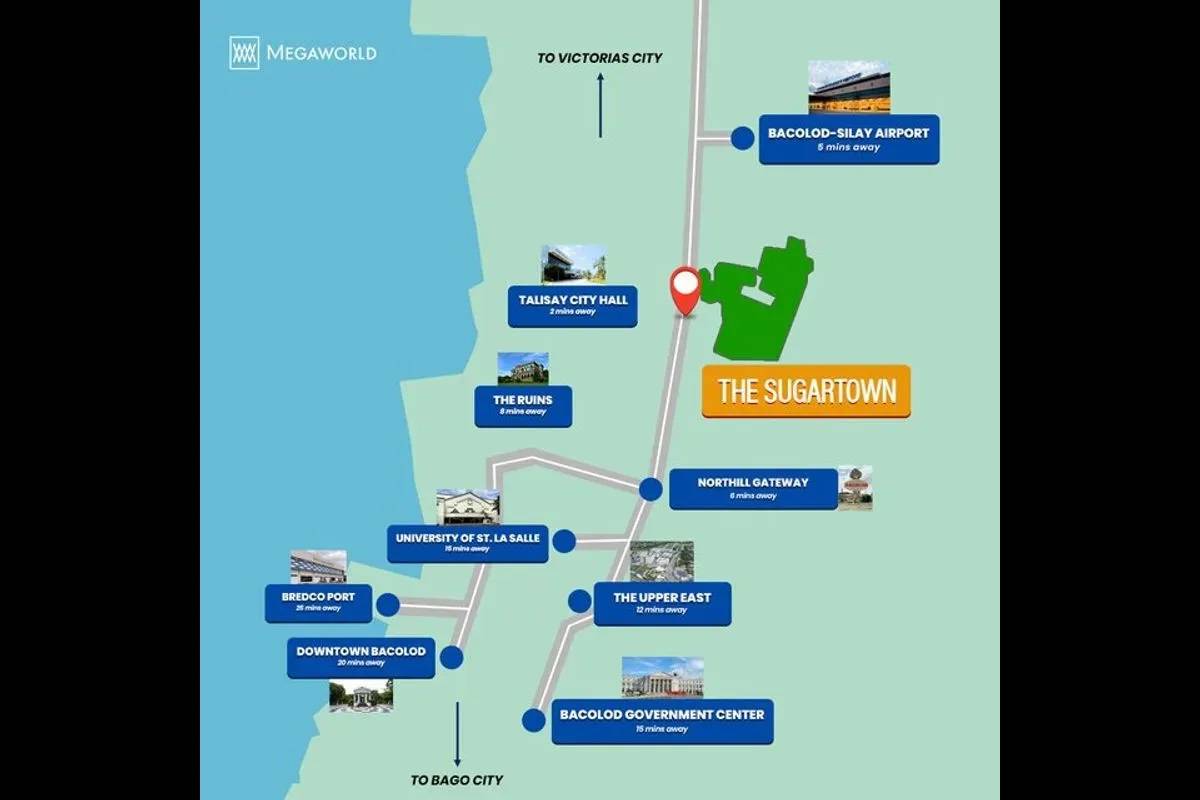
In January this year, property giant Megaworld Corp. announced plans to expand its township portfolio in the province with an P8-billion investment for a new project. Called The Sugartown, this 97-ha township will rise along the Bacolod–Silay Airport Road in Talisay City. This project, Megaworld’s 37th township, is expected to be completed within seven to 10 years.
Within this township, Megaworld subsidiary Suntrust Properties Inc. is also building a 15-ha residential community called La Sonrisa.
Talisay City rising
Talisay City, in particular, has shown strong prospects for sustained growth and development.
Positioned along an emerging economic corridor in Negros Occidental, Talisay is now seen as a potential investment hub outside Bacolod City. It’s also emerging as a center for technical education, innovation, and skilled talent, supported by its growing workforce and strategic location.

This locational advantage is reinforced by its seamless connectivity to neighboring locales. Residents and guests enjoy convenient access to Silay and Bacolod, with the latter reachable in just 15 minutes by car.
Aside from its proximity to neighboring cities, Talisay also serves as a gateway to the province’s countryside, where residents and visitors can explore sugar plantations, taste local delicacies, and learn more about the region’s past through its old establishments.
Investor-friendly
Beyond physical connectivity, Talisay also offers an investor-friendly environment, strengthened by efficient logistics networks that facilitate market access and business opportunities. Continued efforts from both the private and public sectors aim to further enhance synergy between accessibility and investment growth.
DID YOU KNOW?
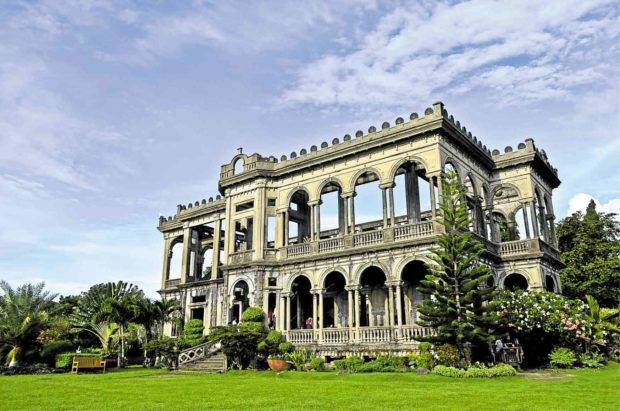
- One of Talisay City’s best known landmarks is The Ruins, the remains of a 1920s Italian-inspired mansion celebrated for its distinctive architecture. Built on a former sugar plantation, the iconic structure has earned the nickname ‘Taj Mahal of Negros.’ It was commissioned by wealthy sugar baron Don Mariano Ledesma Lacson as a tribute to his late Portuguese wife, Cora Maria Osorio Rosa-Braga.
- Talisay City is home to the Gen. Aniceto Lacson Ancestral Home, which was proclaimed a National Historical Landmark in March 2002. Built in 1880, the residence later served as the seat of the Cantonal Republic of Negros, established after Spanish forces surrendered to Negrense forces led by Gen. Juan Araneta and Lacson himself.
- Another iconic ancestral home in Talisay is Balay ni Tana Dicang, a stone house built in 1883 that reflects the lifestyle of sugar barons in the late 19th century. Named after Doña Enrica Alunan–one of its original residents and a barangay leader during her time–the property has since been preserved as a tourist attraction, featuring an art gallery and a karitela (horse-drawn carriage) lane.
Sources: Inquirer archives, pna.gov.ph, negros-occ.gov.ph, facebook.com/CTEIPO, talisaycity.gov.ph, activegroup.com.ph, guidetothephilippines.ph, philhistoricsites.nhcp.gov.ph, futurabyfilinvest.com