







Bridging cultures, traditions: Celebrating CNY in the Philippines

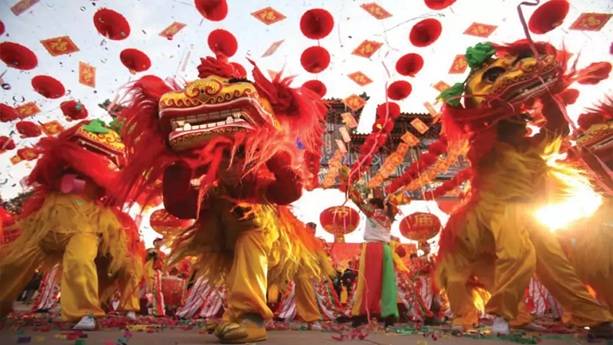
The celebration of Chinese New Year in the Philippines is a delightful blend of tradition, festivity, and culture, which fuses two rich heritages.
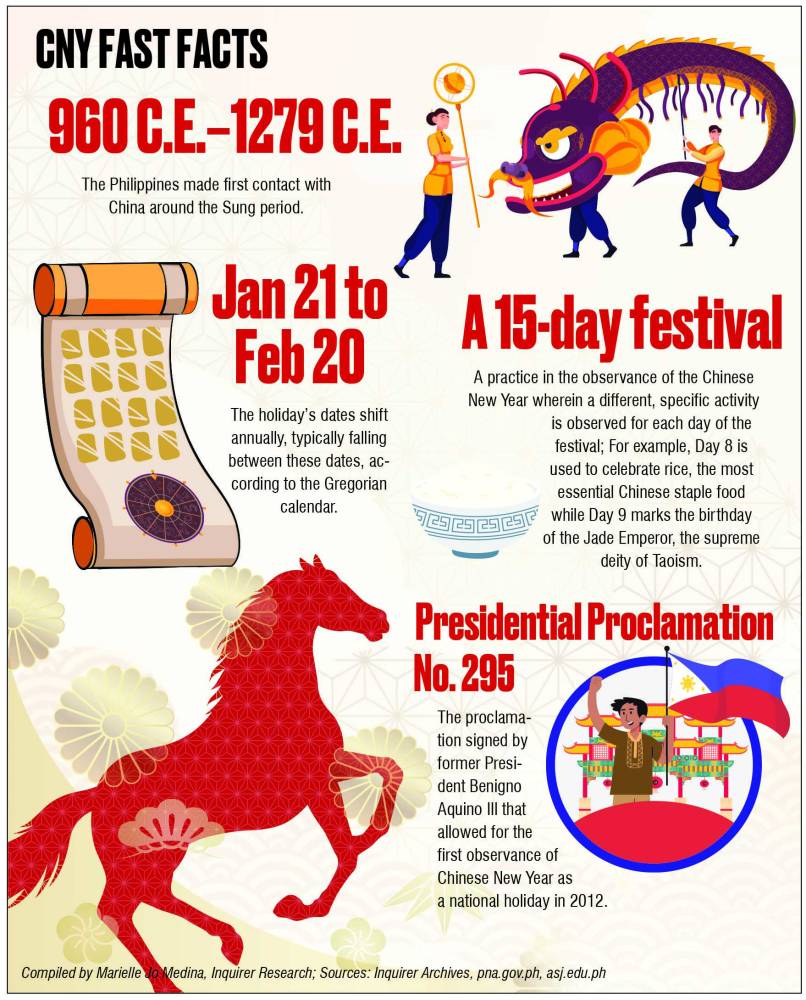
Also known as the Lunar New Year, it is an important event celebrated in China and various countries across Asia. The occasion begins with the first new moon of the lunar calendar and extends for 15 days, culminating on the first full moon.
It thus has no fixed date in the Gregorian calendar but always falls between January 21 and February 20. This year, it falls on February 17, ushering in the Year of the Fire Horse.
A calendar shift
The celebration dates back to the 14th century B.C., when the Shang Dynasty ruled China. It signaled the new year with gatherings and feasts and served as an occasion for people to pay their respects to deities and ancestors.
However, its religious value diminished when the Chinese government, led by Mao Zedong, banned the observance of the traditional Chinese New Year in 1949 and adopted the Western celebration of the New Year based on the Gregorian calendar, which is fixed on January 1. This official shift in New Year revelries came more than 300 years after Jesuit missionaries introduced the Gregorian calendar to China in 1582.
Succeeding Chinese leaders, however, were more receptive to the traditional Chinese New Year celebration.
In 1996, the Spring Festival, used interchangeably to refer to the Chinese New Year, was established as a holiday to give the Chinese a week off to celebrate the occasion and be with their families.
A grand affair
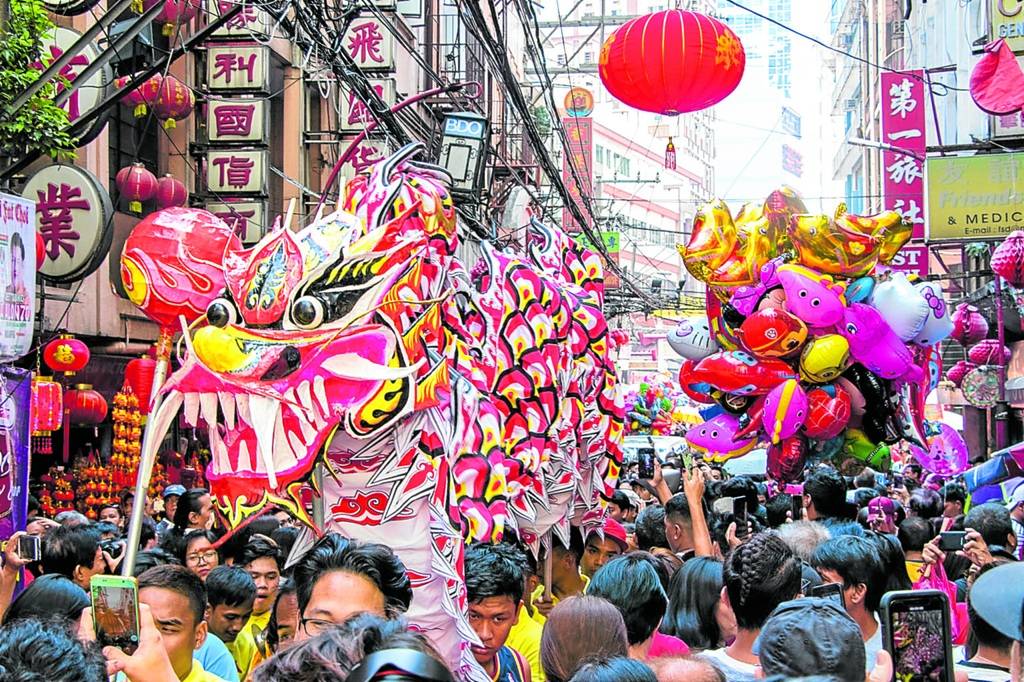
In the Philippines, Chinese New Year is also a grand affair, widely celebrated among Chinese and Filipino families. This is to be expected.
Data from a 2025 paper by Teresita Ang See, former president of the Philippine Association for Chinese Studies and the International Society for the Study of Chinese Overseas, showed that there are some 1.4 million Chinese-Filipinos in the country, accounting for about 1.2 percent of the total population of 117 million.
Including the 200,000 new Chinese immigrants, both legal and undocumented, the Chinese population rises to 1.5 million, or 1.36 percent of the total population.
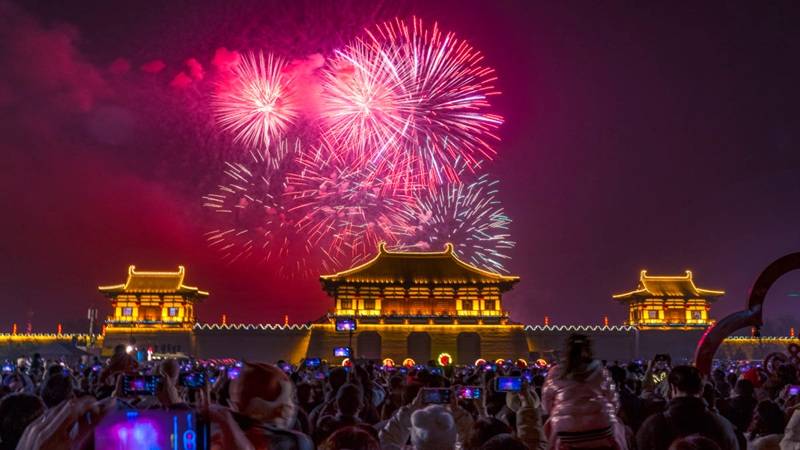
Oldest Chinatown in the world
The Philippines is also home to the oldest Chinatown in the world and has one of the most vibrant Chinese communities.
The emergence of the popular culture dubbed “Tsinoy/Chinoy,” a portmanteau of Chinese and Pinoy, is a product of the merging of Chinese and Filipino traditions that have become embedded in the way Filipinos live as well as celebrate occasions such as Chinese New Year.
Cultural sensitivity and good will
Notably, the first observance of a national holiday for Chinese New Year occurred only in 2012.
The celebration, which fell on January 23 of that year, was declared by then President Benigno Aquino III as a special non-working day. Though several bills to declare Chinese New Year a national holiday were proposed, not all were enacted into law.
A study by Ivy Marie Ganadillo, posted on the Asian Studies website of the University of the Philippines, noted that the declaration found favor among most Chinese-Filipinos, who saw it as a sign of cultural sensitivity and goodwill.
In the years that followed, the Chinese New Year continued to be observed as a national holiday by succeeding presidents.
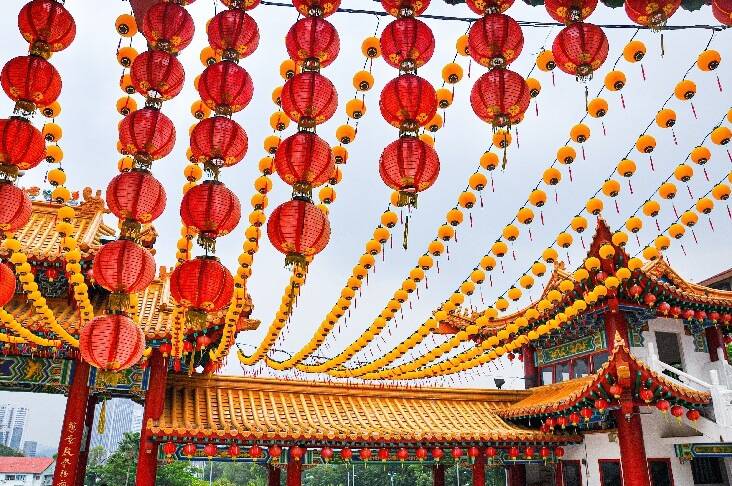
National holiday
Today, the celebration has been embraced not just by Chinese-Filipinos but also by Filipinos.
Practices and traditions are being observed in many homes as a sign of respect for the historical richness of the celebration and to partake in wishing prosperity for everyone in the society.
In 2025, almost 3 million people gathered and participated in the Chinese New Year celebration in the City of Manila.
Sources: Inquirer Archives, pna.gov.ph, asj.edu.ph, iseas.edu.sg