







Local vibe, global flair

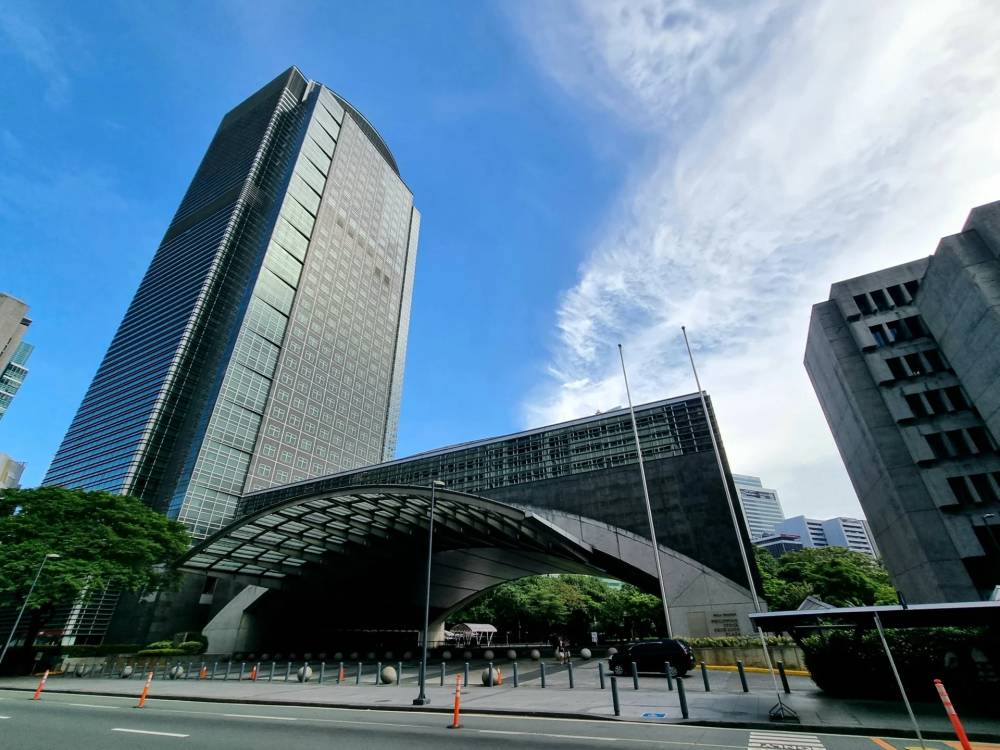
As the Philippines continues to grow as a nation, the rapid expansion of its real estate sector has not only transformed its urban landscape but has also drawn skilled professionals from around the world to contribute to its development.
Over the last 40 years, internationally renowned firms have collaborated with the Philippines’ most respected architects and designers to help shape the country’s built environment, bringing local structures at par with some of the best in the world. Below is a list of projects where international architects and designers played a key role either in the planning, creative direction or overall execution of these developments.
Ayala Tower One & Exchange Plaza
Skidmore, Owings & Merrill
The 35-story Ayala Tower One & Exchange Plaza was the first office building in the Philippines designed by Chicago-based Skidmore, Owings & Merrill (SOM), one of the world’s leading architecture firms.
This building, located at the intersection of Ayala Avenue and Paseo de Roxas, was built in collaboration with local architectural firm Leandro V. Locsin Partners. Construction began in 1993 and was completed three years later, in 1996.
Together with developments like Petron Megaplaza, which was also designed by SOM, Ayala Tower One helped define the aesthetic and functional character of modern Makati. It addressed the growing demand for high-quality office space while reinforcing the city’s transformation into the country’s premier business district. Originally home to the primary trading floor of the Philippine Stock Exchange, the building now houses multinational financial institutions and key players in Philippine business.
The Estate Makati
Foster + Partners
The Estate Makati, a joint project of SM Residences and Federal Land Inc., is the first residential development in the country designed by the award winning architectural firm Foster + Partners, led by renowned British architect Norman Foster.
The groundbreaking ceremony was held in 2019, with W.V. Coscolluela serving as the local architectural consultant. The project rises on the last and most premium available lot along Ayala Avenue, specifically on the Apartment Ridge row, considered Makati’s most prestigious neighborhood.
For this highly anticipated development, Foster + Partners created a subtly elegant yet innovative design, reflecting its holistic approach to architecture. To shape the design, the firm conducted extensive topographical studies, assessing Makati City’s climate, sun patterns, and other environmental factors.
The Estate Makati was also designed to be one of the most resilient residential towers in the Philippines. A key feature is its double-slab construction, a method uncommon in residential projects, which supports custom layouts, large-format stone, specialized room configurations, and future design changes without affecting structural or mechanical systems.
Proscenium
Architect Carlos Ott
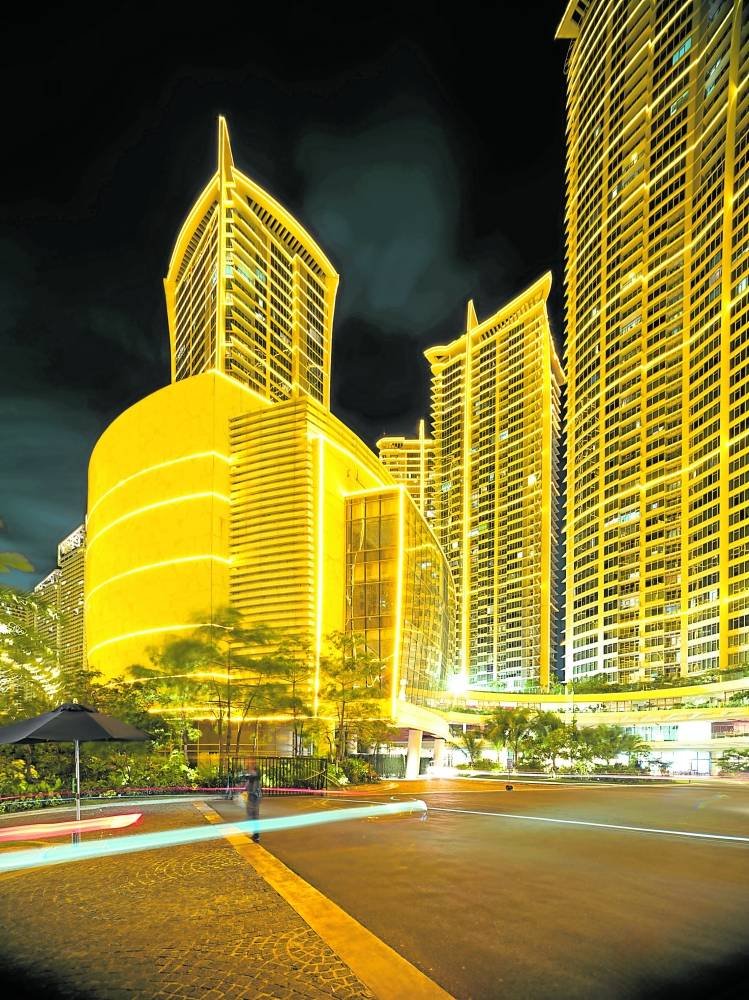
A shining jewel in Rockwell Land’s portfolio is the Proscenium, a brainchild of renowned international architect Carlos Ott.
Situated in Rockwell Center Makati, this 3.6-ha complex has five upscale residential towers, namely Kirov, Sakura, Lincoln, Lorraine, and The Proscenium Residences, which are complemented by an expansive 1-ha amenity deck The Proscenium also boasts of thoughtfully designed spaces as well as a retail row and the Proscenium Theater, which just opened this year.
Plans for the Proscenium were first unveiled in 2012 and now, its presence has not only become a defining feature of Metro Manila’s skyline, but also a symbol of the highly exclusive and refined lifestyle Rockwell has long been known for. This elevated lifestyle is complemented by the Power Plant Mall, which anchors the self-sustaining community with a well-curated mix of retail, dining, entertainment, and essential services.
Savoy Hotel Boracay
FBEYE International
Singapore-based FBEYE International, whose diverse portfolio includes luxury resorts, hotels, and restaurants, designed Megaworld’s Savoy Hotel Boracay.
The result is a fresh take on a 4-star hotel, featuring 559 guest rooms, banqueting and meeting spaces, several food and beverage offerings, a pool, and a health club.
In 2016, Megaworld announced the addition of Savoy Hotel to its homegrown hotel brands, alongside Belmont and Richmonde Hotels. The first Savoy Hotel to open was Savoy Hotel Boracay, located in the 150-ha Boracay Newcoast development.
According to Megaworld, the six-story Savoy Hotel Boracay is a 10-minute drive from Puka Shell Beach and a 15-minute drive from D’Mall. It features a private beach area, an on-site restaurant, and the country’s first concert pool arena.
The Rise Makati
KplusK International Ltd.
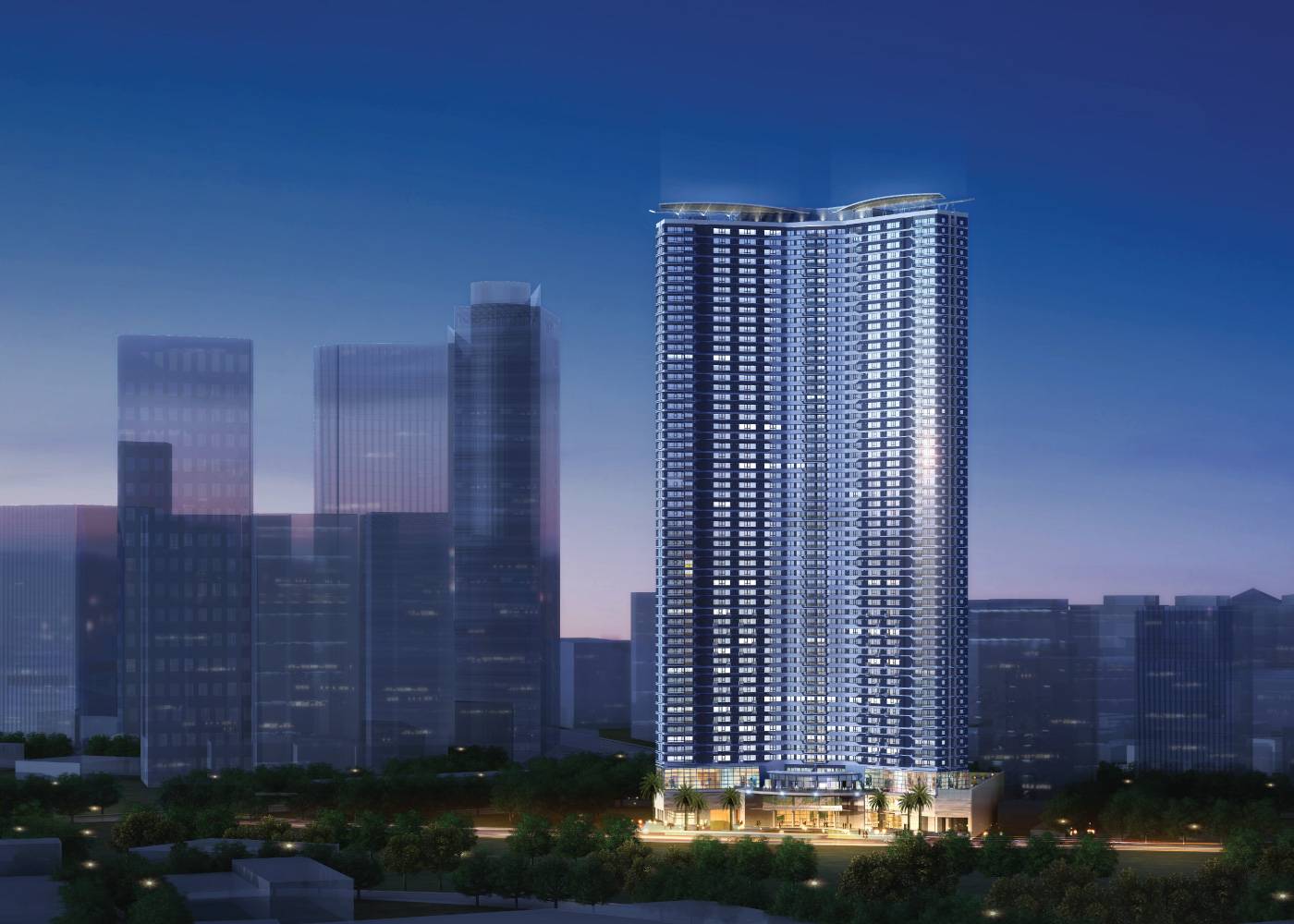
The Rise Makati combines the celebrated world-class design of Hong Kong-based KplusK International Ltd. and the Philippines’ Asya Design.
Developed by Shang Properties Inc., The Rise exemplifies dynamic aesthetics with its architectural concept by KplusK. Inspired by a tri-blade propeller, the 10,000-sqm tower is designed to maximize breathtaking views. Its three wings extend from a central core, where elevators and communal lounges are conveniently located.
Inside, each living space is thoughtfully planned for both style and function, with efficient layouts that provide ample room for personalizing interiors. Complementing these residences are are amenities that pools and gyms, pilates and yoga rooms, a sauna, jogging trails, and a cinema. These are further enhanced by the two-story mall located on the building’s lower levels. The Rise is also just an eight-minute walk from the Makati central business district.
Metrobank Center
Wong & Ouyang Ltd.
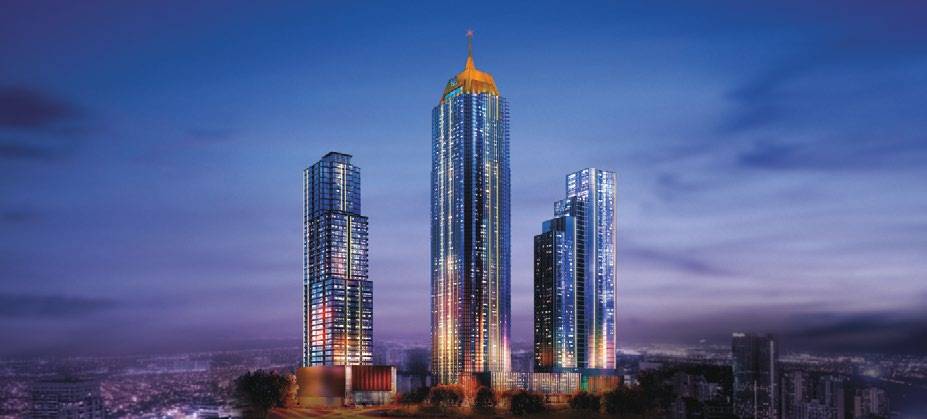
Renowned architectural firm Wong & Ouyang from Hong Kong was the visionary force behind the Grand Hyatt Metrobank Center, located within Bonifacio Global City in Taguig City.
In collaboration with the engineering expertise of Ove Arup & Partners, the 66-story tower soars 318 m above the skyline—a modern architectural feat inspired by the timeless elegance of New York City’s Empire State Building.
Part of a mixed-use complex, the development reached its first major milestone in 2018 with the completion of the Grand Hyatt Metrobank Center, which also had the five-star Grand Hyatt Manila. The hotel occupies the upper floors, while the premium office spaces below serve as the headquarters of Metropolitan Bank and Trust Co. (Metrobank).
The complex, which also has the Grand Hyatt Residences, blends business, leisure, and premium living spaces with a focus on efficiency and modern luxury. Residents and guests enjoy a lifestyle of grandeur, comfort, and privilege, with exclusive access to an array of world-class dining options, exquisite culinary experiences, event venues, and other high-end facilities.
Shangri-La The Fort, Manila
Handel Architects LLP
Shangri-La The Fort, Manila is a 61-story mixed-use tower that has become one of the most recognizable landmarks in Bonifacio Global City since it opened in 2016. It was designed by New York City-based Handel Architects LLP.
Rising 250 meters over High Street, the tower features two long facades and two short ones that appear to slide past each other when viewed from different angles—giving it a stepped, layered look rather than a single monolithic block. It also boasts a LEED Gold certification, a distinction that earned it international recognition as the 2017 MIPIM Asia Award’s Best Hotel & Tourism Development.
The mixed-use development includes 577 hotel rooms, 97 hotel residences, and 96 exclusive Horizon Homes, alongside extensive retail spaces, dining options, function rooms, and recreational facilities.
Handel Architects is also behind other significant projects in Metro Manila, including the Philippine Stock Exchange (2018).
Century Spire
Architect Daniel Libeskind and Armani/Casa Interior Design
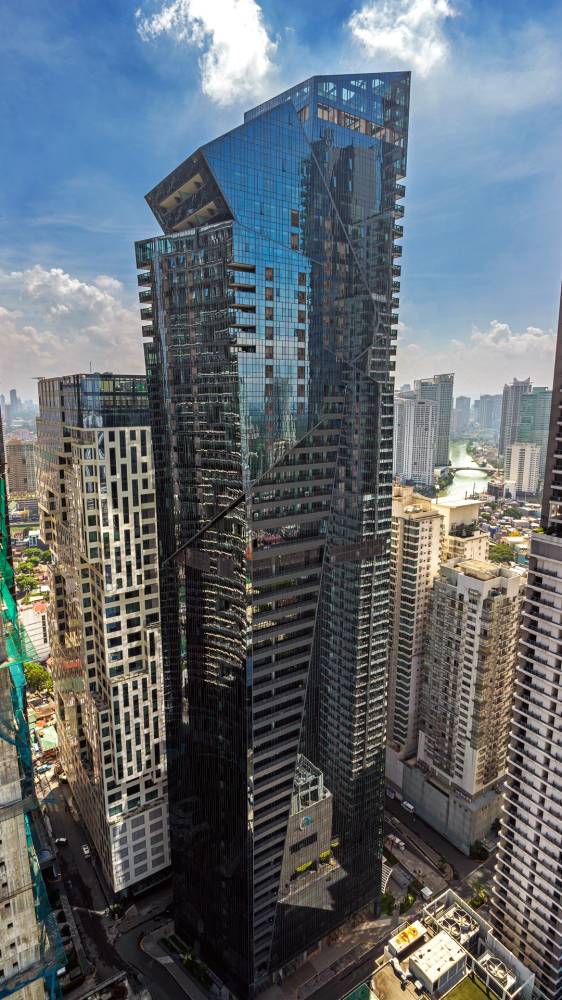
In 2014, world renowned architect Daniel Libeskind, along with Century Properties Group, celebrated the groundbreaking of Century Spire. Completed in 2022, this 60-story office and residential tower in Century City is Century Properties’ flagship development in Makati City. It now stands as one of the most striking additions to Makati’s skyline.
The Spire was designed by Libeskind himself, showcasing his signature cutting-edge style. The common-area interiors—including the grand lobby, library, swimming pool, spa, gym, and fitness area—were by Giorgio Armani’s Armani/Casa Interior Design.
Its innovative and eye-catching design has not gone unnoticed. In 2023, the Spire bagged Best Mixed-Use Development and Best Mixed-Use Architecture awards at the Asia Pacific Property Awards, highlighting Century Properties’ collaboration with Studio Libeskind for its architecture and Armani/Casa for its interiors. It also won the Best Mixed-use Development Award at the 2015-2016 Asia Pacific Property Awards.
Abaca Resort Mactan
Büro Ole Scheeren
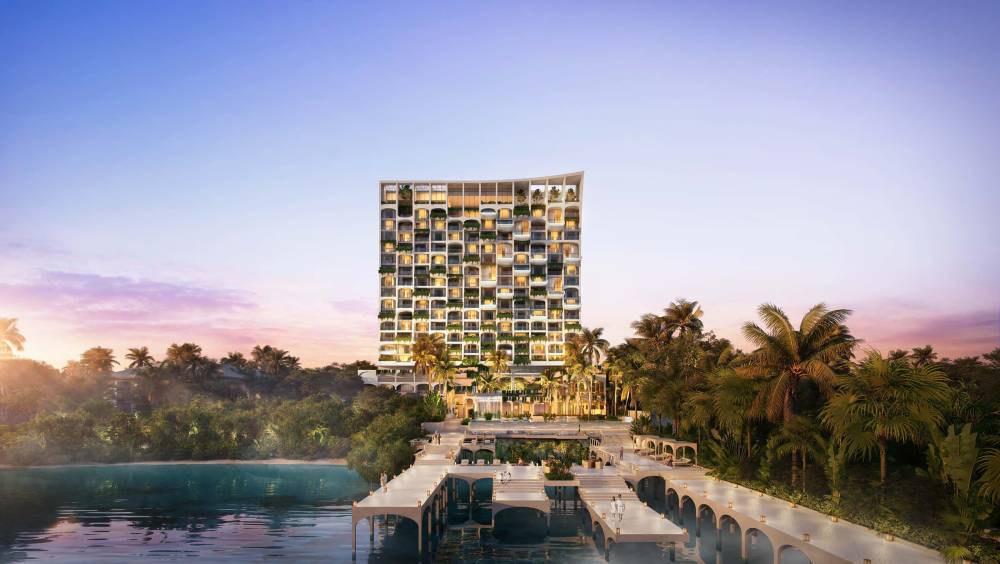
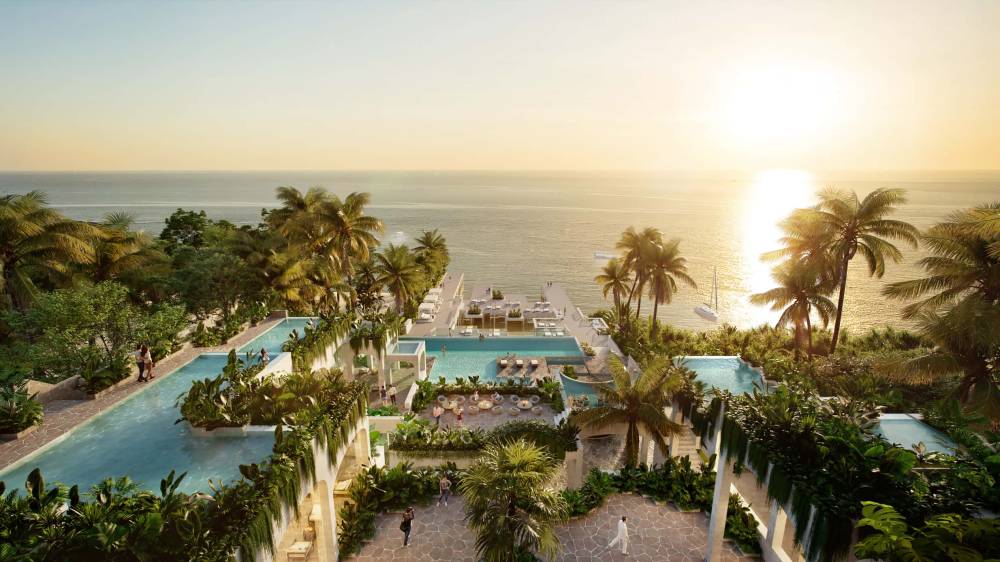
Completed in 2024, the Abaca Resort Mactan is a reimagined version of the award-winning Abaca Boutique Resort in Mactan, Cebu. This luxury beachfront property features 125 butler-serviced suites and sky villas, many of which are equipped with private plunge pools.
Designed for an elevated resort experience, the property offers multiple swimming pools, spacious function rooms, several food and beverage operations, a boutique gym with yoga and meditation facilities, a kids’ lounge, and a luxurious spa among its key amenities.
The resort’s iconic design is led by the internationally acclaimed architectural firm Büro Ole Scheeren, in collaboration with top Filipino designers. Its principal architect, Ole Scheeren, a German-born visionary known for his award-winning, large-scale mixed-use projects across Asia, brought a modern yet deeply contextual approach to the property’s design.

Mitsukoshi BGC
Torafu Architects and Asao Tokolo
Mitsukoshi brought its iconic brand to the Philippines in 2023 with the opening of Mitsukoshi BGC, the first official branch of the famed Japanese department store chain in the country.
This milestone in the franchise’s history was marked by the involvement of some of the most celebrated names in design—a collaboration between Tokyo-based multidisciplinary design firm Torafu Architects and artist Asao Tokolo, designer of the victory ceremony podiums and emblem for the Tokyo 2020 Olympics.
Together, they designed the BGC branch as a showcase of Japanese design elements in a casual yet sophisticated setting, with the façade, for example, featuring a distinctive geometric pattern—a modern interpretation of the traditional Japanese hemp leaf.
Built and designed around the concept of the “Next Manila Lifestyle,” Mitsukoshi BGC offers a new and enriching experience as the first commercial facility operated by the Isetan Mitsukoshi Group in the Philippines. During the mall’s soft opening, Alfred V. Ty, chair of Federal Land—one of the partners behind the development—said he hoped the four-level mall could “give a slice of Japan” through “stores rich in Japanese culture and customer service”.
Mega Tower
Arquitectonica
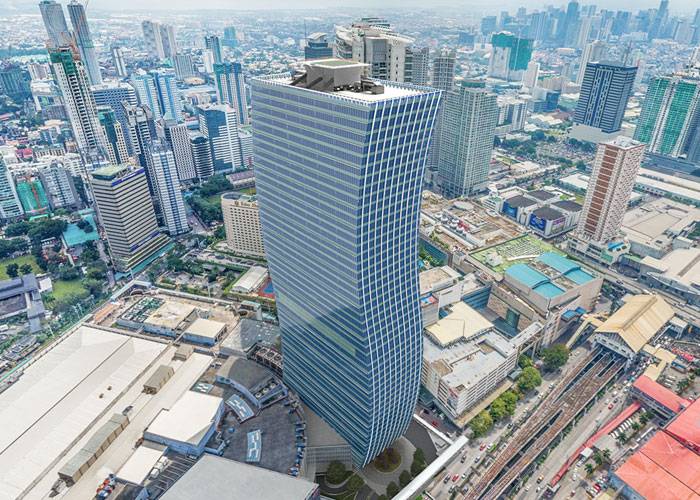
The Mega Tower is a 50-story office building prominently located along Edsa, Metro Manila’s central thoroughfare, just right beside SM Megamall, one of the country’s premier retail destinations. SM Prime Holdings Inc.’s tallest skyscraper is LEED Gold–certified, ensuring a workplace defined by safety, flexibility, sustainability, and accessibility.
Designed by the Miami-based, award-winning global architectural firm Arquitectonica, Mega Tower is celebrated for its elegant S-shaped silhouette, which, according to the firm’s website, was inspired by the client’s requirement for “an efficient and functional floor plate with a sleek design.” This led to the concept of an “undulating S-shaped tower”—now an iconic addition to the city’s skyline.
Since its completion in 2021, the building has received multiple accolades, including the Philippines Property Awards 2022 for Best Office Architectural Design, the Asia Property Awards 2022 for Best Office Architectural Design (Asia), the Dot Property Philippines Awards for Best Office Development, and a Certificate of Excellence from the A&D Awards for Best Workplace in Architecture.
Mactan-Cebu International Airport Terminal 2
Integrated Design Associates
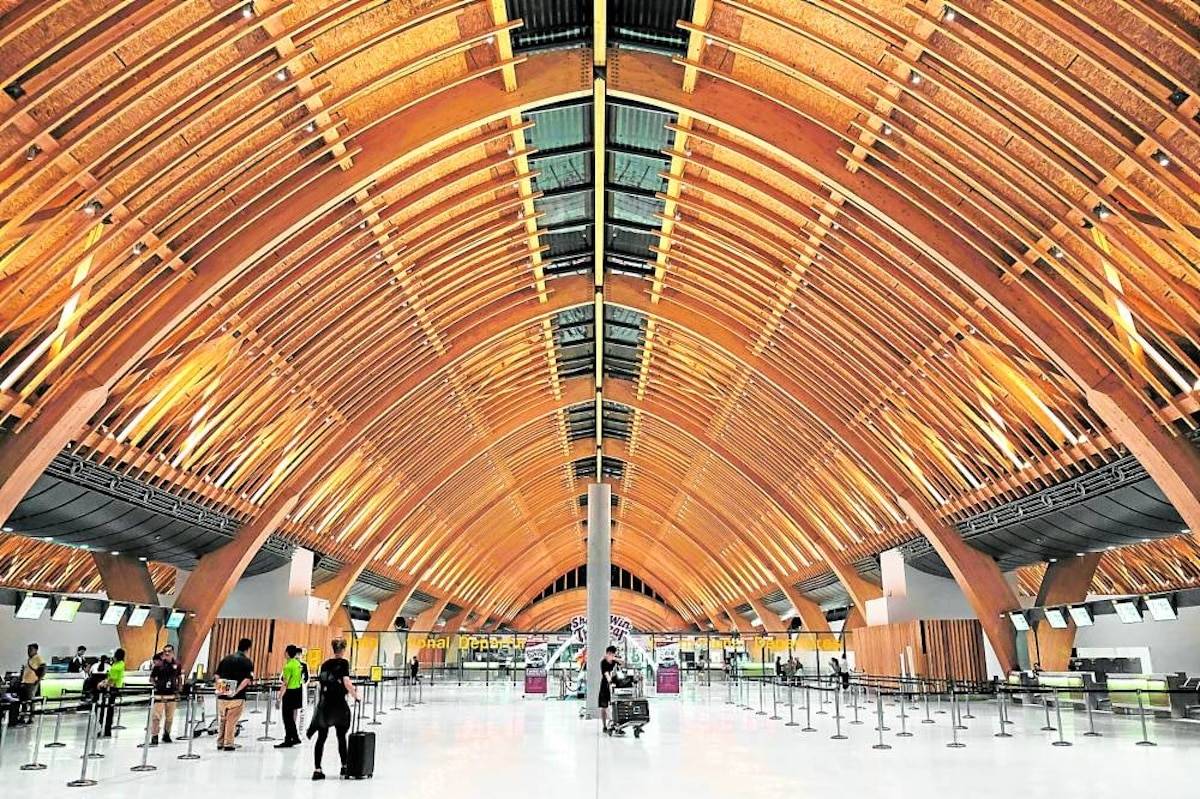
The Mactan Cebu International Airport (MCIA) Terminal 2, which has received several international recognitions, was designed by the multi-awarded firm Integrated Design Associates (IDA) Hong Kong and its principal architect, Winston Shu, in collaboration with Filipino designers Budji Royal and industrial designer Kenneth Cobonpue.
IDA is the same firm that designed the new passenger terminal of Clark International Airport.
MCIA is the second-largest airport in the Philippines and an important transport hub in the Visayas. According to its architects, Terminal 2 was built to meet increasing traffic demands for international flights and to supplement the existing Terminal 1. It officially opened in 2018.
Touted as the world’s first resort airport, the MCIA Terminal 2 was built with the intention of becoming a lifestyle destination in itself, offering tourists their first taste of Cebu as soon as they arrive at the country’s second busiest air gateway. It features light, breezy designs accented with cultural elements inspired by Cebuano heritage and vernacular architecture.
In 2020, MCIA Terminal 2 was the sole awardee in the Architecture and Allied Arts category of the 12th Ani ng Dangal (Harvest of Honors) Awards held at Malacañang Palace. In 2019, it won the Completed Buildings: Transport category at the World Architecture Festival (WAF), beating Singapore’s Jewel Changi Airport. In 2018, MCIA received three awards, including the Asia-Pacific Medium Airport of the Year at the CAPA AvPhiliation Awards for Excellence.
Our Lady of Lourdes Chapel
Hiroshi Nakamura & NAP Architects
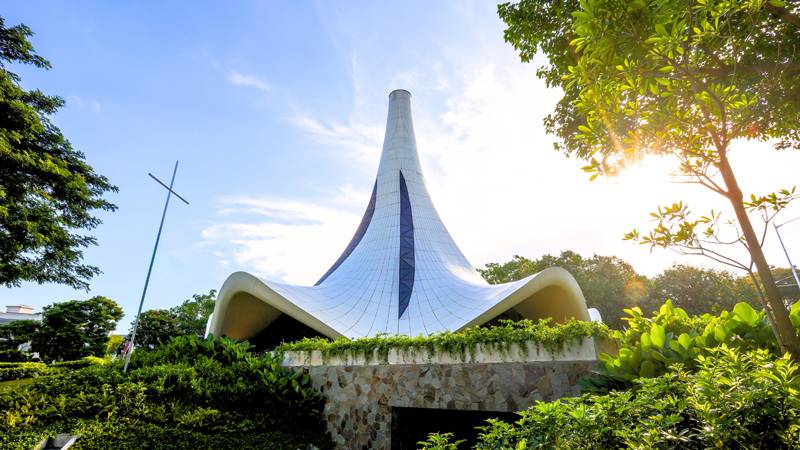
With faith persisting as an integral and defining aspect of Filipino culture, churches and chapels hold a special place in the country’s architectural landscape. In Filinvest City Alabang, the Our Lady of Lourdes Chapel had the privilege of being designed in part by Japan’s Hiroshi Nakamura & NAP Architects.
The chapel’s lily-like form—defined by its tubular corolla spire, resembling petals that unfold to shape a unique rooftop—was designed by Nakamura himself and is inspired by concepts of six-fold symmetrical geometry, seamlessly integrating nature, faith, and artistic design.
Since its opening in 2022, the chapel has received international acclaim for its exquisite design. Last June, it was honored at the 2025 Urban Land Institute (ULI) Asia Pacific Awards for Excellence—the country’s sole winner—marking a significant milestone for the local industry.
Sources: Inquirer Archives, colliers.com gensler.com, aiedea.co, daiichiproperties.com, woodsbagot.com, makaticommercetower.com, kmcmaggroup.com, zuelligbuilding.com, archdaily.com, grandhyattmanilaresidences.ph, federalland.ph, wongouyang.com, handelarchitects.com, Paul Curtis Steelman LinkedIn Account, sec.solaireresort.com, abacaresort.com, buro-os.com, populous.com, arquitectonica.com, asiapropertyawards.com, smcpg.com, ayalalandoffices.com.ph, leechiu.com, jetro.go.jp, nomura-re-hd.co.jp, federalland.ph, mitsukoshi.ph, barleystudio.co.uk, filinvestcity.com, nakam.info, italpinas.com, edgebuildings.com, bluprint-onemega.com, archdaily.com, century-properties.com, evolo.us, forbes.com, dezeen.com, libeskind.com, f-b-eye.com, megaworldcorp.com, jgsummit.com.ph, e-rockwell.com, therisemakati.com