








Sculpting the Filipino win

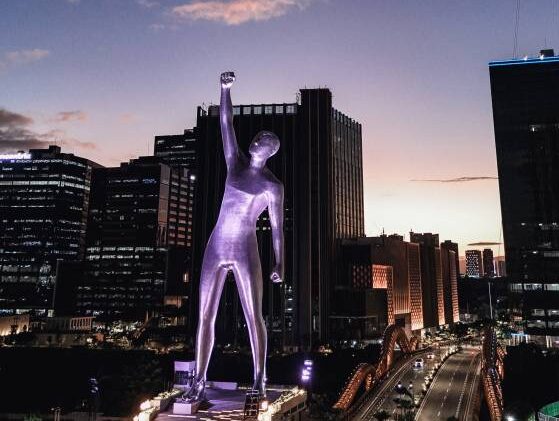
Motorists along the C5 Road and visitors entering the Bridgetowne Destination Estate in Pasig City will meet a towering silhouette that rises above the river and the new cityscape.
The Victor, a 60-meter contemporary art installation at the heart of Robinsons Land’s flagship destination estate, appears as a luminous figure caught mid-stride, its arm lifted in a gesture of triumph. Seen from a distance, it introduces Bridgetowne with confidence. Up close, it feels like a declaration that the Filipino ambition belongs at skyline height.
The Victor has been named Best Landmark Design in the PropertyGuru Asia Property Awards. This is the country’s representative in the regional competition, shortlisted alongside winners from Australia and several other markets. The citation signals that a Filipino-made urban monument can stand beside the region’s newest icons in both scale and intent.
From district marker to shared symbol
The signature element of Bridgetowne was designed to orient visitors and define the estate’s identity.
Located at the junction of the bridge, riverfront, and open space, the sculpture unites office towers, residences, retail, and upcoming hospitality projects. During the day, its stainless skin captures tropical light, framing glass and concrete structures. At night, it glows against the sky, transforming the bridge into a ceremonial entryway.
Over time, The Victor evolved beyond estate branding. Its images appeared in lifestyle magazines, travel destinations, and on social media. Night photos of the lit figure symbolize the whole district. Philippine townships can commission impactful artworks that foster shared symbols embraced by the city.
Standing tall on the Asia stage
The PropertyGuru Asia Property Awards has grown into an influential benchmark for the regional real estate industry, drawing developers from Southeast Asia, East Asia, South Asia, the Middle East, and Australia. Country winners in categories such as Best Landmark Design advance to a Grand Final, where they compete with their peers under a single jury. Recent editions have seen Philippine entries face intense competition from cities such as Sydney, Singapore, Bangkok, and Dubai.
For Filipino practitioners, The Victor’s recognition means that a local urban monument now participates in a continental conversation. The work is measured against projects from markets with long traditions of commissioning civic sculpture and landmark architecture.
Its citation signals to investors and local governments that Manila estates are allocating space and budget to public art with regional relevance. The acknowledgment affirms an industry that is expanding beyond efficient floor plates and yield-driven typologies into the cultural dimension of placemaking.
Anatomy of a vertical experience
The sculpture’s impact comes from intentional technical choices.
Its marine-grade stainless steel cladding is perforated to let light pass through the figure instead of reflecting off it. The surface appears solid during the day and turns into a lantern after sunset. Layered on this material are sophisticated lighting and projection systems.
Programmable LEDs and projection mapping enable the figure to display different colors, patterns, and stories throughout the year. The same silhouette can honor national holidays, celebrate festivals, or promote civic campaigns.
From a moving vehicle along C5 Road, the figure looks like a single light gesture. From the promenade or bridge, viewers notice details of texture and changing illumination, transforming a simple drive-by into an immersive, walkable experience.
Curated art as urban strategy
Landmark installations change the way cities feel when they emerge from a clear curatorial vision.
The Victor benefits from the larger body of work of its artist Jefrë, whose practice engages themes of identity, diaspora, and the scale of the global citizen. The choice of collaborator signaled that Bridgetowne would carry a narrative beyond decorative sculpture and corporate logo.
When developers collaborate with artists, curators, and local governments, the estates of these artists can host artworks that resonate with diverse audiences and gain legitimacy as contemporary heritage. These partnerships help ensure that large-scale installations across Philippine cities mature into anchors of urban memory.
The author (www.ianfulgar.com) is a leading architect with an impressive portfolio of local and international clients. His team elevates hotels, resorts, condominiums, residences, and commercial and mixed-use township development projects. Ian’s innovative, cutting-edge design and business solutions have garnered industry recognition, making him the go-to expert for clients seeking to transform their real estate ventures