










Synergy in Luzon’s real estate ecosystem promotes continued growth


Offices attract jobs; jobs draw people; and where people relocate, communities are sure to rise along with the supporting developments that go with them.
Over time, these communities evolve into self-sustaining hubs, creating growth corridors that can shape entire regions. This progression lays the foundation for Luzon’s real estate ecosystem–anchored by Metro Manila, the country’s long standing economic engine.
Today, Luzon continues to grow, albeit at a moderate pace, setting the tone for property development nationwide.
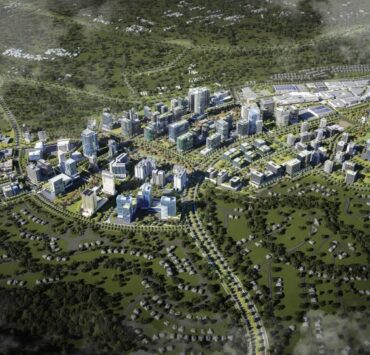
What we now call townships or mixed-use business districts represents this very evolution. These integrated developments thrive on synergy, wherein each component–office, residential, retail–reinforces the performance of the others, creating a complete and interconnected ecosystem.
Heart of the ecosystem
At the heart of this ecosystem is Metro Manila and the infrastructure that moves businesses and people within and around the capital.
This connectivity drives bulk of office demand, residential launches, and retail activity. Beyond the capital region, Central Luzon and Calabarzon are emerging as growth corridors, strengthened by infrastructure projects that improve accessibility.
Together, these regions position Luzon as the benchmark for national economic performance.
Infrastructure as a growth catalyst
Connectivity projects–including expressways, rail systems, and the upcoming Bataan-Cavite Interlink Bridge–are reinforcing Luzon’s growth corridors. These developments shorten travel times, improve logistics efficiency, and open new areas for housing and industrial expansion.
By linking northern and southern Luzon, infrastructure investments create a more distributed and resilient property market–one that influences development patterns nationwide.
Office
At the core of this ecosystem is the office market, which drives employment and sets off the chain of housing and retail demand.
In the first nine months of the year, Metro Manila office demand reached 966,000 sqm, or 88 percent of FY2024 levels. This was led by IT and business process management (IT-BPM) firms, which accounted for 45 percent of take-up.
Vacancy narrowed to 18 percent, with Bonifacio Global City and Makati at single digits–evidence of sustained support from corporate occupiers.
Outside the National Capital Region (NCR), Clark and Pampanga comprised 13 percent of take-up for the first three quarters. This highlights Luzon’s ability to sustain office demand even as global markets faced steep declines, reinforcing its role as the country’s economic anchor.
Residential
Where jobs go, housing demand follows, shaping residential trends across Metro Manila and its surrounding provinces.
Metro Manila condominium unit take-up reached 7,713 units in Q3 2025–the highest in seven quarters–while inventory fell to 31 months from 37 months in Q2 2025. Developers launched 1,766 units, signaling cautious optimism. Rental rates remain under correction, with most Metro Manila developments posting downward adjustments from January to September.
For selling prices, data from Bangko Sentral ng Pilipinas (BSP) showed the Residential Property Price Index at 156.3 nationwide as of Q2 2025.
Metro Manila stood at 149.5, while the Cavite, Laguna, Batangas, Rizal, Bulacan, and Pampanga area (collectively called as the “Balance Greater Manila Area or GMA” by BSP) posted 169.5.
Housing loan volumes also rose: nationwide by 5 percent, NCR by 10 percent, and Balance GMA by 11 percent, reflecting firm demand in Luzon’s suburban markets.
Masterplanned communities
These dynamics merge in integrated townships, which bring together workspaces, homes, and lifestyle amenities.
Bulk of the country’s major township projects are in Luzon, creating mixed-use communities that combine places to work, live, socialize, create experiences, study, worship, and shop. These communities allow people to live, work and play in one township, driving convenience and lifestyle integration.

While similar projects are in Visayas and Mindanao, Luzon leads in scale due to its population density and infrastructure connectivity.

Retail and tourism
Retail and hospitality also benefit from the expanding development, reinforcing Luzon’s role as both a business and leisure hub.
The country’s four largest malls are located in Metro Manila. In the past 10 years, 4.3 million sqm in gross leasable area in malls were launched in Luzon, and 52 percent of upcoming malls will rise here too.
Mall traffic remains strong, and more international brands are entering the market. The top three mall developers posted 7.5 percent higher revenues in H1 2025 versus last year, while listed retailers grew systemwide sales by 17 percent year-on-year.
For the tourism sector, nationwide, over 45,000 hotel keys are projected for development, with 23,000 to be located in Luzon.

Resiliency
Luzon’s resilience in 2025 is built on strong fundamentals: a large population base, expanding infrastructure, and improved connectivity that opened new growth corridors.
Integrated townships amplified this momentum, creating hubs where people can live, work, and play. These factors sustained growth—however modest.
The author is an associate director and head of Research at Leechiu Property Consultants Inc.