







TRIP DOWN GLORIOUS MEMORY LANE

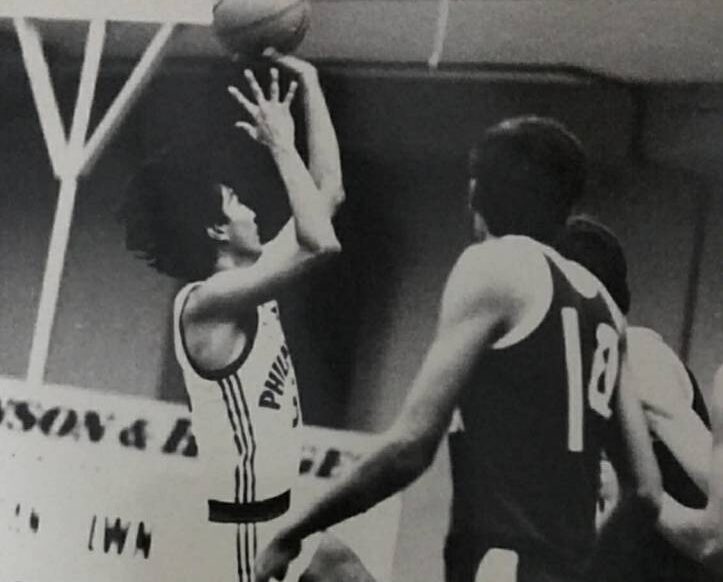
The countdown began at seven seconds.
Five days earlier, there was a more muted countdown—several players, stuck in their hotel rooms in Malaysia, knocked on the doors of other players as they counted the seconds before 1985 gave way to the New Year.
“It was a simple celebration,” Allan Caidic recalled.
“There was dinner, then some of us opened a bottle of champagne,” Caidic, generally acknowledged as the greatest shooter the Philippines has ever seen, said.
The countdown at Kuala Lumpur’s Stadium Negara, however, was more electric.
Wang Libin, China’s 6-foot-8 big man with a smooth touch, buried a three-pointer that pegged the final count.
“There wasn’t much tension toward the end of the game,” Caidic said. “We had a good lead and all we did at the end was make sure we didn’t let it slip away.”
“Kontrolado,” Yves Dignadice chimed in.
“But I remember, we were inbounding the ball, someone got it and then as the seconds were ticking, someone threw the ball in the air,” Caidic said.
If you catch the grainy replay of that championship game, you’d hear commentators identify the player who dribbled away the final seconds and heaved the ball in the air as Hector Calma.
When the buzzer ended, Caidic said, the Philippines was once again king of Asia.
Dignadice, listening to his teammate recall the final moments of the 1985 ABC Championship, a tournament that is now known as the Fiba Asia Cup, smiled widely—the lines on his 61-year-old face unable to hide the boyish charm that made basketball fans swoon in the 80s and 90s—and then rubbed his arms.
“Grabe,” he said, pointing to goosebumps.
It’s still a big thing
Forty years later, the significance of the tournament still resonates for the players who made it possible.
“It’s hard to describe the pride,” Dignadice, the team’s defense and rebounds whiz, said. “One thing I know, everything that happened to us there, everything we worked for, all the days we were together in a dorm or hotel, that turned us into more than teammates. We became brothers.”
They also became heroes.
The Philippines, bankrolled by Northern Cement Corporation (NCC), went to Kuala Lumpur with one mission: to regain the Asian title China had hoarded for more than a decade.
They succeeded emphatically. Three-fourths of the way in the second half of the championship game, the Philippines, with Caidic and the late legend Samboy Lim leading the scoring charge, erected a 23-point lead.
But even as the buzzer sounded, there was unbridled ecstasy over at the Philippines’ side of the arena.
“Someone carried coach Ron (the late national coach Ron Jacobs), someone lifted boss Danding (the late Ambassador Eduardo Cojuangco, then the basketball patron) and we were just celebrating,” Caidic said.
The Philippines retook the Asian title for the first time since 1973. Two years later, the Philippine Basketball Association (PBA) was formed and the country’s finest players turned pro, becoming ineligible for international play until the 1990s, when Fiba adopted the open basketball policy.
Today’s version of the men’s national team, Gilas Pilipinas, started out with a blueprint similar to that one of NCC. Under Serbian coach Rajko Toroman, Gilas pooled together the finest amateurs of the country and spiked that roster with a naturalized player in NBA center Marcus Douthit.
Since then, Gilas has undergone program facelifts, with each iteration seemingly coming with every coaching change. Chot Reyes, Tab Baldwin, Yeng Guiao. All esteemed coaches and all of them having handled the reins of the national program.
Today, that program is under Tim Cone.
There have been many hits and misses, all of which the Inquirer chronicled. The return to the World Cup. The infamous brawl. The Asiad was where Gilas began shooting at the opponent’s goal. Wins over China and rival South Korea.
In 2023, Cone achieved what was once thought improbable. The country reclaimed the Asian Games throne for the first time in six decades.
Team for the ages
Of all the victories, however, the one carved 40 years ago remains peerless.
Technically speaking, the championship game was played on Jan. 6, 1986, due to the tournament’s schedule. Because it was a Southeast Asian Games year and with Malaysia as host, there was no earlier schedule to hold the tournament.
But that team will always remember 1985 as a special year and the ABC-winning team as the 1985 squad. It competed in the World Interclub basketball tournament early that year, beating teams like Uruguay and Brazil, which were top-ranked squads then. They lost by a mere seven points to an American squad bannered by Hall-of-Famer David Robinson, Chuck Person and Dell Curry, the dad of NBA guards Steph and Seth Curry.
“By then, we were confident. If we could keep pace with the Americans, we knew we could compete against China,” Dignadice said.
“We were building toward the end of the year. Even when we competed in the SEA Games, the goal was focused on the ABC championship. We wanted to get our crown back from China,” said Caidic.
That team also featured naturalized players Dennis Still and Jeff Moore and the likes of Hector Calma, Franz Pumaren, and Tonichi Yturri—all of whom would have fruitful years with San Miguel Beer in the PBA, along with Lim, Dignadice and, eventually, Caidic.
But those championships won in the PBA pale in comparison to the victories they notched internationally.
“Very different,” Dignadice emphasized.
“When you win a championship abroad, and the national anthem begins to play…” Dignadice, who is based abroad, said, pausing to again rub his arms and point out the goosebumps.
The 6-foot-4 forward’s daughter, Sophia, was part of the gold-winning Gilas women’s team for the 33rd Southeast Asian Games in Thailand and got to share in the same old patriotic pride.
“During our time, just being able to represent the country was a big thing. It mattered so much to us to be able to put on the Philippine jersey,” Caidic said.
“One thing that went for us,” Caidic added, “was that we knew the PBA would always be there. And that time, it meant a lot to your stature as a player if you played before for the national team.”
“That’s why all of us, once you are done with college, your next goal is always the national team.”
There’s an interesting side note to their achievement. Forty years later, no other Philippine team has matched their feat yet. While Gilas Pilipinas has reclaimed the Asiad throne, no other Philippine team has won the Fiba Asia Cup.
Can it be repeated?
And with Fiba merging Oceania into the Asian zone, reeling in powerhouse teams like Australia and New Zealand, it might take a while for a team to match that feat. And even then, it is likely that one aspect of their feat will never be matched: Because basketball is in the Open era, there is little chance that we will ever see an all-amateur Filipino squad win that Fiba Asia title.
“There’s a certain pride knowing that,” Caidic said. “But it’s not the kind of pride we want to have forever. Of course, I still dream that the Philippines will one day become Fiba Asia champion (again).”
“Especially for me, because I have a double drought that’s both 40 years old that I want to see ending,” Caidic said, before adding, with a chuckle: “Aside from that NCC team in 1985, I was also part of the last UE (University of the East) team that won a UAAP championship. That was also 40 years ago.”
It seems a tough goal, though, dominating the Fiba Asia the way the old NCC squad did.
But never tell that to the two players.
“It can be done,” Dignadice said.
And neither of them seems to think it will take another 40 years for the country to do so.