




This fruitcake is for everybody

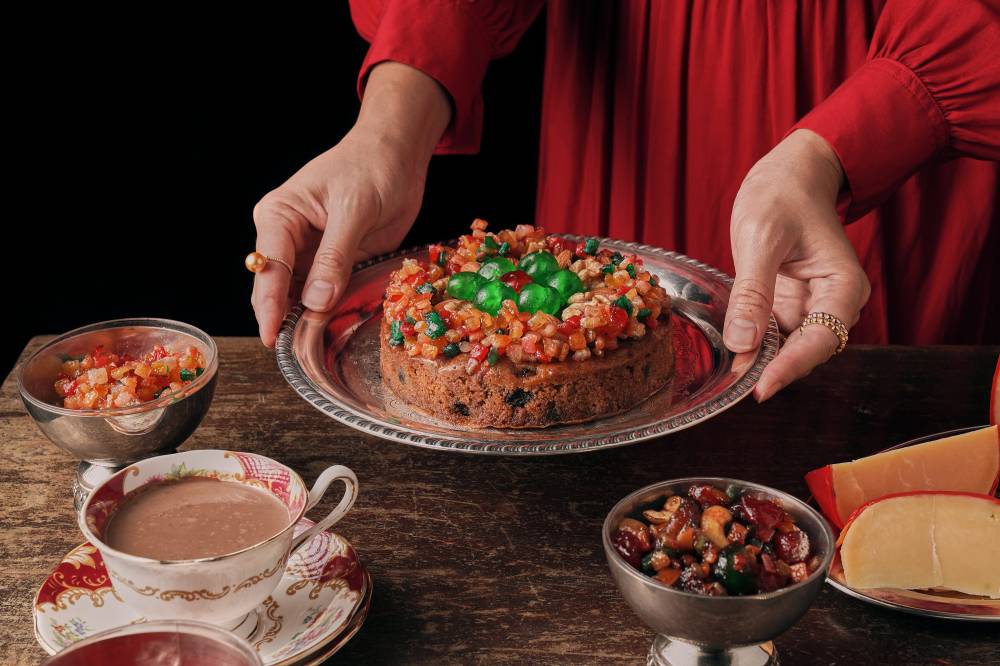
I have two core memories of fruitcake. First is the Eraserheads song of the same name, whose “Take a bite, it’s alright” line lived (or still lives?) in my head rent-free, as one of the peak Filipino Christmas song choices in the ’90s alongside Jose Mari Chan’s iconic hit “Christmas in Our Hearts.”
The other, less fruity memory is the sight of that lonely brick of a cake that was neither touched nor tasted on the night of Noche Buena. I was feeling sorry—not just for the holiday loaf studded with nuts and red and green “fruits,” but also for whoever brought it to the table (though I had a change of heart immediately after my first bite).
I’ve shunned fruitcakes ever since, but talking to Carmela Agosta of Casa San Luis Pastries and ogling at their dazzling fruitcakes might make me reconsider my stance.
“I hate to say it, but there are a lot of fruitcakes on the market that don’t taste good. Either there’s too much alcohol that it’s similar to a rum cake or [there’s] not enough fruit and nuts or too much spices,” says Agosta of fruitcake’s polarizing reputation.
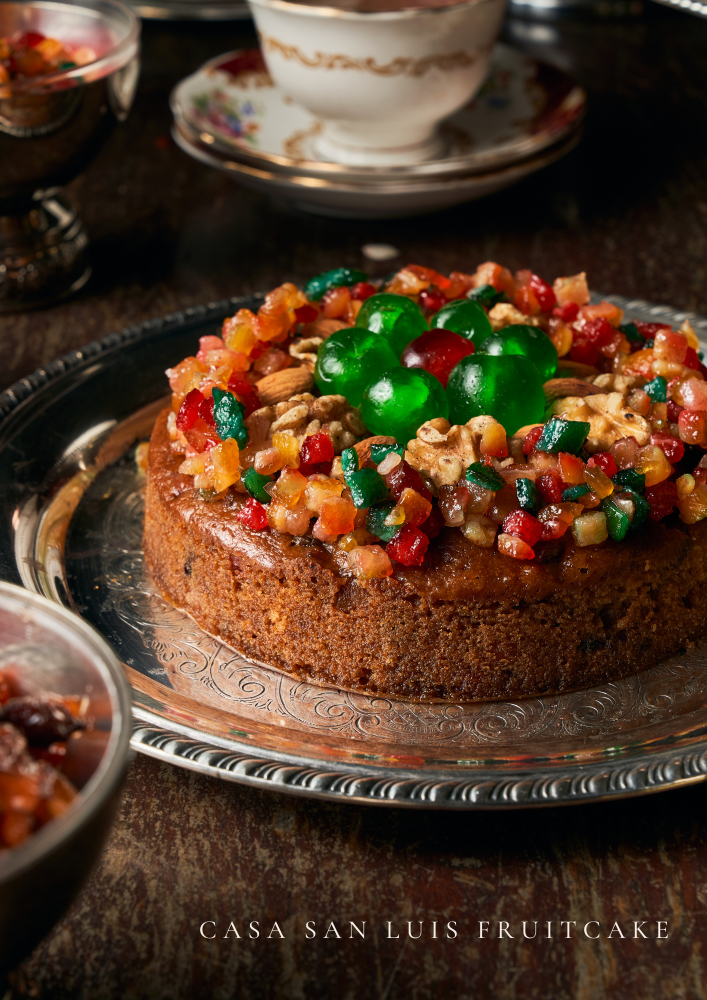
“It’s really tricky to get the perfect balance of flavor and texture,” she adds. Which makes sense as to why the cake becomes a pervasive Christmas parody. However, “a fruitcake should be rich, it should taste like dried fruit and spices and alcohol. It should have a moist texture—it’s not supposed to be dry and crusty,” says Virginia Glass in a 2018 interview—qualities that Agosta’s fruitcake recipe also possesses.
So if there’s a fruitcake that might just see its big comeback on your table, Agosta’s beautiful heirloom recipe is a definite contender. Admittedly obsessive about process, Casa San Luis’ fruitcake follows a strict protocol. “Everything is weighed—fruits, nuts, batter—so proportions don’t change. Fruits soak for a set time, baking times and temperatures are logged, and aging follows a specific rhythm.”
But more than the technical precision in each cake, the meaning carries heft, too. “Every time I bake it, it feels like inviting my lola and my mom back into the kitchen with me.”
Here, we talk to the Casa San Luis Pastries entrepreneur about the enduring appeal of homemade fruitcake.
What inspired you to carry on your lola’s legacy and share it with others?
At first, it was simply fear of losing the recipe—and the memories attached to it. Every time I baked it, it felt like inviting my lola and my mom back into the kitchen with me. Then customers began sharing their own stories: how our fruitcake reminded them of a grandparent or became their own family tradition.
That’s when I understood that this wasn’t just our family heirloom; it could bridge generations and households. Continuing the legacy through Casa San Luis felt like the natural next step.
Can you share about your first memory of eating your lola’s fruitcake?
My strongest memory of my lola’s fruitcake is not eating it, but more of what it felt and what it represented to see the cake appear on the table close to December. More than one moment, what stayed with me was the ritual. The fruitcake only appeared once a year, and when it did, it was the unofficial signal that Christmas had truly begun. That’s the feeling I try to recreate for people now.
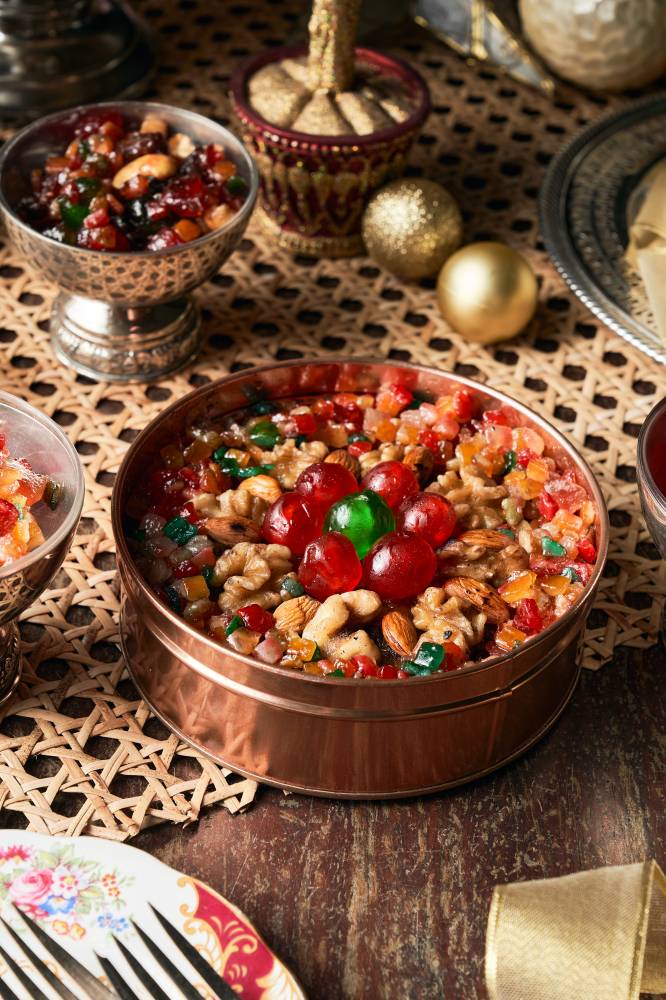
There’s a secret blend of fruits and nuts that goes in a fruitcake. Any chance you can hint at what some of the key ingredients are?
The secret to a really good fruitcake is time. The actual cake takes 48 hours to make. The fruits and nuts are soaked a day before with all the flavors, and then we bake the cake. The cakes are then matured for a year to achieve the perfect flavor and gooey, candied texture. For the first few months of the maturing process, we brush the cakes with brandy to make sure the cakes get the right amount of alcohol.
And why use brandy instead of, say, rum or whiskey?
The flavor of brandy is round and fruity. Rum or whiskey can dominate; brandy quietly lifts the fruit and helps the cake age gracefully. It gives that gentle warmth at the end of each bite, especially when eaten chilled, which is how we love to serve it.
What’s the biggest misconception people have about fruitcake?
That it’s the gift that gets re-gifted every Christmas because of the reputation of being too dry, too fruity, too sweet.

Our experience is the opposite. A good fruitcake is moist, almost fudgy, and keeps developing flavor as it ages. We often get messages from younger customers saying, “I thought I hated fruitcake, but now I get it.” Once they taste a version made with care, their entire idea of the dessert shifts.
What’s the most challenging part about running a home food business?
Finding balance between motherhood and work. With two daughters, I have to juggle the kids’ schedules and find time to work in between naps, school pick-ups, and activities. Most of my work is done at night when the house is quiet.
Another hard part is that our house becomes a literal packaging central; our dining table is at the same time my office, used for meals, and my daughter’s homework table.
What are your thoughts on balancing tradition and innovation today?
I think tradition is the core of all innovations; without an actual idea that was passed down for generations, there would be no stepping stone to innovation. For my lola’s fruitcake, it’s the tradition of baking it and serving it close to Christmas.
Do you think it’s possible to innovate while preserving tradition?
By baking the different limited-editions like the coffee pecan, it’s creating a new version of the cake while still using the base of the original fruitcake with a few additional flavors. Collaborating with Pinkerton Ice Cream allowed us to introduce fruitcake in another form and introduce it to a new market.
It’s innovations like these that keep the tradition of Christmas fruitcakes alive.