






Pax Silica: What’s in it for PH

In what is widely seen as a bid to reduce its reliance on manufacturing and technology inputs from potentially hostile governments, the United States announced plans to establish a 1,619-hectare (4,000-acre) industrial hub in the Philippines “to secure inputs vital to American and global supply chains.”
To be located within New Clark City in Tarlac, the “historic” Economic Security Zone (ESZ) has been described by US Undersecretary of State for Economic Affairs Jacob Helberg as a “new model” for “AI-native investment acceleration hubs” being developed across allied nations under the US-led Pax Silica initiative.
“The Economic Security Zone is part of a broader strategy to surge production for inputs vital to US supply chains,” the statement read, adding that “the Zone can leverage the Philippines’ geographic centrality in the Indo-Pacific, its young and technically skilled workforce, and its deepening alliance with the United States.”
The Marcos administration was only too eager to join Pax Silica, described as the US’ flagship AI and supply chain security alliance with several countries. Finance Secretary Frederick Go said that by joining, the Philippines is ensuring that its “mineral resources and strategic location are not simply supporting global industries from the margins, but are actively harnessed to build the industries of the future.”
Main attraction
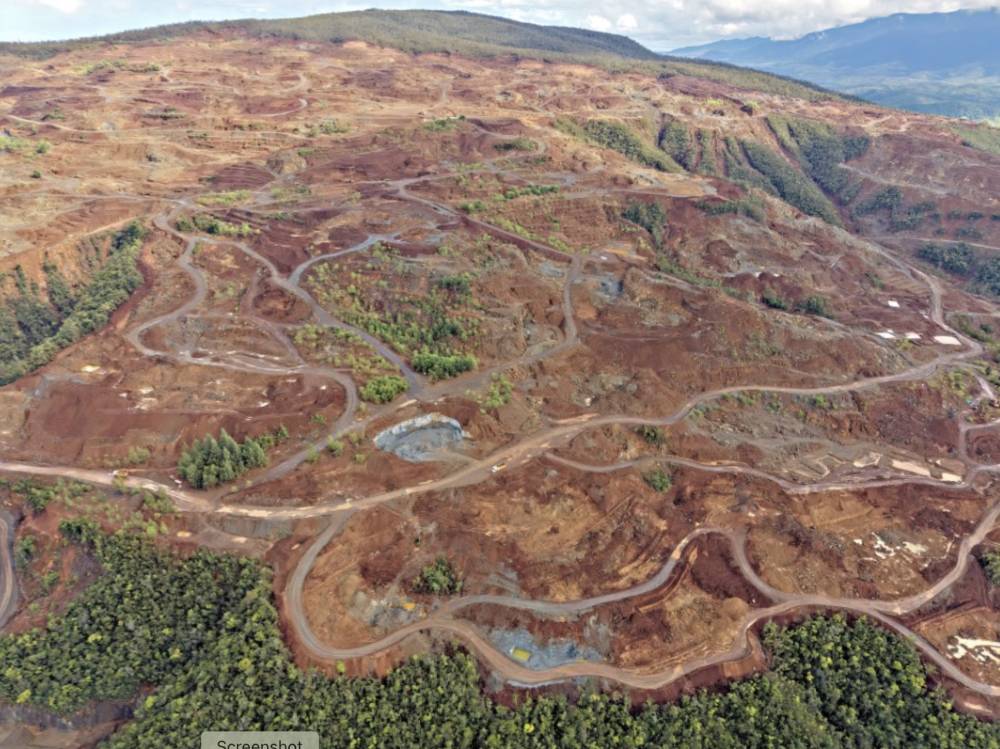
A closer look at the US statement reveals, however, what is likely the main attraction of the Philippines to the Trump administration: its “significant reserves” of nickel, copper, chromite, and cobalt that are deemed “increasingly vital” to global supply chains including semiconductors, especially as the US seeks to ensure its dominance in the production of chips packed with the highest level of computing power used in artificial intelligence applications.
“If the 20th century ran on oil and steel, the 21st century runs on compute and the minerals that feed it,” Helberg said earlier.
That the Philippines possesses the critical minerals that the US sorely needs should therefore give the Marcos administration the leverage it needs to ensure that the ESZ–within the broader Luzon Economic Corridor on the western side of the Philippines–will indeed become a thriving center for job-generating manufacturing facilities and at least cost to the country.
As to how exactly the carved-out ESZ will look like is still to be determined as the pronouncements of the US and Philippine governments have merely provided the broad outline of the agreement with hardly any of the needed details to determine if the deal indeed warrants celebration.
Second-class citizens
Questions that have to be clearly answered, for example, include exactly what kind of manufacturing facilities will be established in the corridor? Will they all be American or can other foreign investors likewise establish a foothold in the zone that should be firmly established as under the sole and ultimate control of the Philippines?
Even on the level of the declaration of principles, there are nagging concerns that should raise eyebrows, not least of which is the notion of “joint governance.”
The legal and operating conditions that will govern the zone should be explicitly spelled out as these may run counter to constitutional limitations on ownership of land and the government’s own rules on foreign investments.
Indeed, the ESZ must in no way, shape or form take on the same governance structure as the former military bases in Subic and Clark where the US was given ownership while Filipinos were deemed second-class citizens in their own land.
Likewise problematic is the declaration that the ESZ will call for “enhanced access” to the country’s “outstanding workforce and talent, mineral endowments, energy resources and strategic position at the crossroads of Indo-Pacific trade.”

‘Massive sellout’
Because of these red flags, the Kilusang Magbubukid ng Pilipinas has characterized the project as a “massive sellout” of the country’s land, minerals, and sovereignty. It also raised fears that the US-initiated project would “intensify” land grabbing, resource extraction, and militarization in the rural areas.
The Makabayan Bloc in the House shared the same valid concerns and vehemently opposed the plan to take part in the Pax Silica, branding the project as a mere cover to use the Philippines for the US war machine and reduce US dependence on China-linked supply chain.
The potential benefits of such a grand project cannot be denied, as the Philippines badly needs investments and the promised influx of investments and technology could indeed align with the country’s security and economic interests.
However, the government should make sure the final structure of agreements covering the ESZ will not be one where the Filipino people will pay too steep a price and where the agenda of the US, which has not been coy about its intent to ward off the growing presence of China, will not be advanced at the expense of the Philippines.
******
Get real-time news updates: inqnews.net/inqviber