








Quezon City: The middle ground that works


When people mention “prestigious addresses” in Metro Manila, Makati and Bonifacio Global City are top of mind. But in earlier decades, prestige was more distributed, tied to established communities and land.
Quezon City embodied this, housing significant residential areas long before new centers emerged. Though development trends have changed, that legacy still matters today.
But this was not always the case.

Significant residential area
In earlier decades, before the rise of masterplanned business districts, prestige was more distributed, often tied to land, space, and the stability of established communities.
In many ways, Quezon City carried that identity, housing some of the metro’s most significant residential areas long before the current centers of gravity emerged. And that condition still matters today.
Quezon City currently has one of the largest residential inventories in Metro Manila. With it comes something increasingly rare: breathing room. Streets are not always compressed into tight grids, and neighborhoods retain a sense of scale that supports daily living. It is a city that accommodates families, growing households, and individuals who want a clearer separation between work and rest.
It feels less engineered for speed and more aligned with how people live.
This is reinforced by its relationship with Manila.
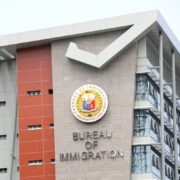
In many areas, the boundary between the two cities is barely perceptible. Movement between them is continuous. For those dealing with national government processes, this proximity becomes part of routine, where access and familiarity shape the experience more than distance alone.

Center of urban life
Quezon City has also long been a center of urban life.
Some of the country’s early large scale retail developments took shape here, influencing how Filipinos experienced shopping and leisure before lifestyle centers became the norm.
At the same time, Cubao emerged as a major hub for events and entertainment, anchored by the Araneta Coliseum. For decades, it hosted the country’s biggest gatherings–concerts, sports, and national events–positioning the city as a cultural anchor.
This history extends to its residential character. Quezon City remains home to established and exclusive enclaves.
Districts like New Manila introduced a form of suburban living defined by space, greenery, and privacy–conditions that are difficult to reproduce today. Many of these areas continue to house prominent families, public figures, and long-standing communities.


Access to open spaces
At the same time, the city balances density with access to open space. Major green areas such as Quezon Memorial Circle, Ninoy Aquino Parks and Wildlife Center, and the watershed around La Mesa Dam remain accessible and relevant to everyday life.
Even institutions contribute to this. The campus of the University of the Philippines Diliman functions much like a public park, where its academic oval and open spaces are shared by students, residents, and visitors. Surrounding it is a concentration of some of the country’s most established schools like Ateneo de Manila University and Miriam College–forming an environment that supports long-term residential life.

A complete, thriving middle ground
These layers–residential, institutional, commercial, and cultural–position Quezon City as a middle ground. It’s a complete environment that allows different aspects of city life to coexist.
It carries the energy of a large city while maintaining a pace that supports everyday routines. It offers access to work, education, and services, while still allowing space for community life.
Quezon City may not always be the most visible address of choice today.
However, its unique blend of space, accessibility, and established communities makes it an effective and enduring option for urban living. It is the kind of place where multiple aspects of city life–residential, cultural, and institutional–continue to coexist effectively, making Quezon City a proven environment that works overtime.
The author is a LEED Fellow, ASEAN Architect, UAP Fellow, and educator with over 25 years of professional practice in architecture and sustainability.


