






Wonder on cue: The Singapore International Festival of Arts

There are some things you can’t translate, but only experience. The Singapore International Festival of Arts (SIFA) 2026, which I attended over its opening weekend last May 15, is one of them. You can describe the shows, staging, and all their conceptual layers. But the sense of wonder is harder to pin down.
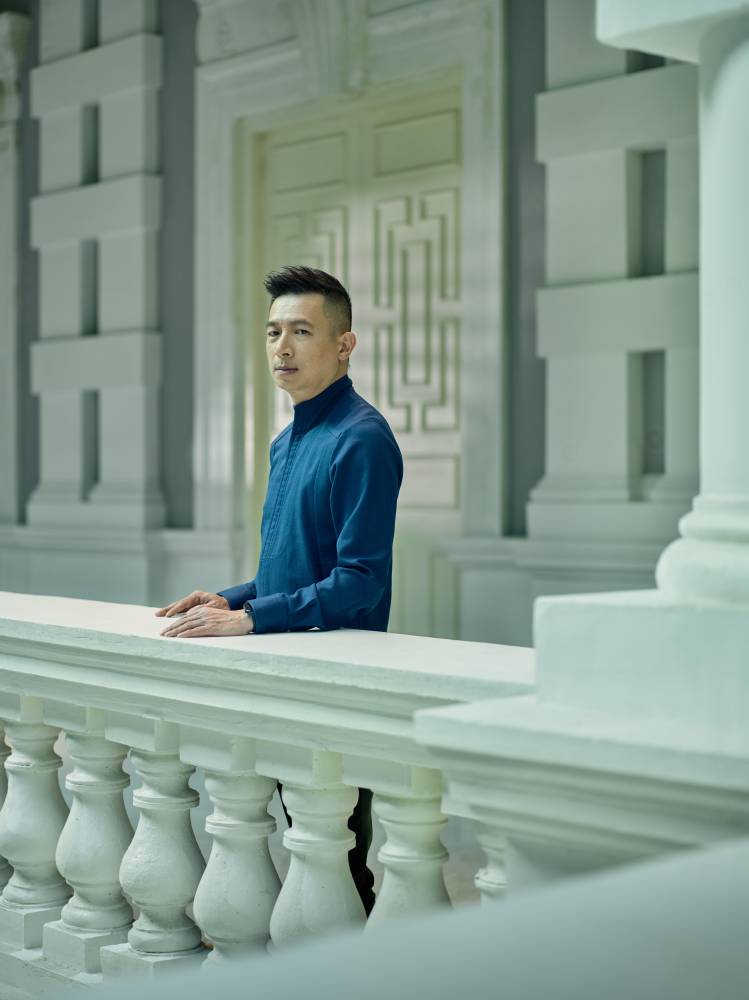
This year marked the start of festival director Chong Tze Chien’s tenure. Approaching the festival’s 50th year in 2027, he reflects, “If I imagine the festival turning 50, it would ask: ‘What have I done well? What have I not done enough of? And how do I look back in order to move forward?’”
“This year is very much informed by history and imagination,” he continues. “It’s about looking backward to shape what comes next… I wanted to bring back that feeling when the festival was the only one in town, when global works came in, and local artists felt they could dream.”
While looking at the past could slip into ennui, SIFA 2026 felt anything but heavy. It was refreshingly honest and fun, with performances that were largely accessible and open to the public.
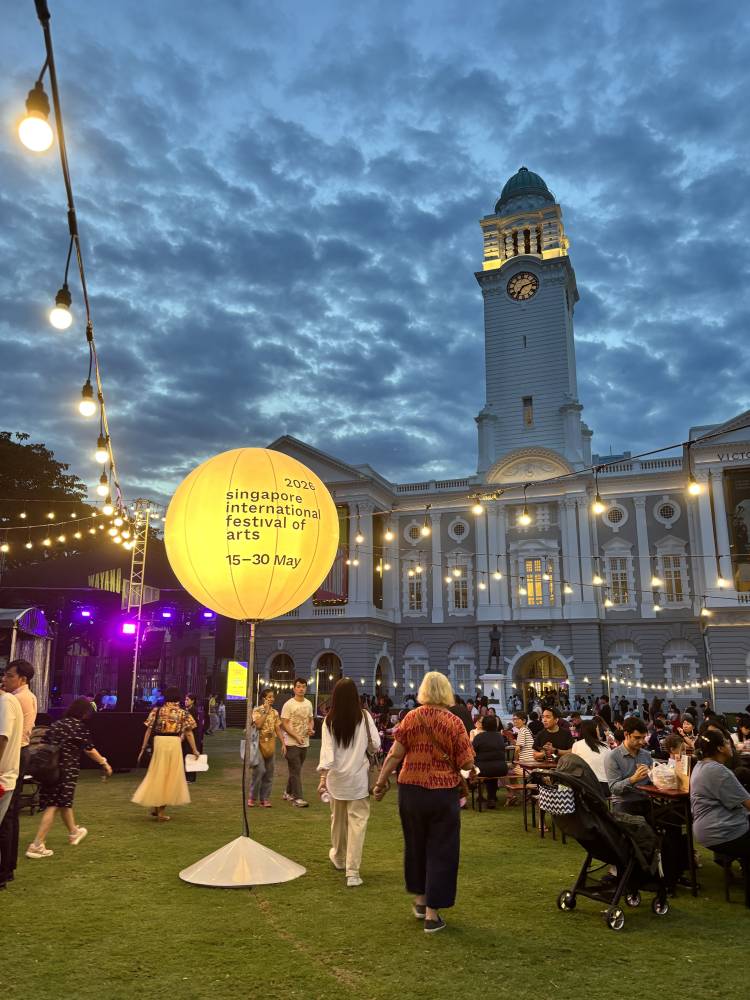
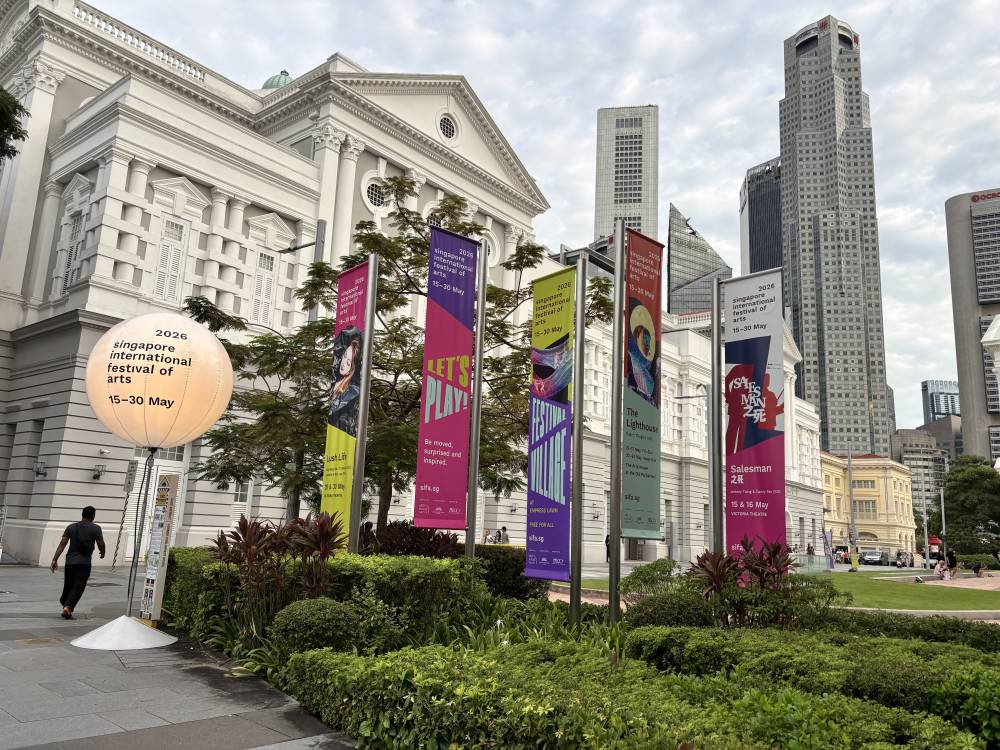
This openness first comes through at the Festival Village at the Empress Lawn. Before you even sit down for a show, the festival sounds spill into the street with students in a parade and children running across the grass.
Forced listening and real conversations
Chong argues that “Right now, people are no longer having conversations. They’re just expressing opinions and wanting to be right… In the arts, it’s the opposite. You are forced to listen. Audiences sit, watch, listen, and after, they talk. That’s where real conversation begins.”
That idea of “forced listening” was a surprise in Singapore, a country often perceived as stringent, especially given its history and strict rules. And yet, the performers were fearlessly vocal, with audiences unfailingly engaged.
My favorite of the weekend was “Salesman 之死,” which captured this subtle resistance through sideways statements. A multilingual reimagining of Arthur Miller’s very American “Death of a Salesman,” it reimagined the actual historical staging at the Beijing People’s Art Theatre in 1983, with actors navigating culture after Mao’s Red China. Smart, funny, and pointedly self-aware, director Danny Yeo called it a “love letter to theater.” And we felt that love in the way it played with real human history, emotional clarity in tow.
Elsewhere, the festival moved between the playful and the absurd, without ever losing its intelligence.
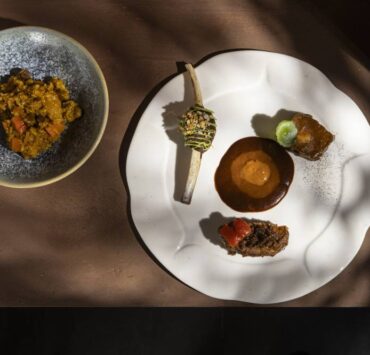
“Makan Culture” by Jo Tan transformed food into performance. “Makan,” which in Malay means “eat,” injected charming puppetry, some improv rap, and social commentary, probing race, class, and the blurred line between high and low art. It was interactive with a push and pull between audience and performer, and traditional Singaporean food you could eat, from iced gem biscuits to oolong tea.
Later that night, “Automata: Two Weddings & A Rapture” by Chong Lii & Hothouse tipped into chaos. With scathing narration, a young woman talked about two weddings she attended, while in front of her, workers repetitively performed the menial labor of a wedding caterer. I stood there clutching a beer, chortling at the often absurd, oddly relatable experiences as a wedding guest.
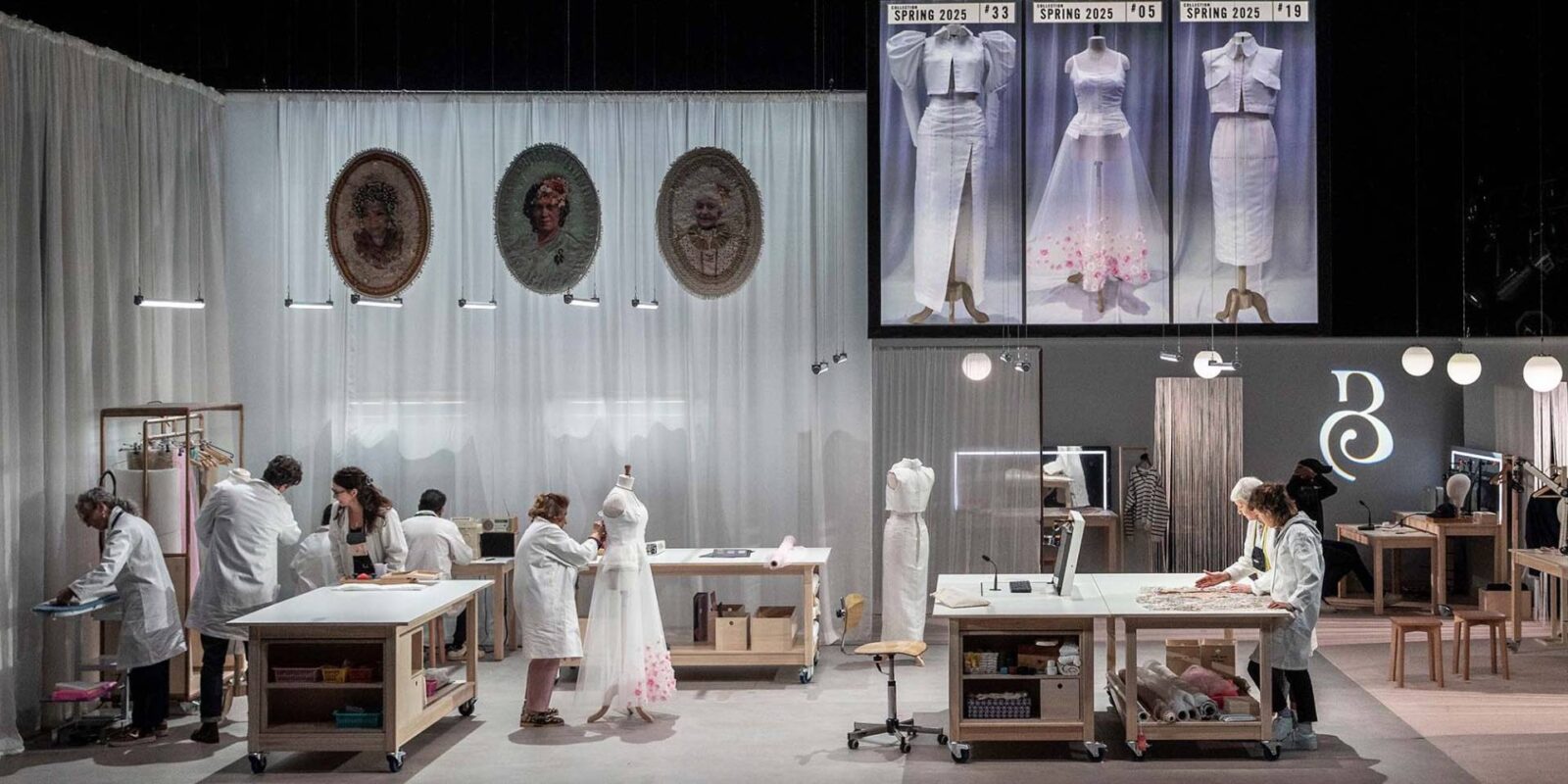
Meanwhile, “Lacrima” pulled in the opposite direction. Caroline Guiela Nguyen’s epic three-hour drama unfolded just like a slow French film. Opening with a suicide, the play was obsessively passionate and fixated on craft (as the French often are); the script moved across French, English, Tamil, and sign language. While the heavy themes weren’t easy to sit through, it stayed with you.
Beauty, communicated conceptually
Then there were the works that gave wonder without words.
At the Festival Village was the open performance, “Noli Timere,” where performers—suspended 25 feet in the air—defied gravity, somersaulting through spectral, multicolored nets.
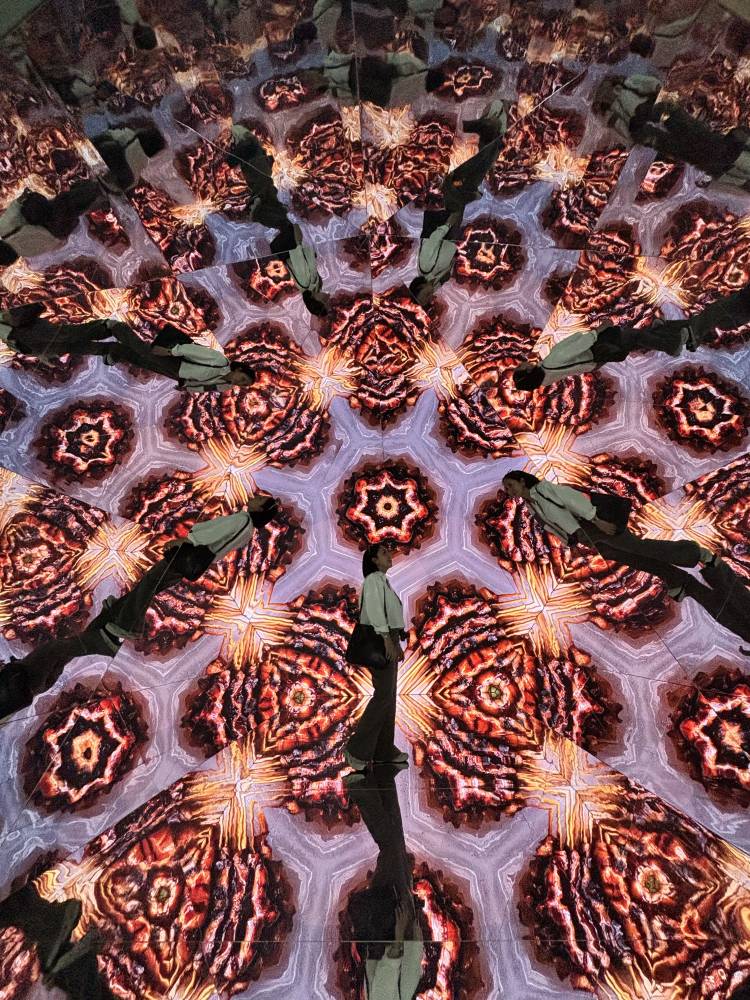
Off stage at “You Are (Not) What You Eat!” artist Yang Derong created a literally kaleidoscopic installation with an assemblage of plastic waste. Inviting audiences to see the “shiok” (the deliciousness) of Singapore’s food culture, combined with the “shock” of plastic waste, Derong clarifies, “I am not a crystal ball. I am putting this here on a buffet table… I don’t have a solution, but I can show you what it is, and how scary it is.”
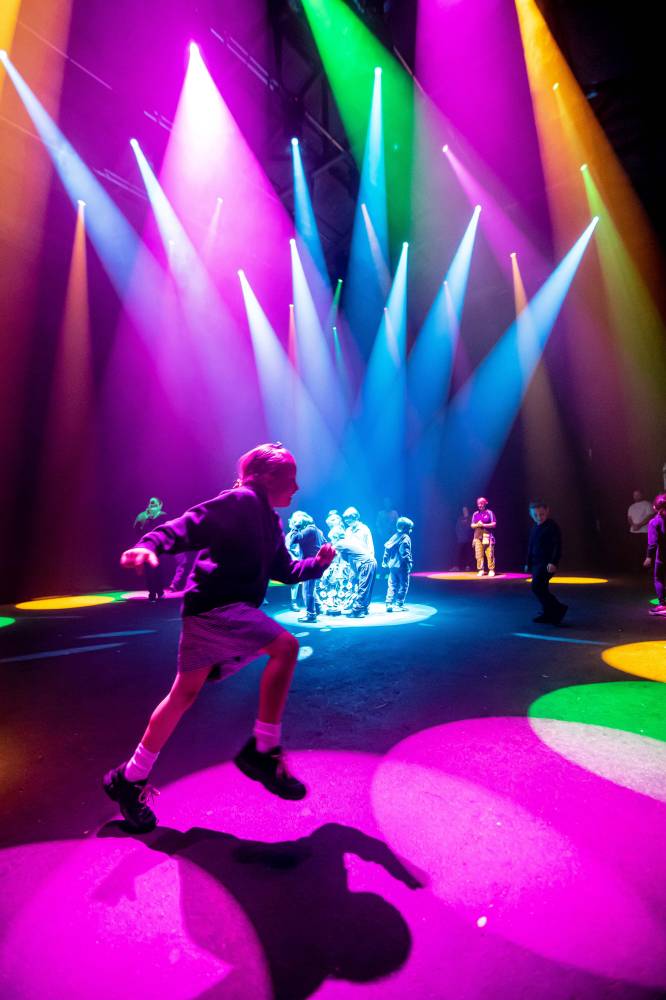
But it was “The Lighthouse,” a one-hour performance wholly without words, where a sense of childlike wonder reached its peak. The Australian Patch Theatre company transformed the Arts House at the Old Parliament, where Lee Kuan Yew and other esteemed ministers once met, into a wonderland.
I observed that we adults in the audience were at first hesitant to engage with the interactive lights, until the performances became more otherworldly, with lights and performers acting like friendly extraterrestrials. By the end of it, everyone was giddy, giggling, and uninhibitedly following the bright beams of light.
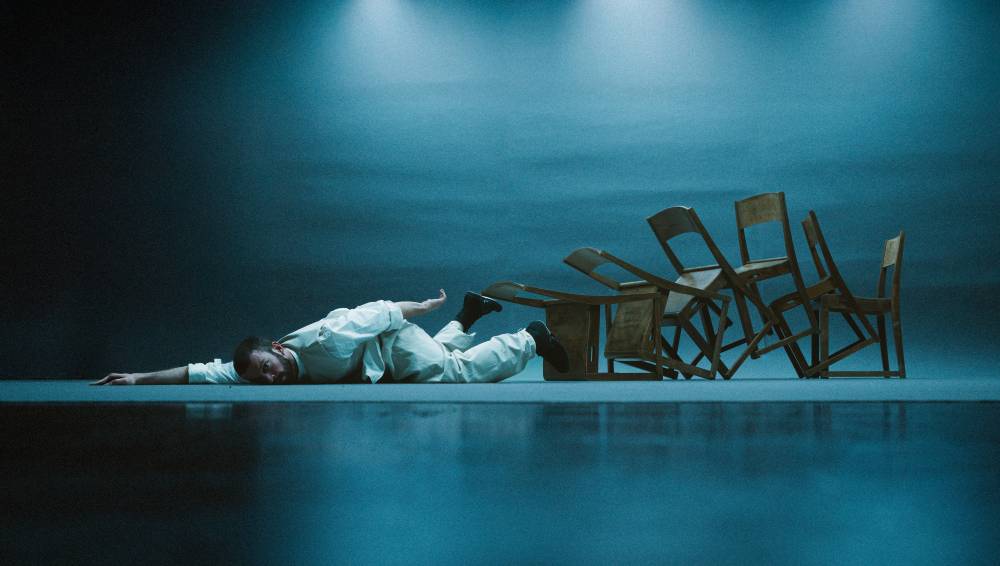
To end the opening weekend was “Tempo.” What can you do with three performers, a chair, and a single light? A lot of things, apparently. Embodying performance art’s discipline of the body, the performers floated and flitted across the stage between moments of illumination and darkness.
Simultaneously, they meditated on time itself and how it can stretch, fracture, and expand.
Theater that lingers
Inside the Arts House is the Cultural Medallion exhibit that makes clear Singapore’s ecosystem didn’t happen by accident. Singapore’s highest artistic honor comes with real support, with grants that can reach up to S$80,000 (roughly US$ 60,000). Such support allows artists to take risks and experiment, all the while engaging the community.
What SIFA demonstrates is that when you invest in the arts, these projects expand to third spaces for people to sit, listen, and bridge differences.
I first attended SIFA in 2023, and I found myself thinking about it long after I left. Three years later, it’s the same, if not a better experience. The performances linger long after the curtain falls, leaving you with a wider perspective and, more than anything, a renewed sense of wonder.
SIFA 2026 runs until May 30, 2026. Read more at https://sifa.sg/