
Finding order in Filipino cuisine’s complex history


I’ll be first to admit that when I tried Francis Lacson’s Italian-inspired tasting menu at Leo Sea House last year, it was a “hit or miss.” Sure, there were dishes that I absolutely loved. I can still vividly remember the velvety seafood-squash velouté that I had wanted a full serving of, as well as the handmade rotolo with seafood bolognese and gorgonzola.
But somehow, despite the noble effort, it was a little bit of a letdown.
So when I found myself in a car on the way to Marikina for close to two hours to sample his latest 10-course tasting menu at Digámo, I had reservations. However, this time around, he achieves something beautiful, meticulous, and inventive. A fully realized vision from start to finish that accomplishes the task of reintroducing himself, his beloved Marikina, and the Philippines’ food history to a wider audience.
A taste of culinary history
Lacson’s menu, called Playful Revolution, reflects on and connects with Filipino culinary history. At its best, he mines the archives and annals of Philippine history—from the precolonial period, Chinese and Malay trading era, and the arrival of the Spaniards to the American and Japanese occupations, all the way to the modern times—to set up a rewarding experience that finally flexes his creative muscles.
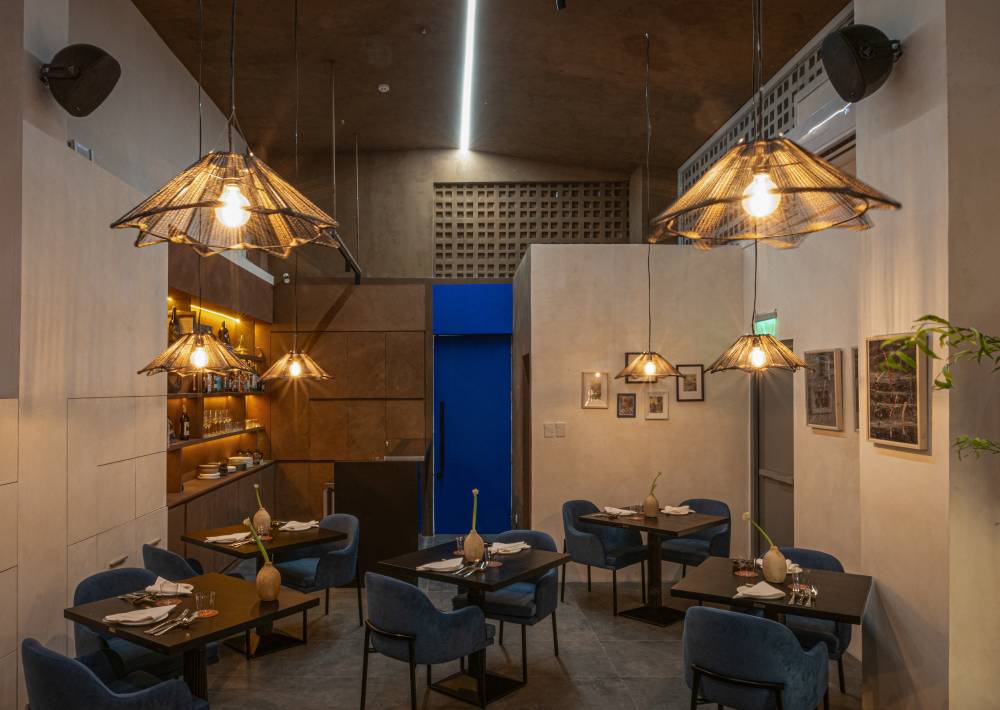
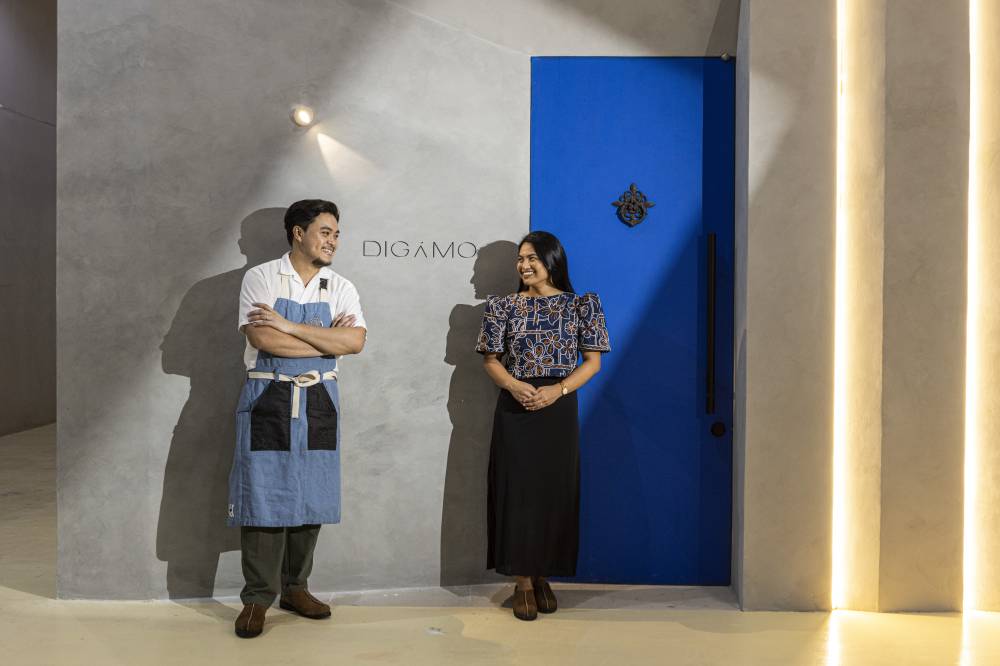
It all starts with a bright blue door—an Alice in Wonderland-like symbolism of transition from the real world into Lacson’s internal psyche. Here, he embodies what the translation of the Hiligaynon origins of the restaurant’s name—“to set things in order” or “to prepare with intention”—and tinkers with them at his own discretion.
For one, the menu isn’t historically chronological, but it is coherent in working through questions of culinary identity. And, of course, reclaiming it “through the palate,” explains Lacson.
“We believe the best way for us to understand our food is to understand our evolution, where we came from, and where we’re going.”
The story is in the details
Given Lacson’s background growing up in Mambusao, Capiz, cooking for local gatherings, navigating open oceans as a seafarer, and immersing in the scholarly side of food, Digámo captures the academic obsession this three-time recipient of the Doreen Gamboa Fernandez Food Writing Award seems to possess.
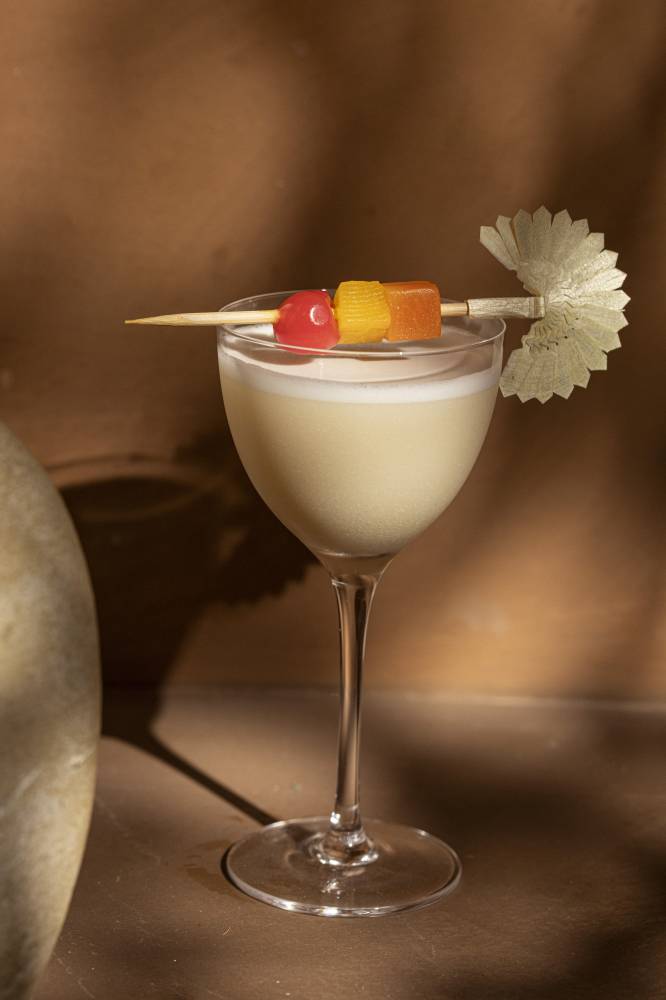
A sweeping look at the compact space explains a lot about Lacson’s point of view, as flashes of brilliant guest experience abound. Custom linen napkins from The Olive Tree, dining tables by Jed Yabut, a beverage program by Proudly Promdi’s Ken Alonso that includes pinakurat and pinakbet cocktails, a lingering scent from artisan perfumer Oscar Mejia III, and numerous little Filipino details gesture at the consistency of Lascon’s concept.
Elsewhere, the waitstaff function as moving storytellers themselves, donning inabel vests and sleek leather shoes crafted by Tatay Oly, a master shoemaker from Marikina, while telling the stories behind the dishes in a disciplined display of Filipino hospitality.
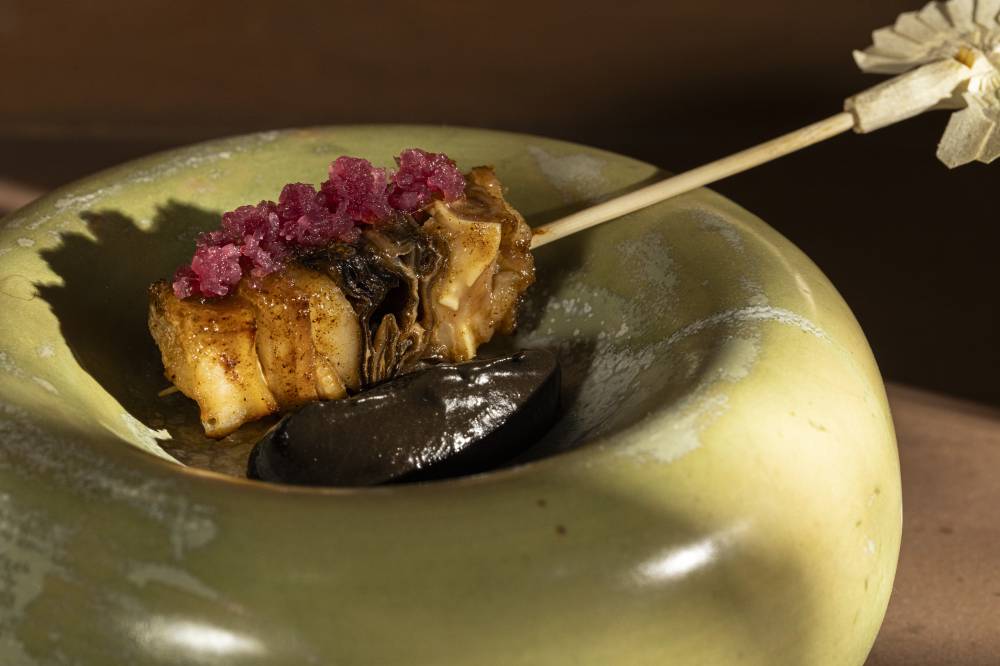
His fixation for Filipino culinary identity is also palpable in his ingredients, where he sources and how he respects seasonality, and why he bridges the past with the present, or what the thinking is when he weaves three types of edible “ears” on a skewer with a “sarsa” starter pack of menudo, kaldereta, and mechado.
And he does all this in a manner that is easygoing enough for customers to grasp the gravity of the concept without getting bogged down by Lacson’s ambitions for Digámo.
“It is a place for better and deeper conversations about Filipino food. It comes from the desire to honor where we come from while allowing our cuisine to move, question, and grow,” he says.
Setting the tone
Unlike his reverence for seafood at Leo Sea House or the authenticity of Italian plates in Francesco’s, the Digámo menu is quite gentle. Not frail or spineless, but resolute throughout. There are hardly any flavors that hit you in the face, but the poetic imagery he creates jolts you anyway.
On his kinilaw, Lacson crafts an eternal homage to a dish that has played a central role in pre-colonial cuisine. His take features tanigue slices—salt-cured and tossed in five-degree Celsius sukang sasa—draped atop a silky pili nut purée, which sits on oozing palapa oil and sili leaves essence. The result is a luxurious fusion of raw sweetness, acidity, and texture.
As the menu progresses, Lacson gives way to more tone-setting plates portraying the beauty and bounty of the country. Kalabasa plays with Bukidnon honey, rice flour, and coconut oil in the tamales course; Southern Tagalog’s talong kulawo is positioned as a luscious liquid dip for puto galapong served with a side of watermelon jam. But he also lets loose and has a little more fun with C3, his ode to the American fast food era and the iconic Jollibee chicken and spaghetti combo, complete with a strawberry version of Maria Orosa’s banana ketchup.

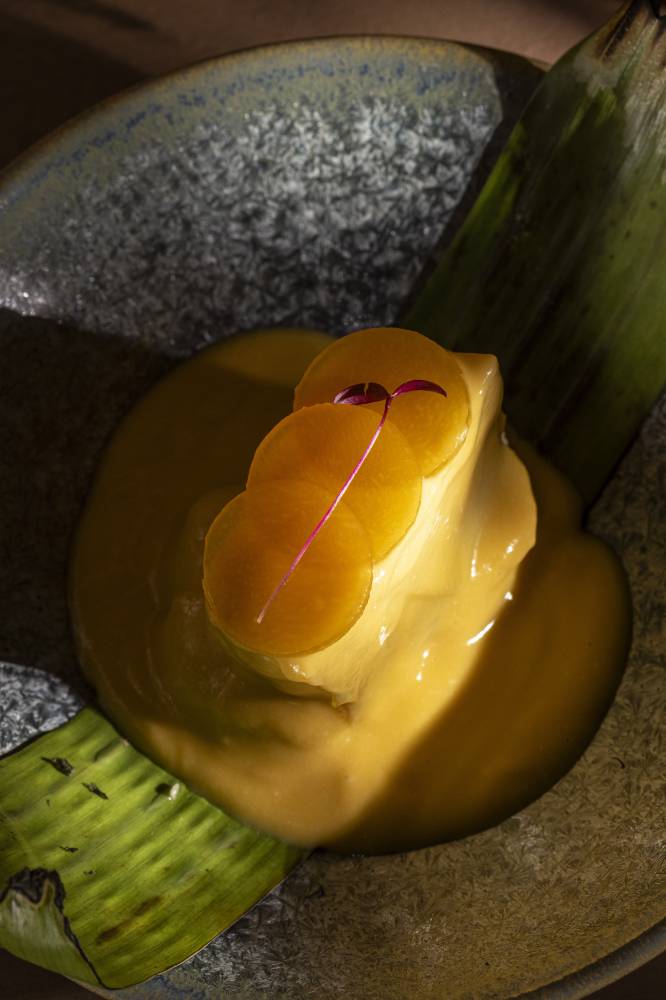
“Tonight, we highlight a creative spin applying the signature techniques of that famous fried chicken to soft-shell crab, paired with lumot (cuttlefish) a la plancha cut into ‘spaghetti’-shaped noodles and dressed with a rich taba ng talangka sauce and egg rice,” the server explains.
The menu isn’t flawless, though. Occasionally, his playfulness can get the better of him, resulting in courses, such as the Pancit Batil Patung, that get lost in the unnecessary flourishes.
The emotional connection
Ultimately, his second course and the subject of his essay that won second prize at the 2024 Doreen Gamboa Fernandez Food Writing Awards comes closest to owning his examination of Filipino food history.
Deeply personal, rich, and multilayered, Lacson’s linagpang (“grilled soup”)—using Iloilo’s dumaraga nga manok (free-range chicken) and sinalay (smoked shrimp) from Sapia, Capiz—is spectacular in its deceptive simplicity. The broth is simple by most measures, yet it has secrets to mull over: a gingery lemongrass foam, tangy libas leaves, and, at the bottom, a light “chicken taho” that’s heavy on the mild bird flavor.
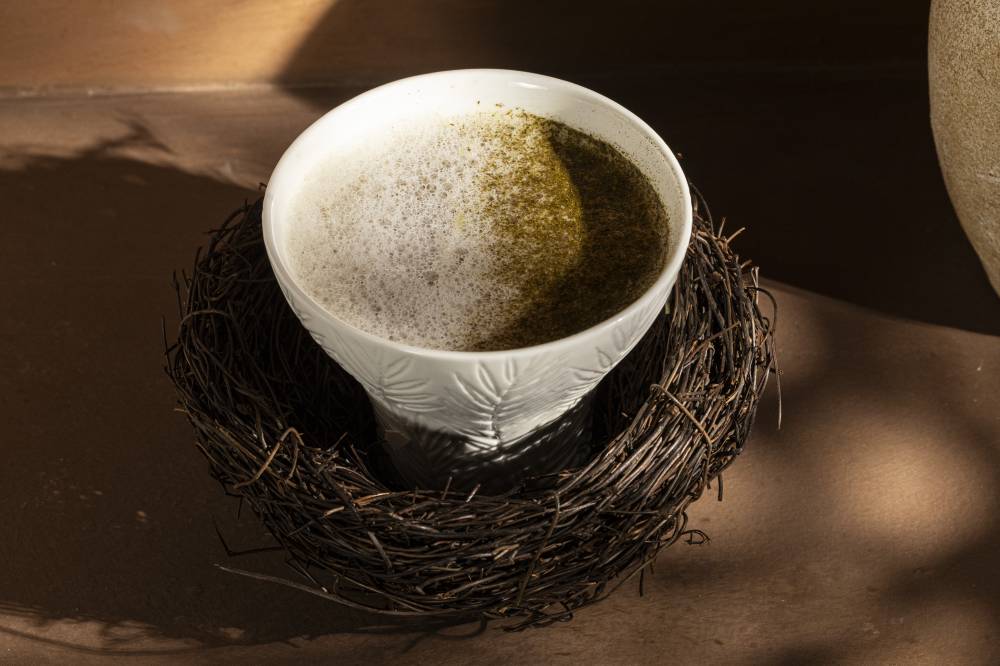
But the strongest element in Lacson’s linagpang isn’t the fine bone cup itself. It’s the kind of emotional connection he intentionally creates with customers at Digámo alongside the incidental allusions he recreates from his time spent with his grandfather Tay Palok, savoring the “heartiest grilled soup of my childhood.”
It took some time for Lacson to simmer, but he finally reached a boiling point here, drawing out the intricacies of his experiences to shake up Manila’s fine dining order with a point of view that’s calm and sharply focused.
Digámo is located at GCN Building, 240 Narra Street, Marikina Heights, Marikina City. Visit digamo.ph for more information