








PH eagle ‘Lakpue’ soars again in Leyte forests


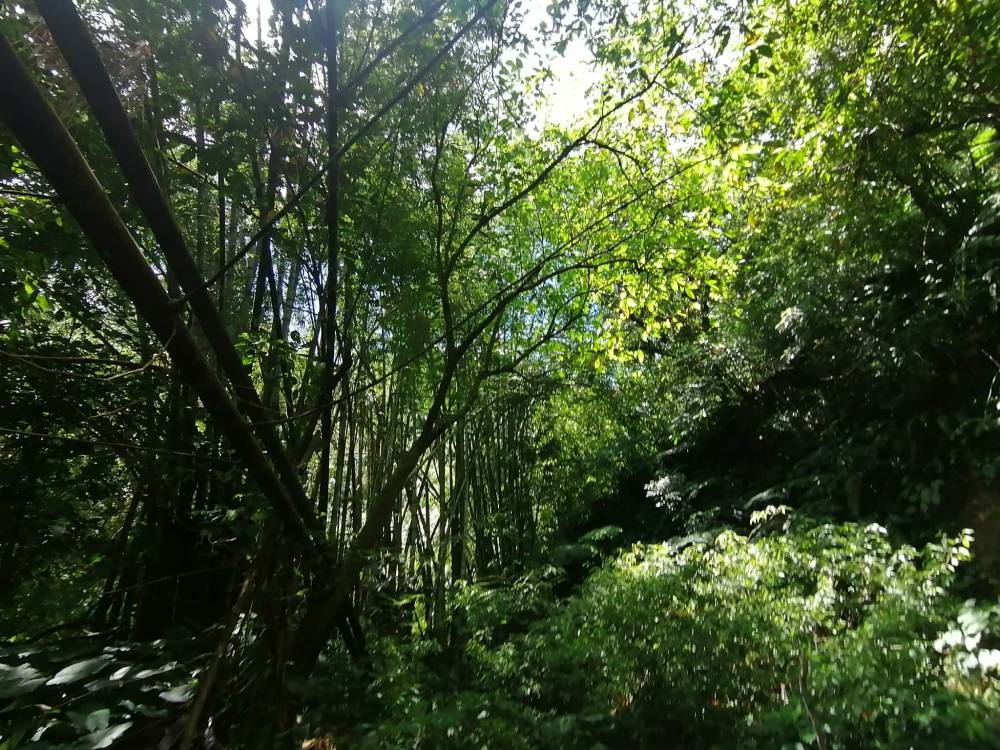
MAHAGNAO, LEYTE—On the morning of May 17, “Lakpue,” a 23-year-old male Philippine eagle (Pithecophaga jefferyi), was observed inside the forest near the Pangalaw-an River here at about 288.9 meters above sea level, perched on a “hagimit” tree for roughly three hours as it prepared to hunt.
Lakpue, adopted by Lakpue Drug Inc., is the fifth eagle released in Southern Leyte under the Department of Environment and Natural Resources’ (DENR) reintroduction program for the national bird, following its presumed extinction in the province after Supertyphoon “Yolanda” (international name: Haiyan) in 2013.
The eagle was taken from its nest in July 2003 at Mt. Busa in Maitum, Sarangani province. It was later brought under the care of the Philippine Eagle Foundation (PEF), which leads the repopulation effort.
Lakpue arrived in Leyte in March 2025 with two other eagles and was released on Sept. 30, 2025, in Barangay Kagbana, Burauen, after six months of acclimatization.
Now eight months into life in the wild, Lakpue has been actively hunting within the Marabong watershed—its preferred hunting ground—and frequently roams the Anonang-Lobi mountain range.
Positive sign
The development is seen as a positive sign for the reintroduction program, which aims to translocate up to 16 raptors into Leyte’s forests.
Equipped with GPS and a radio transmitter, Lakpue is closely monitored by PEF biologists and field technicians. According to PEF director for operations Dr. Jayson Ibañez, the eagle’s current activity range spans about 613 hectares.
“This range is slowly expanding as he explores new places. For now, he appears to be spending much of his time following the riverine forests along the Marabong River in Mahagnao,” Ibañez said.
He added that Lakpue’s presence in the Marabong watershed and along tributaries such as the Pangalaw-an River indicates healthy adaptation.
“This kind of forested river corridor is typical habitat for a free-living Philippine eagle. The fact that he is not staying close to houses or roads and is instead using the forest interior tells us that he is behaving like a wild eagle,” he said.
Ibañez also noted that Lakpue’s calm behavior during the sighting—preening and gliding—suggests stability in its new environment.
“His behavior shows general health and confidence. These include regular preening, resting calmly, standing on one leg while resting or sleeping, hiding inside thick foliage, walking along riverbanks and the forest floor while hunting, and flying from tree to tree in search of prey,” he said.
Reintroduction
PEF launched the Leyte reintroduction program in June 2024 to rebuild the population of the critically endangered species in the wild.
“The successful release of Philippine eagle Lakpue reflects how far our reintroduction efforts have evolved through years of learning, adaptation, and collaboration,” Ibañez said. “Every release before him taught us critical lessons that helped refine and redesign our protocols—from longer periods of caging and hacking, to introducing natural prey items, and carefully timing supplemental feeding during difficult hunting periods and prolonged rainy seasons.”
He also cited the support of partners in the field.
“Equally important was the strong collaboration among forest guards, field technicians, DENR personnel, police partners, local government units, and local communities whose commitment helped make Lakpue’s release possible,” he added.
Before his release, Lakpue spent four months in an initial enclosure, then was transferred to Pag-ong village, where he remained for another two months after a nearby sighting of female eagle “Carlito.”
PEF reported that in the months following release, Lakpue showed little hunting behavior until March 19, 2026, when field teams found remains of a “sailfin” lizard. Although no direct observation was made, fecal evidence and prey remains strongly indicated successful hunting.

On March 26, the team directly observed Lakpue feeding on an Asian palm civet in the Marabong River riparian area. Since then, it has been regularly seen attempting to hunt sailfin lizards in the watershed.
PEF aims to release up to 18 eagles in Leyte over the next five years, mostly sourced from Mindanao and possibly Samar.
Villagers in Barangay Kagbana recalled seeing an eagle pair in 2007, last in 2012 before Yolanda, and a lone sighting in 2017, believing the population was wiped out by the typhoon.
“These test-and-trial releases are fulfilling their purpose,” Ibañez said. “They are helping prepare the Philippine Eagle Foundation and its network of partners for a more systematic reintroduction of eagles into suitable but currently vacant habitats across the country.”
He added that Mt. Anonang-Lobi can support up to 16 eagles, with five already released.
“To reach the target, we still need at least 11 more eagles. We also expect some mortality, as in the wild. A 25 percent mortality rate would mean around four of 16 eagles may not survive due to natural or human-related causes. This trial translocation helps us learn how to reduce those losses in the future,” he said.
******
Get real-time news updates: inqnews.net/inqviber