






Sustainability as a foundation of modern communities


As Philippine cities expand and climate risks become more pronounced, developers are being pushed to think beyond construction and consider how communities will perform over time.
Increasingly, this means embedding sustainability into the planning process –ensuring that growth is supported by environmental responsibility and long-term resilience.
For Pueblo de Oro Development Corp. (PDO), sustainability is not an added feature but a guiding principle. Across its developments, the company integrates green spaces, efficient infrastructure, and environmental safeguards to create communities that support quality of life and long-term stability.
Embedding sustainability
This approach is most evident in its 400-hectare township in Cagayan de Oro, where sustainability is embedded at scale.
A defining feature of the estate is its 40-ha urban rainforest–preserved and maintained as part of the township’s long-term environmental strategy. More than a visual amenity, the forest functions as a living ecosystem, supporting biodiversity while helping regulate temperature and improve air quality within the community.
The township’s resilience is reinforced by a comprehensive flood management strategy.
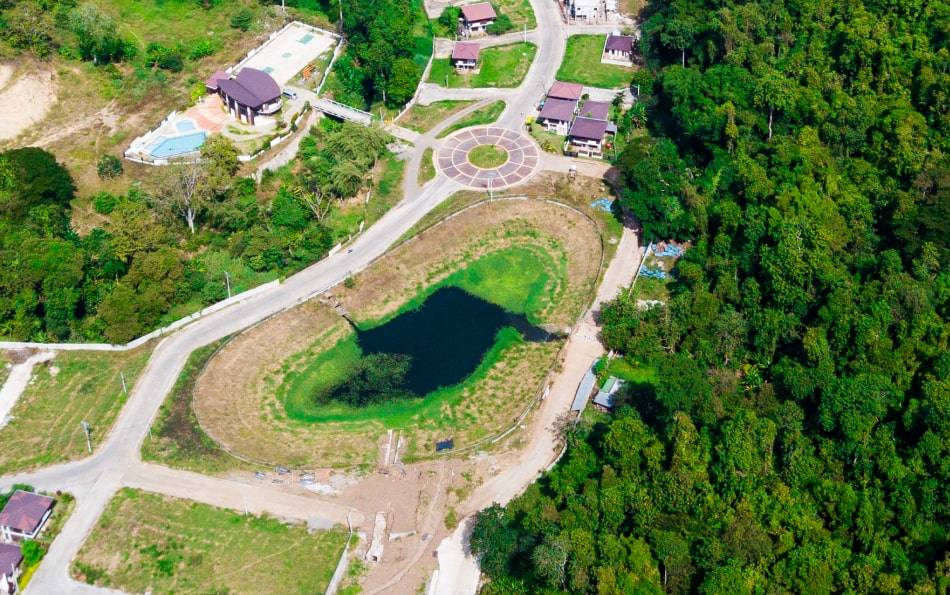
Guided by detailed geohazard and hydrological studies, PDO designed a layered system of drainage networks, slope protection, and a 23,000 cubic meter detention pond to manage stormwater effectively. Captured stormwater is also reused for irrigation across six lagoons in Pueblo Golf.
These measures have helped keep the development flood-free even during severe weather events that have affected surrounding areas.
“Sustainability is most effective when it is built into the plan from the very beginning. When you understand the land, allocate space for nature, and invest in the right infrastructure, you create communities that are not only livable today but resilient well into the future,” said PDO president said Prim Nolido.
Everyday infrastructure
Beyond large-scale environmental planning, PDO integrates sustainability into everyday infrastructure.
Solar-powered lighting has been introduced in key areas. Road networks are designed for efficient circulation, while mixed-use layouts ensure more walkable environments.
These principles are applied consistently across PDO’s portfolio.
In Batangas, for instance, PDO Westwoods Heights has allocated up to 40 percent of the developable area to open spaces, including pocket parks, landscaped areas, and a central linear park that serves as a shared green spine for the community.

Pueblo de Oro Townscapes Malvar meanwhile was planned based on 100‑year flood studies, ensuring its land development is resilient for the long term. It also integrates a ‘green loop’ of bike lanes, jogging paths, and landscaped corridors. This approach earned Pueblo de Oro Townscapes Malvar the recognition as Best Green Development at the Dot Property Philippines Awards.
Design excellence has also been recognized in projects such as PDO Courtyards Lipa, which received a Best Housing Architectural Design award at the Property Guru Philippines Property Awards.
Quality of life
Across its developments, PDO consistently allocates substantial space to open areas and road networks, balancing density with breathing room that supports environmental performance and quality of life.
As climate risks become more pronounced, sustainability is increasingly viewed not just as a differentiator, but as a baseline for responsible development.
This is why for PDO, its planning decisions are not incidental. They are central to how its communities are designed to function over time. By aligning environmental considerations with infrastructure and land use from the outset, the company is able to reduce risk, improve livability, and support long-term value across its developments.
For more information, please visit https://pueblodeoro.com.


