






The boat that rocked


Taiwan and the Philippines are more closely related than we think. If you’ve been a tourist in Taiwan, you’ve likely experienced a few “Uy, Pilipins!” moments. That’s because on weekends, OFWs flock to St. Christopher’s church in Taipei, which is surrounded by kainans—from chicken Inasal spots to KTVs.
In some public schools, Tagalog classes are even offered as a language elective. At the Chiang Kai-shek Memorial Hall, visitors might stumble on an Order of Sikatuna medal given to the Nationalist statesman, or spot some photos of the People Power Revolution. There are even two Cadillacs gifted by the Filipino-Chinese community. At Taipei’s sleek Jut art museum, their most recent exhibition even spotlights Filipino artists Alfredo and Isabel Aquilizan alongside Mark Salvatus.
And while there are so many connections you’ll stumble across in a few days, the relationship between Taiwan and the Philippines stretches much farther back.
Earlier this month, this relationship came into focus when 20 indigenous Tao people (just three percent or 5,120 of Taiwan’s population) mounted a traditional Tao boat that sailed from Taiwan’s Orchid Island to Batanes. Using a traditional wooden canoe, the men rowed their engine-less boat through sheer strength, navigating purely through the stars. Navigating the notoriously rough waters of the Bashi Channel, they replicated the first journey believed to have been made more than 4,000 years ago, and last attempted 300 years ago.
Supported by the Taiwanese government, Maraos, chairperson of Taiwan’s Indigenous Peoples Cultural Foundation, said, “This is not only a significant day for the Pacific Ocean but also a day of commemoration for the Austronesian people.”
300 years in the making
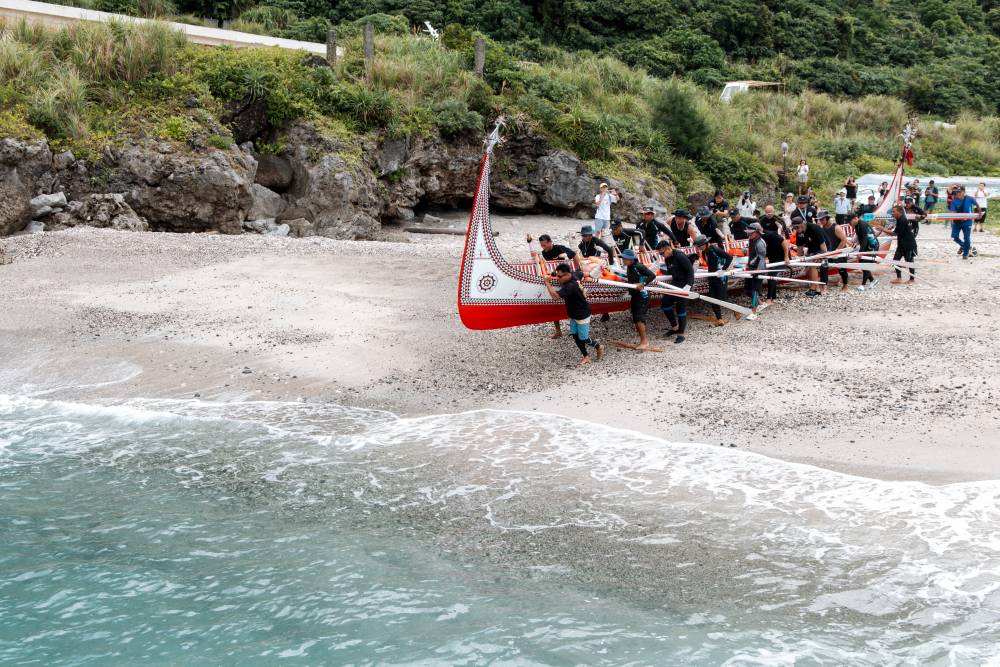
The boat, called the Golden Friendship, arrived at Mahatao Shelter Port in Batanes on June 16, Tuesday, after leaving Lanyu (Orchid Island) on Sunday, June 14. The Tao people of Orchid Island and the Ivatan people of Batanes are regarded as cultural relatives who share closely related languages, similar boat-building traditions, and a way of life shaped by the sea.
“The high-level diversity suggests that Taiwan was the original dispersal of the family,” Victoria Chen, a senior lecturer at Victoria University of Wellington in New Zealand, tells CNN on the migration of Austronesian culture and language.
One of the oarsmen, Wu Hsi-lung, expresses his motivations to join the expedition with Agence France-Presse: “I’ve always wanted to visit the place where my ancestors once went and see what it’s like there.”
“I feel that I carry the blood of this place and want to do something for my community,” he adds.
Golden Friendship
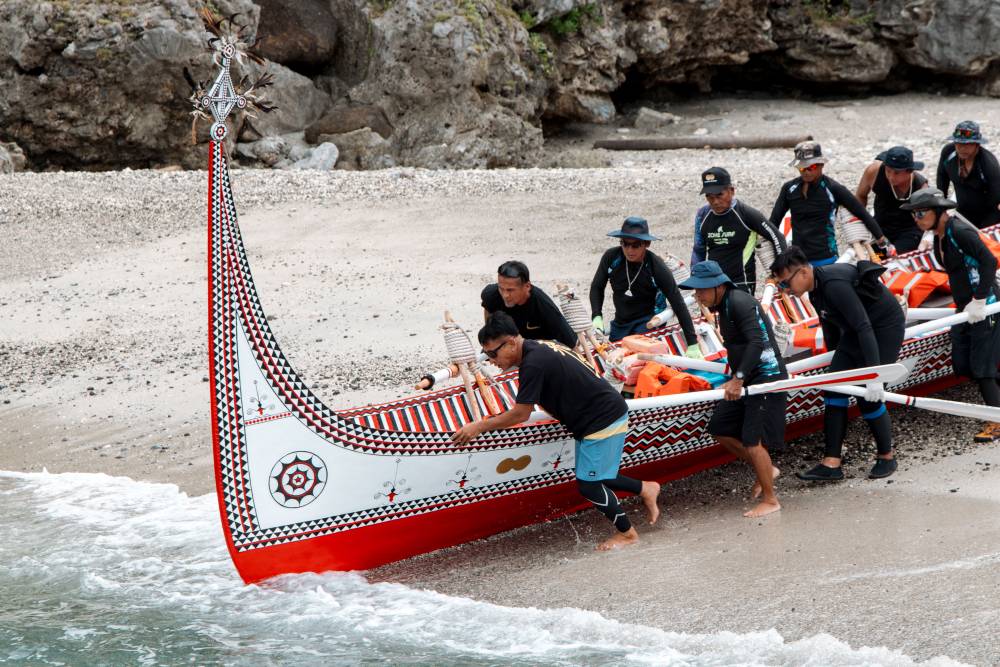
Carrying the voyage was the Tatala, a traditional Tao boat painstakingly carved from wood and decorated with intricate patterns. Historically, these vessels were used to catch flying fish, an important source of food for communities on Orchid Island.
The Golden Friendship is an enlarged version of the traditional craft, stretching 12 meters long and capable of carrying 20 people. A support vessel also monitored the journey for safety.
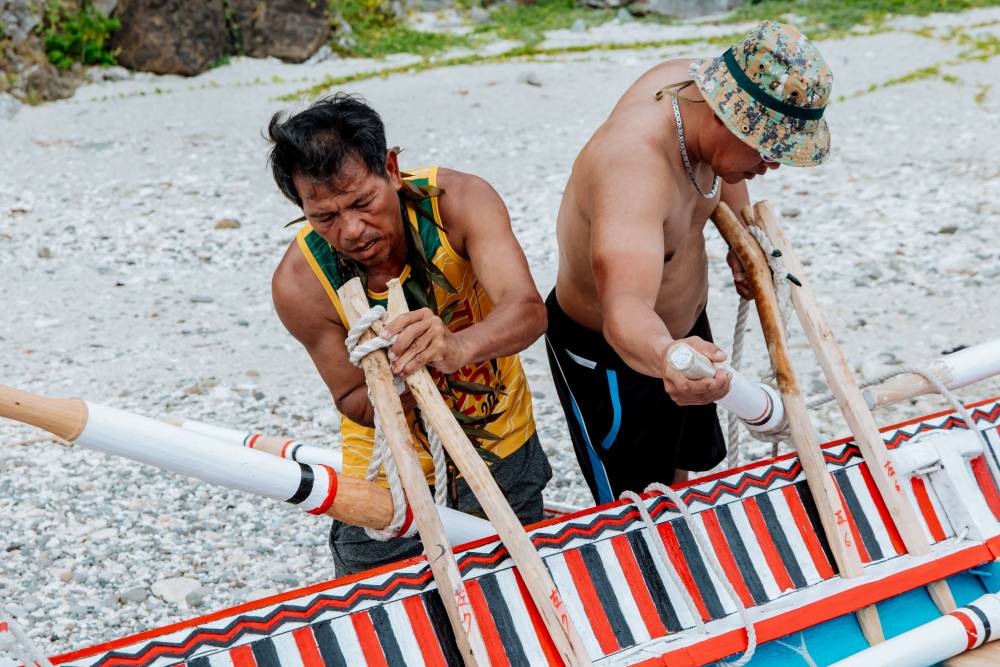
Like many traditional boats, it was made without nails and was instead bound by traditional methods. According to participant Hsiao Chun-hsiang, the Tatala was once primarily “a tool for survival.” Hsiao described the vessel as being “like a member of the family.”

Resurfacing Austronesian roots
Beyond reconnecting two island communities, the voyage has also renewed interest in the wider Austronesian story. Echoes of these ancient connections can still be felt across the Philippines, with many of the people in the North of the Philippines, especially the Cordilleras, believed to have been from Taiwan originally, with evidence of archeological and DNA records.
The Bashi Channel is known for strong currents, unpredictable weather, and rough waters, making it one of the region’s most formidable stretches of sea. Yet people continue to attempt these journeys. You might think of Arturo Valdez’s 2009 voyage of the ancient balanghai boats from Tawi-Tawi to Brunei, Indonesia, Malaysia, Thailand, and Vietnam.
Some people just have this crazy compulsion to see the world by sea. It’s dangerous work that maritime explorers have been doing for years, but that only makes these journeys even more awe-inspiring.
As the boat sailed into the Mahatao Shelter Port in Batanes at 2 p.m. last Tuesday, they were welcomed by the former Itbayat councilor Zenas Labrador and local government employee chairman Gato-de Sagon, who also visited Lanyu to see the boat last year.
Led by the stars and pushed by their paddles, the crossing revived a route that had fallen silent for centuries, once again linking the Tao and Ivatan communities. And while the voyage may have lasted only a day and a half, it implied thousands of years of history that link the two countries. And it makes you think, too, of how Filipinos cross oceans in different ways today, as workers, travelers, students, and migrants.
Such an epic trip shows that sometimes, the shortest distance between two people isn’t necessarily by a road, but by the sea.