









Asean not just navigating but shaping global trade

A unified regional stance on trade is on the table for the Philippines’ chairship of the Association of Southeast Asian Nations (Asean), amid a global trade environment increasingly unsettled by the United States’ tariffs.
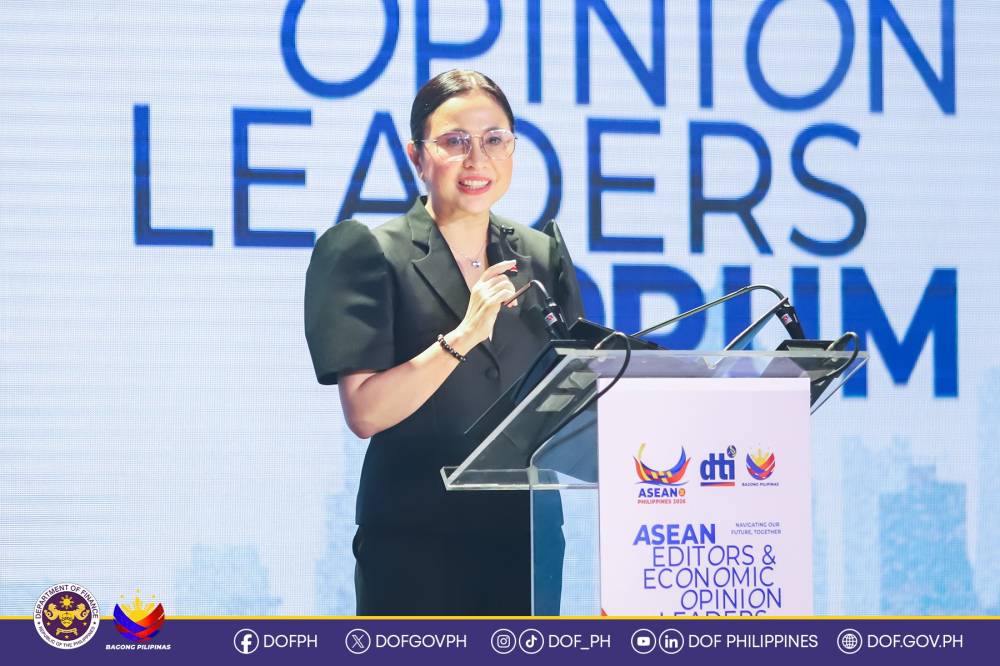
Trade Secretary Cristina Roque raised this prospect as she recently opened the Asean Editors and Economic Opinion Leaders Forum in Makati, the first event on Asean’s business and investment promotion calendar.
“We recognize the complexity of today’s global environment—geopolitical tensions, technological disruption, supply chain shifts, and climate risks,” Roque says. “Yet we remain confident in Asean’s collective strength.”
“Asean bonded together is a force that cannot be ignored,” she adds.
Among the immediate concerns for the region are recent US President Donald Trump’s tariff moves.
Recently, Trump’s “reciprocal” tariffs had been struck down by the Supreme Court, reinstated at 10 percent and then shortly raised to 15 percent, leaving trading partners uncertain whether prior agreements and concessions still hold.
On whether the Philippines would rally fellow Asean members to adopt a unified position on US President Donald Trump’s tariffs, Roque says the issue will “definitely” be discussed when trade ministers meet in Manila from March 11 to March 13.
‘Force to reckon with’
“For now, we are focused on the Asean chairship because there are many opportunities that we can get from Asean (translated from Filipino),” Roque tells reporters. “And Asean, once bonded together, is a very strong force to reckon with.”
Roque frames the Philippines as a stable reform leader in business and investment.
She cites a 15.2-percent increase in Philippine exports, which reached a record $84.41 billion in 2025.
Investment approvals also remain solid, with the Board of Investments green-lighting P1.56 trillion worth of projects last year. The Philippine Economic Zone Authority, on the other hand, registered P260.89 billion in investments, a nine-year high.

Total investment commitments, however, fell 2.04 percent to P1.92 trillion last year.
Diversification
While the United States remains the Philippines’ largest export market, Roque says the country is expanding its trade network.
“The Philippines now maintains its widest network of free trade agreements in history—connected to 20 FTA (free trade agreement) partners,” she says. “These agreements expand market access and embed Filipino products and services deeper into global value chains.”
As Asean chair, the Philippines is set to spearhead more than 500 strategic engagements with regional and global partners, according to the trade chief, positioning the regional bloc as a formidable driving force for change.
“Asean is not merely navigating change, but shaping it,” she says.