





DA pushes for higher tariffs on pork imports

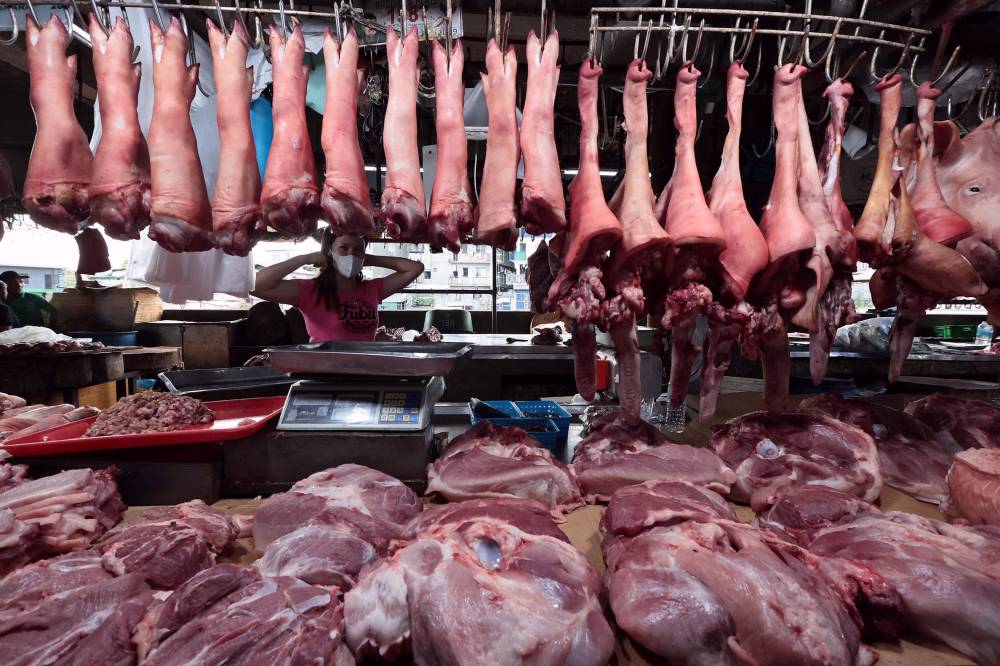
The Department of Agriculture (DA) is seeking higher tariffs on imported pork to shield the local industry from declining hog prices and rising imports.
The DA has submitted a proposal to the Tariff Commission for a staggered increase in tariffs on imported pork, which has since been elevated to President Marcos.
This is on top of the DA’s request for a separate line for frozen pork jowl, which have become a major import item due to its lower tariff treatment and is increasingly competing with both local pork in retail and food service.
10 percentage points
“With that, clearly we have to support the growth of our hog industry. We have to do something about importation,” Agriculture Secretary Francisco Tiu Laurel Jr. said in an interview.
The agency proposed a 10-percentage-point increase in pork tariffs in 2027, raising import duties to 25 percent in-quota and 35 percent out-quota, respectively. These are currently at 15 percent and 25 percent.
Pork tariffs would then return to 30 percent in-quota and 40 percent out-quota in 2028.
Tiu Laurel said the DA proposed imposing higher pork tariffs to help the industry recover from African swine fever (ASF).
He noted that although domestic hog production and inventories are improving, the volume of meat imports has also risen while farm-gate hog prices have declined.
Farm-gate prices of live hogs averaged P172.44 per kilogram (kg) in the second quarter of this year, down 18.6 percent from P211.91 per kg in the same period a year ago, data from the Philippine Statistics Authority (PSA) showed.
The PSA recorded a 5.6 percent increase in second-quarter hog production, reaching 412,281.56 metric tons.
Meanwhile, pork imports totaled 602.66 million kg in the January-to-August period, up 5.1 percent.
Will raise inflation
The Meat Importers and Traders Association (Mita) said the proposed pork tariff hikes would be very inflationary and impact consumers severely.

“Hog production will not likely recover to pre-ASF levels in the next five to 10 years. So local supply will be very short,” Mita president emeritus Jesus Cham said.
“Processors and restaurants will have to raise prices or reduce portion sizes to accommodate the increased cost,” he added.
The Samahang Industriya ng Agrikultura (Sinag) expressed hope that the agreements between the DA and industry stakeholders would move forward and be implemented at the soonest possible time.
“We cannot afford another round of excessive pork imports while Filipino hog raisers continue to face depressed farm-gate prices, rising production costs and mounting financial losses,” Sinag executive director Jayson Cainglet said in a statement.
Cainglet said that instead of staggered tariff restoration, the government should provide the local industry with the policy space to recover and rebuild their production.
“Tariff policies must not continue to give imported pork an advantage while local hog raisers struggle to recover their investments and sustain local production,” he added.