









Emergency funds top Filipinos’ savings goals—survey

Danish Fabellon passed this year’s licensure exam for medical technologists, a milestone that required her to quit her job and drain much of her savings so she could focus on the grueling review process.
“I just got employed again and right now my savings are not enough,” says Fabellon, 27. She now aims to rebuild a financial cushion, setting aside a fixed amount from every paycheck.
“My long-term plan is to have healthy emergency funds,” she adds.
A new Metrobank survey shows she is hardly alone. Preparing for emergencies is the top reason Filipinos save, though the motivations shift as people move through different stages of life.
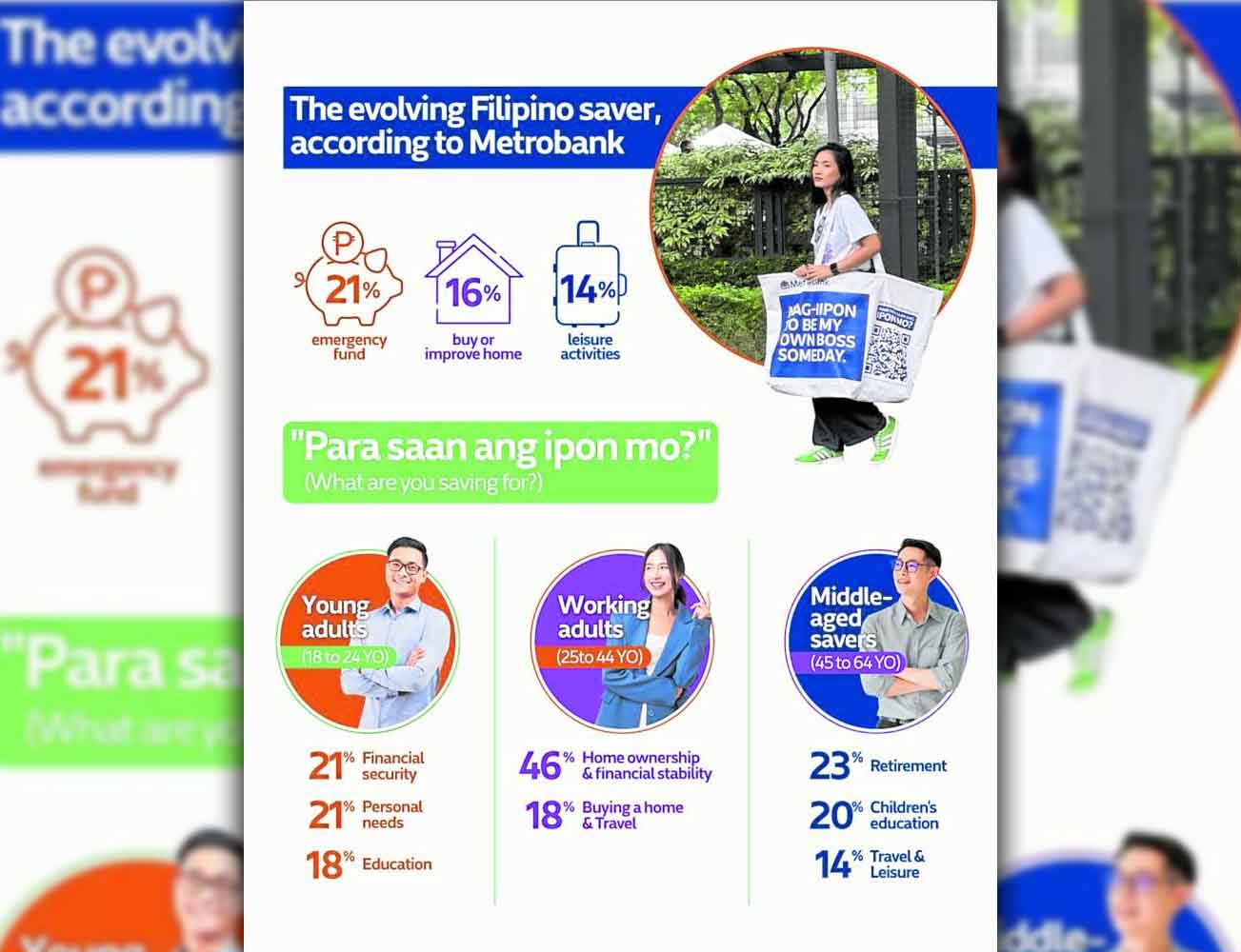
An October survey of 1,200 respondents found that 21 percent of Filipinos save primarily to build an emergency fund or set aside money for future needs.
This, Metrobank says, aligns with the Bangko Sentral ng Pilipinas (BSP) 2021 Financial Inclusion Survey, which showed that roughly four in five savers allocate funds for emergencies.
Key priorities
Other common goals include buying or improving a home, which motivates about 16 percent of respondents, as well as leisure activities, such as travel, concerts and hobbies, as cited by 14 percent.
Priorities also vary by location. In Metro Manila, financial stability is the leading motivator, with 23 percent of respondents listing it as their main goal.
Home-related expenses followed at 19 percent, and travel or leisure at 17 percent.
Outside the capital, education is the priority, with 20 percent of Filipinos saving for tuition or other school-related costs for themselves or family members.
“These differences show both access and opportunity: residents in Metro Manila generally earn more and have easier access to schools and financial services, while those in other regions prioritize education as a path to a better future,” Metrobank says.
Age further shapes savings behavior
Among young adults 18 to 24, financial security (21 percent) and personal purchases (21 percent), such as gadgets or clothes, were the top reasons for saving, followed by education-related expenses (18 percent).
For young Filipinos outside Metro Manila, about one in four save specifically for schooling.

Working adults of age 25 to 44 tend to prioritize homeownership and financial stability, each cited by 23 percent of respondents. Travel and leisure motivate another 18 percent.
Among middle-aged Filipinos 45 to 64, savings goals shift toward retirement, children’s futures and travel. Twenty-three percent save for retirement, 20 percent for children’s education and other needs and 14 percent for leisure.
“Nationwide, these patterns remain consistent, showing that long-term planning and family considerations are top of mind for older savers,” Metrobank says.
For its part, the BSP says it will promote financial health as part of the regional agenda when the Philippines serves as chair of the Association of Southeast Asian Nations (Asean) in 2026.
Financial health exists when individuals and families can manage financial obligations smoothly, withstand shocks, pursue goals, seize opportunities and feel satisfied and confident about their financial lives. The BSP says country-specific circumstances shape this experience.
“Asean should strengthen financial health by expanding access to financial markets, such as stocks, bonds, and insurance,” BSP Governor Eli Remolona Jr. says in a statement.