









Finally, potable water reaches Butbut community in Kalinga


In Barangay Butbut proper, the physical landscape is as challenging as it is beautiful. Access to water has long meant distance, effort, and daily sacrifice. Families have endured long walks to far-off sources to secure a basic need that should be within reach.
This scarcity has shaped routines, strained households, and limited opportunities for daily living, turning a simple survival need into a grueling communal labor.
“When water systems work, progress flows,” said President Marcos, underscoring water as a vital resource that sustains health, lives, and economic activities.
Under the President’s directive, the Department of Environment and Natural Resources-Cordillera Administrative Region (DENR-CAR) recently provided the community with Level II Water Works Project (Spring Development) funded under the Water Resources Management Office (WRMO) established through Executive Order No. 22.
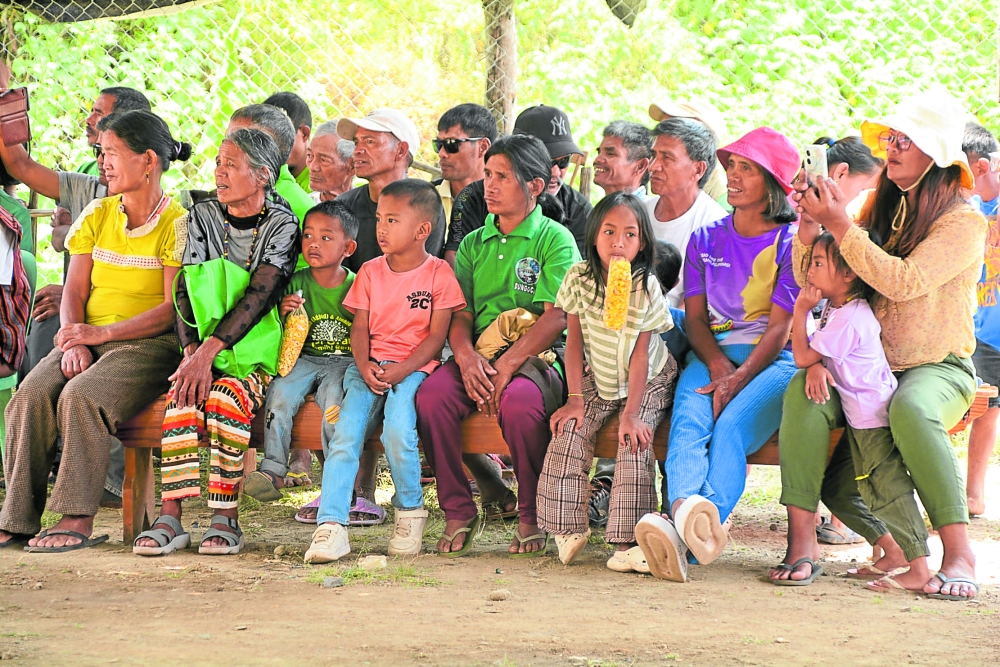
The Butbut indigenous community is one of the many ethnolinguistic groups within the Kalinga province, primarily inhabiting the rugged, mountainous terrain of Tinglayan. Known for their fierce independence and rich warrior history, they are also the keepers of ancient traditions that have survived centuries of colonial influence.
Direct access
The P2-million project, which will serve 147 households, includes a 31.394-cubic-meter intake tank, filtration tank, and main tank. The amount also covers the installation of pipelines and fittings, hauling of materials, and other external works.
The Butbut Community Integrated School, which children of the Butbut tribe attend, was the first facility to have direct access to the water supply.
School head Joy Bagni shared that before the project, learners and teachers had to fetch water from distant sources and often struggled with a limited supply for daily use.
“With the new system in place, the school now benefits from a more stable and accessible water supply that supports sanitation and learning activities,” she said.
Punong Barangay Pedro Bugawit shared how the project will improve the community’s daily life.
“It reduces the burden of water collection, improves health conditions, and restores time for education, livelihood, and community activities,” he said. “In Butbut, water is now closer, bringing with it relief, dignity, and renewed hope for sustainable living.”

Environment Secretary Juan Miguel Cuna said that through this initiative, the DENR reinforces its commitment to provide essential services to vulnerable and underserved communities.
Collective responsibility
“Our objective is evolving into becoming architects of systems that bridge the gap between resource management and community resilience. We are building a foundation where water security is no longer a daily struggle for upland communities, but a permanent catalyst for their health and progress,” he stated.
The turnover ceremony, held in the remote Barangay Butbut proper, was attended by Assistant Regional Director for Technical Services Benjamin Ventura representing Regional Executive Director Paquito Moreno Jr., together with project coordinator, Angelica Jacela of the WRMO, and personnel from the regional and provincial offices.
Jacela underscored the importance of collective responsibility in sustaining the project.
“This initiative helps alleviate one challenge at a time faced by the community. Its success is a reflection of unity. We encourage everyone to help maintain the water system and protect the water source,” she said.


