







How Cavite is redefining growth outside Metro Manila

- As Ayala Land expands in Southern Luzon, Cavite is being shaped by a new kind of real estate demand—driven by time, access, and complete communities.

For years, Cavite’s growth story was largely tied to its role as an alternative to Metro Manila—a place where families could find more space and relatively affordable housing while remaining within commuting distance of the capital.
Today, improved expressways, expanding road networks, and sustained economic activity across the CALABARZON corridor are gradually reshaping Cavite into a self-sustaining growth area. It is now attracting not only homebuyers, but also businesses, institutions, and investors looking at Cavite real estate as a long-term play rather than a spillover market.
The result is a shift in demand. The focus is moving from access to Metro Manila toward the quality of communities being built within Cavite itself.
Location Still Matters, But Time Is Emerging as a Key Metric
In real estate, location remains important. But for many buyers today, another factor is becoming just as valuable: time.
How long does it take to reach schools, workplaces, and retail centers? Are essential services within the immediate community? Can daily routines be completed without long cross-city travel?
These questions are increasingly shaping decisions in residential property in Cavite and other growth corridors outside Metro Manila.
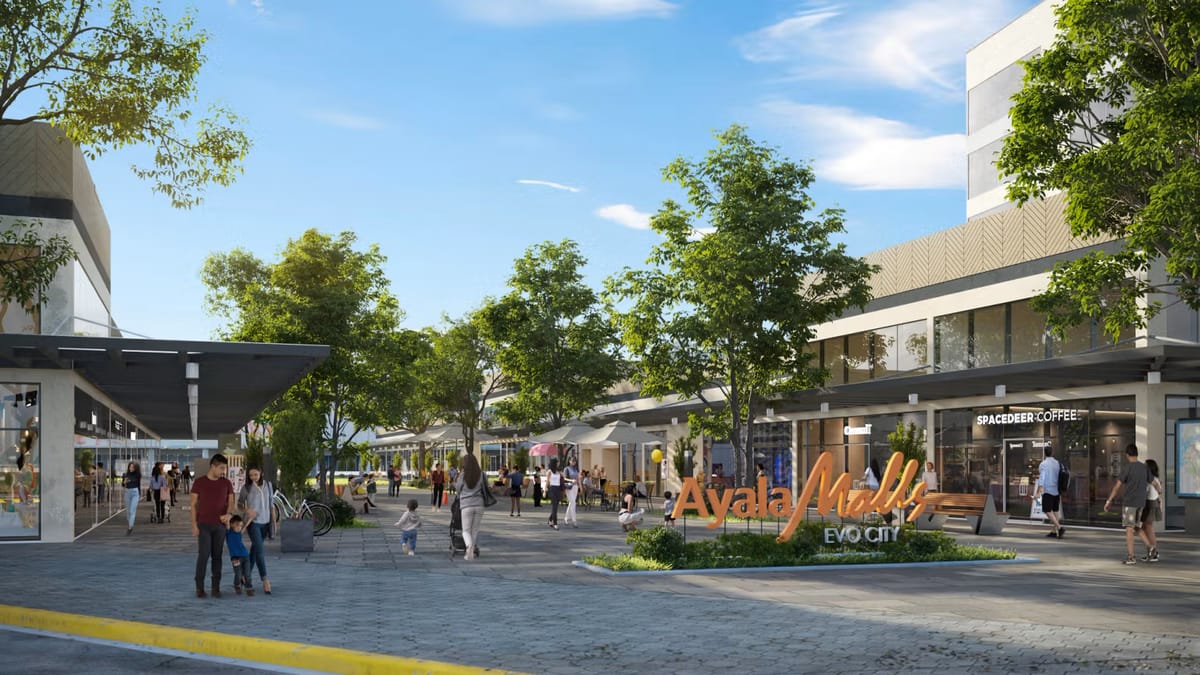
Urban planning literature often refers to this as the “15-minute city” model—communities designed to meet daily needs within a short drive, bike ride, or walk. While still unevenly applied, the principle is becoming more visible in new masterplanned estates in the Philippines.
In Cavite, this trend is reflected in developments such as Ayala Land’s Vermosa in Imus and Dasmariñas, and Evo City in Kawit.
Vermosa, Imus: Education and Sports as Value Anchors
Along the Daang Hari corridor, Vermosa has developed around a clear positioning: a low-density, active-living modern suburban estate with commercial establishments such as Ayala Malls Vermosa and Landers is further supported by upcoming education, sports, and wellness infrastructure.
One of its key additions in the estate is The Abba’s Orchard Montessori School, which will establish the largest K–12 Maria Montessori campus in the country. This is to complement the existing De La Salle Santiago Zobel Vermosa Campus currently within the estate.
In real estate markets, proximity to established schools is consistently linked with stronger long-term residential demand. For households, access to education within or near a community reduces travel time and improves daily livability—factors that increasingly influence buying decisions.
The estate’s sports infrastructure is also expanding. A partnership with the Philippine Tennis Center for Excellence, Inc. will introduce the Philippine Tennis Academy International Tennis Center, featuring nine international-standard tennis courts, 16 pickleball courts, and dormitories for student-athletes. Together with the existing Ayala Vermosa Sports Hub, the facility positions Vermosa as a venue for training, competitions, and sports tourism in Southern Luzon.
The Philippine National Off-Road Motorcycle Track by Ride For Solidarity further extends this ecosystem into cycling and action sports, attracting niche but growing segments of recreational and competitive users.
From a property investment perspective, these components contribute to consistent foot traffic and non-residential demand drivers—an increasingly important factor in masterplanned estate performance in Cavite.
Evo City, Kawit: Early Signals of a Regional District
In Kawit, Evo City represents a different but complementary development model of regional growth—one centered on mixed-use development, connectivity and urban integration.
The 207-hectare estate is strategically located along major transport corridors, including Centennial Road, Daang Hari link, and CALAX, providing convenient 30-minutes access to Metro Manila and surrounding provinces, positioning Evo City within the broader CALABARZON growth corridor.
Early-stage indicators of estate activation are already visible.
Ayala Malls Evo City has begun drawing visitors from Kawit, Imus, Bacoor, and nearby areas, with further expansion plans underway as demand grows. The recently opened Our Lady of Mount Carmel Church, designed by Architect Dominic Galicia, functions as a civic anchor—an important but often overlooked element in the development of sustainable, community-oriented estates.
Equally important are the estate’s parks and open spaces, which play a critical role in shaping vibrant urban environments. Beyond providing recreational areas, these spaces create opportunities for people to gather, interact, and build social connections. Successful districts are not defined solely by buildings and infrastructure; they are strengthened by places where communities can converge, participate in events, and foster a sense of belonging. As Evo City continues to develop, its open spaces contribute to the social fabric that supports long-term district formation.
The Market at Evo City has introduced a platform for Cavite-based entrepreneurs and micro-enterprises, helping foster local commerce while strengthening the estate’s identity as a destination for both residents and visitors.

For investors, commercial lots in Cavite developments such as Evo City represent an early-entry position into a district that is still forming. Residential developments such as The Residences at Evo City, along with office, retail, and institutional components, are positioned to benefit from increasing population density and activity over time.
Cavite Real Estate and the Shift Toward Complete Communities
Across Cavite, the direction of growth is becoming clearer.
Infrastructure alone does not automatically translate into livable communities. What is increasingly shaping demand is whether developments can support daily life within a connected community—housing, employment, education, retail, and recreation in closer proximity.
This is why integrated or masterplanned estates are gaining relevance in Philippine real estate. They combine residential, commercial, institutional, and open-space components in a way that reduces dependence on long-distance travel.
For homebuyers, this translates into practical gains in time and convenience. For businesses, it expands access to local consumer bases in emerging growth areas outside Metro Manila. For investors, it creates exposure to markets benefiting from both infrastructure development and structural shifts in how people choose where to live.
As these factors converge, Cavite continues to strengthen its position as one of the country’s most important growth corridors—where residential demand, commercial activity, and institutional development are increasingly interconnected.
The next phase of value creation will depend not only on geography, but on how effectively communities can support modern patterns of living, working, and mobility.
This shift is already visible in estates such as Vermosa and Evo City, where residential, commercial, educational, and lifestyle components are being developed within integrated frameworks that reflect the changing expectations of Cavite real estate.
For commercial lot inquiries, email invest@ayalaland.com.ph or visit https://bit.ly/AyalaLandCommercialLotsCavite.


