HSBC: Jumbo June rate hike possible

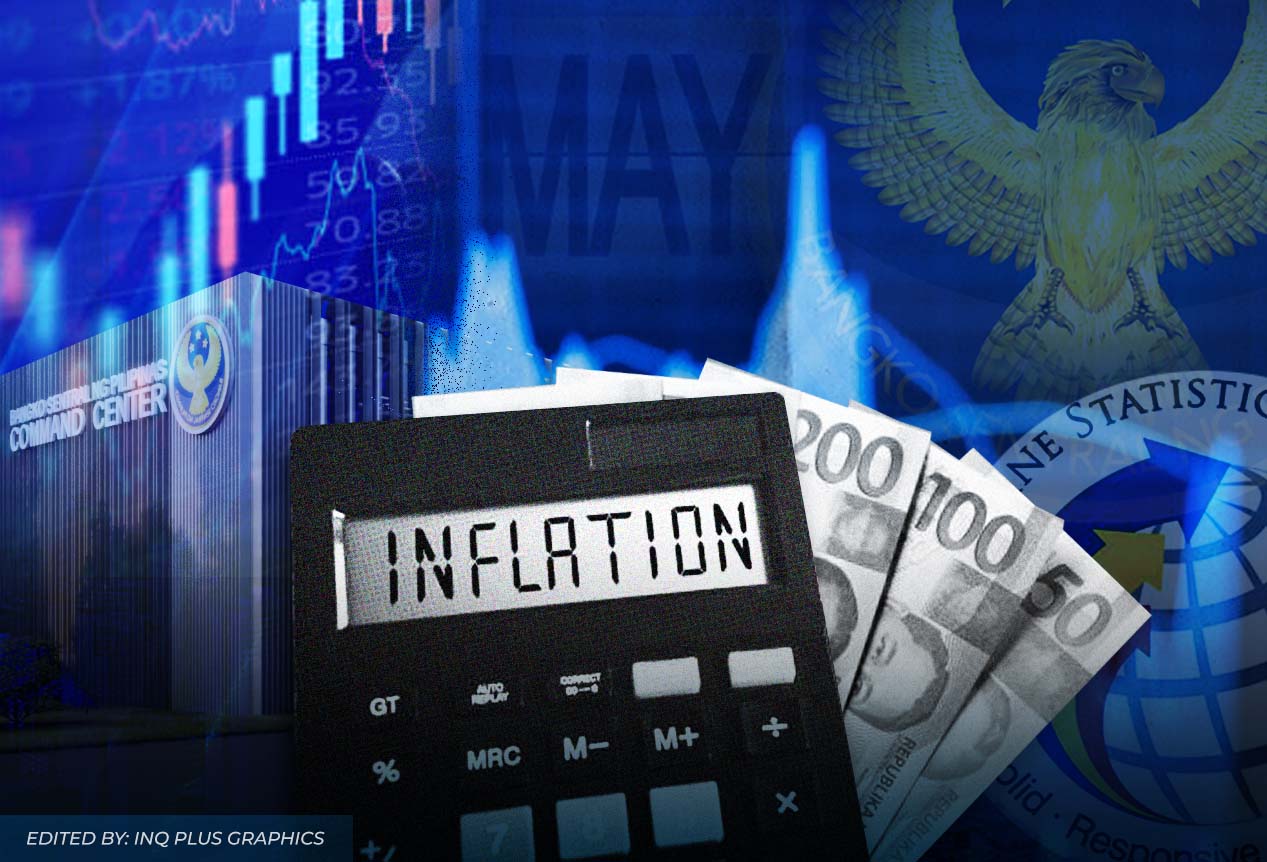
A jumbo half-point rate hike may be looming as the Philippines confronts the twin threats of sluggish growth and red-hot inflation, HSBC Global Investment Research said, warning that a prolonged Middle East conflict is pushing the “adverse” scenario closer to reality.
In a note to clients, Aris Dacanay, a senior Asean economist at HSBC, said the Bangko Sentral ng Pilipinas (BSP) could deliver a total of 1.5 percentage points in rate increases this year, a move that would bring the benchmark rate to 6 percent.
He added that policymakers may accelerate the pace of tightening as soon as June, opting for a half-point increase instead of the usual quarter-point steps to prevent inflation from spreading more broadly. Dacanay warned that a recent string of bad data suggests the economy may already be drifting away from HSBC’s baseline outlook and toward the adverse scenario.
Already, consumer prices rose 7.2 percent from a year earlier in April, the fastest pace in three years, as higher energy costs quickly spilled over to other household essentials. The April surge marked the second straight month inflation breached the central bank’s 2 percent to 4 percent target range.
This happened while the economy has yet to fully recover from the blow to confidence and public spending caused by a major corruption scandal last year. Gross domestic product slowed further to 2.8 percent in the first quarter of 2026, from 3 percent in the preceding three months.
HSBC now expects inflation to average 6.6 percent this year and 4.4 percent in 2027, both above the central bank’s target. Economic growth, meanwhile, is projected to reach 3.4 percent in 2026 and 4.6 percent in 2027, well below the country’s estimated potential of about 6 percent.
“Monetary policy is in a better position to address the spillover effects of higher energy and food prices on inflation expectations,” Dacanay wrote.
“In fact, price stability is the BSP’s main policy fabric. The central bank has the tools, through its monetary operations, to ensure that a wage-price spiral never comes out of its cage,” he added. INQ
The BSP has already moved to tighten policy in response to the global oil shock tied to the US-Israel war with Iran, now in its second month. The central bank raised its key policy rate by a quarter point to 4.5 percent at its April 23 meeting, where policymakers acknowledged a “deteriorating” inflation outlook.

The central bank said inflation may average 6.3 percent this year and 4.3 percent in 2027. Policymakers also said they are “committed to fulfilling its primary mandate of slow inflation and will take necessary actions to ensure inflation returns to its 3-percent target within a reasonable time.”
Dacanay said raising the key rate to 6 percent would lift the real policy rate, or the actual cost of borrowing after factoring in inflation, to about 1.6 percent — an “adequate and balanced” response to high inflation and weak growth.
Still, he acknowledged that aggressive tightening carries risks, particularly for borrowers already squeezed by slow growth. Once inflation pressures ease, however, he said the central bank could begin cutting rates, with HSBC expecting a 75-basis-point reduction to 5.25 percent in the second half of 2027.
“True enough, the Philippine economy’s short-term growth and inflation prospects do look dimmer as compared to other Southeast Asian economies,” he said. “But medium-term prospects look stable.”