




US slaps PH exports with higher 12.5% tariff


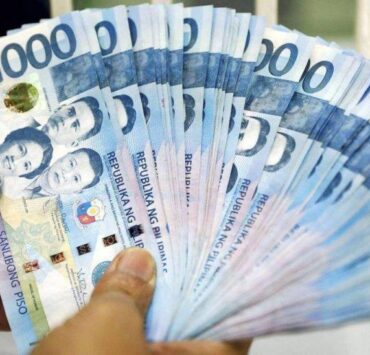
Washington on Friday formally imposed a new 12.5-percent tariff on Philippine exports, joining dozens of other US trading partners that the Trump administration said had failed to adopt adequate prohibitions against the importation of goods made with forced labor.
This means Philippine goods entering the United States will again face higher import duties, following the expiration on the same day of the 10-percent blanket tariff that took effect after the US Supreme Court struck down President Donald Trump’s “reciprocal” tariffs.
Announcing the decision, US Trade Representative (USTR) Jamieson Greer said Trump had approved the new duties on 60 of the United States’ largest trading partners, with tariffs ranging from 10 percent to 12.5 percent.
“The United States has had a forced labor import ban for nearly a century, and rigorously enforces it; it’s well past time for our trading partners to do the same,” Greer said. “Today’s action will begin to correct what is both a human rights abuse and distortive trade practice to improve the welfare of workers everywhere.”
According to the USTR, exemptions will cover raw materials that could face supply shortages, products whose tariffs could trigger economy-wide disruptions, goods that cannot be sufficiently produced in the United States, selected products from countries with partial forced-labor import bans and products deemed unrelated to eliminating forced labor.
These new tariffs stem from the USTR’s Section 301(b) investigation launched in May.
But talks ‘ongoing’
In findings released in June, the agency concluded that the “Philippines has failed to impose and effectively enforce a forced-labor import prohibition.”
Although the Philippines has no explicit ban on imports made with forced labor, the Department of Trade and Industry (DTI) has consistently argued in its submissions to the USTR that existing laws and enforcement mechanisms provide sufficient safeguards and that the country should not be subjected to the additional tariffs.
A day before the USTR announced the new duties, the Philippine government created an inter-agency committee tasked with establishing a mechanism to investigate imports suspected of having been produced through forced labor.
At a briefing on Friday, Trade Undersecretary Ceferino Rodolfo said the USTR had already received a copy of the joint administrative order (JAO) creating the committee and would take the measure into account in reviewing the tariff imposed on Philippine goods.
“We are very much encouraged by the continued positive engagement of the US with respect to this particular issue, including the recent issuance by the Philippines of the JAO,” Rodolfo said, adding that the USTR had assured the DTI that the decision can be revised “at any time.”

Federation of Philippine Industries chair Elizabeth Lee also expressed hopes that the Philippines could still secure a lower tariff if it moves quickly to align its regulations with US requirements.
Competitiveness to take hit
“Because the tariff is tied directly to forced labor rules, there might be a possibility to move down to the 10-percent bracket—or gain extra product waivers—once we can show those concerns don’t apply,” Lee said. “The burden is now on rapid regulatory alignment.”
Ferdinand Ferrer, president of the Philippine Chamber of Commerce and Industry, also warned that “the new tariffs will certainly impact the Philippines’ competitiveness.”
******
Get real-time news updates: inqnews.net/inqviber