





Charo Santos on savoring her luminous years


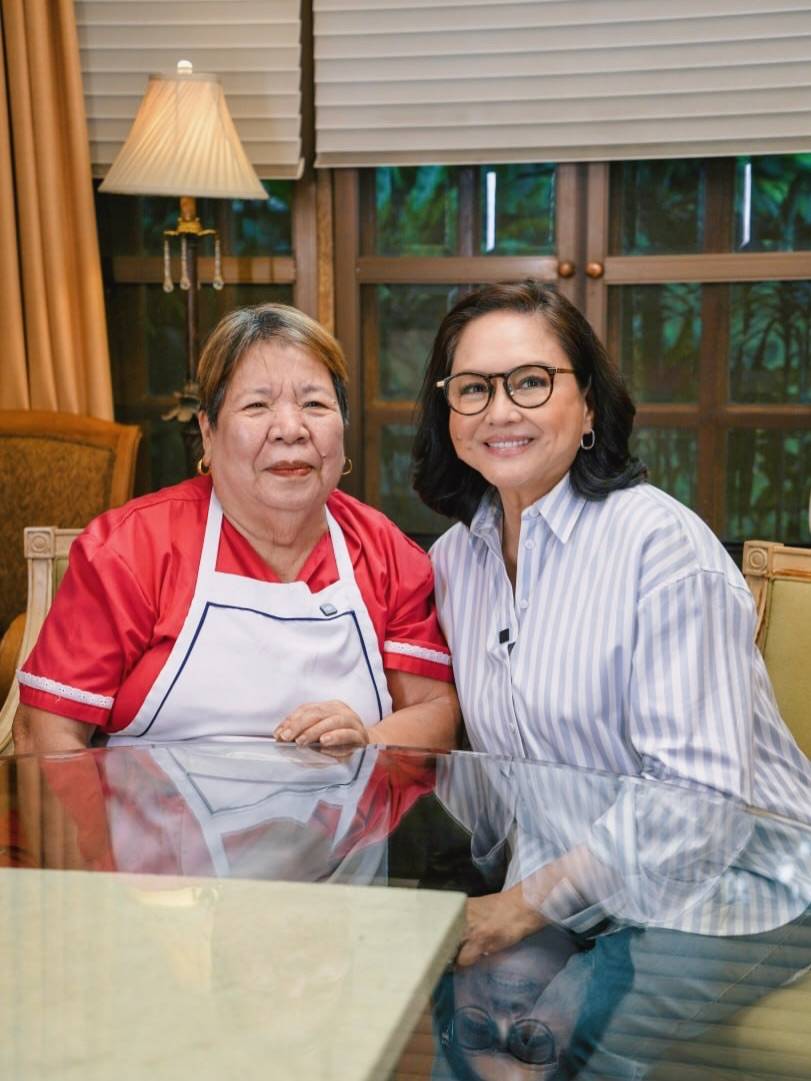
When I came across a video of Charo Santos looking for Rosie, a longtime cook who had become part of the family over the years, I knew it was time to give her a call. As good an actress as she is, I could sense that behind the humor was a genuine longing for Rosie.
So I picked up the phone and dialed her number. And what started as a conversation about Rosie soon wandered into stories of childhood, family, love, and the people who shaped her life.
A trip down memory lane
Before long, Santos had transported me to Calapan, Oriental Mindoro. Her father, Dr. Winifredo Santos, was a surgeon who chose to remain in the province and serve the poor. Patients often paid him—not with money but with fish, chickens, vegetables, and whatever harvest they could spare. At home, he tended a vegetable garden while her mother, Nora Navarro, was a part-time teacher. She took care of the kitchen and fed a family of eight.
Life was simple. There were no household helpers. Everyone had chores. At 12, Santos learned how to cook rice. She knew how to buy fish at the market and even knew how to dress a chicken.
As she spoke, it became clear that food had always been woven into the fabric of her life.
Explored, experienced, and enjoyed
Breakfast remains her favorite meal of the day. Mention tuyo, daing na bangus, tapa, tocino, longganisa, or fried chicken, and her voice immediately brightens. I found myself laughing when the conversation turned to liempo. Not the lean version. The one with the taba.
“The pork without the taba is sad,” she declares.
This, after all, is the same woman who grabs a hotdog at Costco whenever she gets the chance, eats roasted beetles in Mexico, and continues to enjoy Indian food even when the spice brings tears to her eyes.
Food, for Santos, is meant to be explored, experienced, and devoured with gusto. And perhaps one of life’s little gifts to her was a naturally forgiving metabolism. Santos laughs, saying that she probably inherited it from her mother, who remained slim throughout her life.
Ask Santos about her favorite comfort food, and she doesn’t hesitate. “Tinola,” she says simply. It has long been one of her favorites alongside sinigang.
As she described it, I realized she might just as well have been describing herself. Tinola, she said, is calm and malinamnam. It is nourishing, healthy, complete, and joyful. Yet it still has a little kick from the ginger.
Shaping meals and memories
Santos readily admits that her husband was the real food enthusiast in the family. He worked closely with Rosie, planned menus, watched cooking shows, and helped shape the meals that gathered children, grandchildren, and relatives around the table.
But these days, she enjoys traveling and discovering new restaurants with her grandchildren.
Today, Rosie has retired. And somehow, life has brought Santos back toward the kitchen. Not necessarily to cook—she is quick to clarify—but to oversee things once again. There is a new cook to guide, menus to discuss, combinations to think through, and household routines to revisit, especially when the brood comes together.
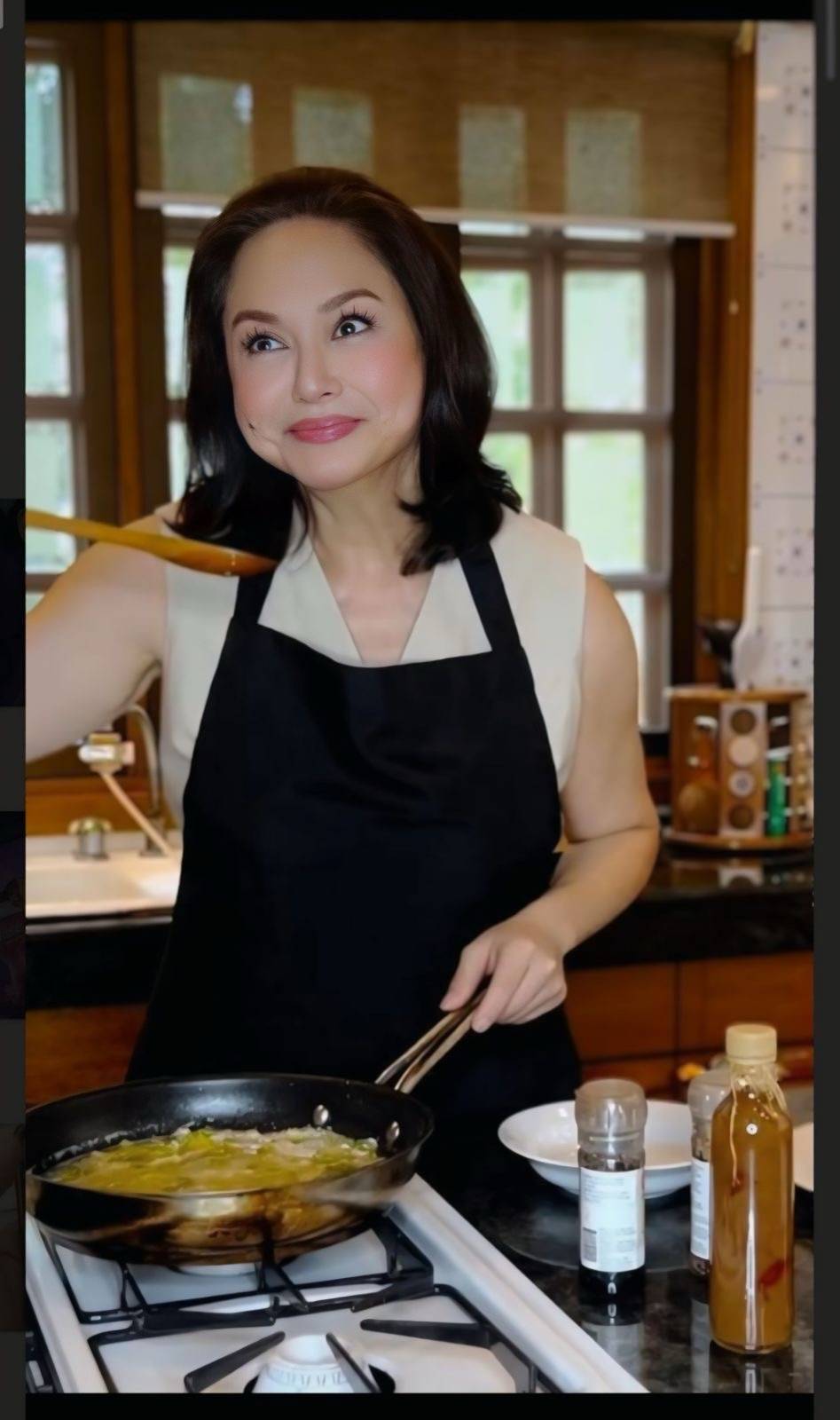
I realized that even if Santos was never the primary cook in the family, she has always known how a kitchen works. She knows how to put together a menu, stretch a budget, manage inventory, and make sure everyone around the table is well fed.
In many ways, it felt like a return to skills she first learned as a young girl in Mindoro.
Life in full circle
Life, it seems, has a funny way of coming full circle. The Charo Santos on the line that afternoon spoke often about gratitude. About joy. About being present.
She described herself as being in the autumn season of her life. There was no sadness in the way she said it. If anything, there was peace. At one point, she laughed and said she had already gone through her joyful years, her sorrowful years, and her glorious years.
Today, she believes she is living her luminous years.
There was something beautiful about her acceptance of where life had brought her. The need to constantly achieve seems to have given way to a deeper appreciation for the present.
She no longer feels the need to perfect everything. “I don’t seek perfection anymore,” she tells me. There was no trace of resignation in her voice—only freedom.
These days, she prefers to go with the flow, trust her instincts, and listen to her heart. She still wants to learn. She still wants to tell stories. But she no longer measures life by how perfectly it unfolds.
To teach and to give back
There was always a teacher, a mentor, and a coach in Santos that still lives on. She likes helping people become better versions of themselves. She admits she can be demanding, but beneath that is a genuine desire to help people grow.
And if there was one word that surfaced again and again throughout our conversation, it was “kabutihan.” Goodness—and the desire to leave something good behind.
As our conversation drew to a close, I asked her: If she could have one last dinner with anyone who shaped her life, who would be at the table? Without hesitation, she answered: her mother and father. Her father, whom she lost while still young. Her mother, with whom she shared a deep bond.
And what would she serve them? The freshest vegetables, the kind that her dad grew in their backyard.
The answer felt fitting. Because after all the success, Santos finds herself returning to the people and values that shaped her from the very beginning. A father who planted vegetables. A mother who cooked. A family gathered around the table. And a daughter who still wants one more meal with them—to say thank you.
I put down the phone, grateful for the conversation. Well done, dear Charo Santos.
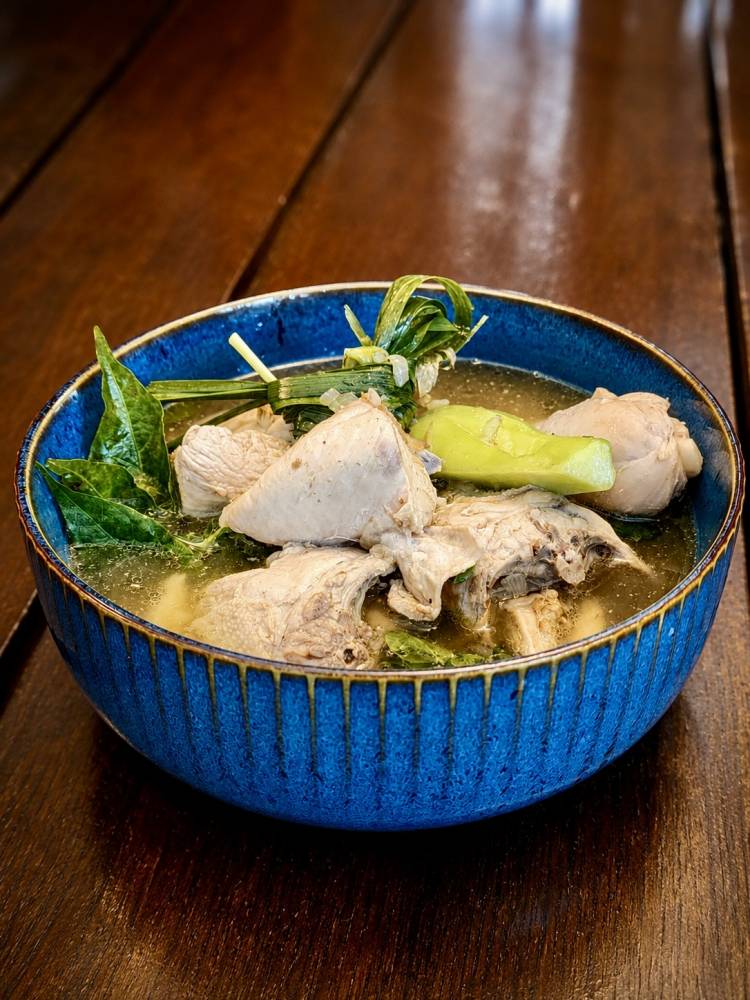
Charo Santos’ tinola
Serves 6
“We use sayote instead of green papaya. We don’t like the aftertaste of green papaya. We add lots of malunggay leaves and dahon ng sili, then finish it with tanglad for a more aromatic broth.”
Ingredients
1 whole chicken (about 1.2 to 1.5 kg), cut into serving pieces
2 Tbsp cooking oil
1 large onion, sliced
1 large knob of ginger, peeled and cut into strips
6 cloves garlic, minced
6 to 7 cups of water or chicken stock, do not put too much liquid, so that the broth remains flavorful

Fish sauce, or to taste
2 medium sayote, peeled, halved, and sliced into wedges
1 to 2 stalks tanglad (lemongrass), lightly pounded
2 cups malunggay leaves
2 cups dahon ng sili
Salt and pepper, to taste
Whole peppercorns
Procedure
1. Heat the oil in a large pot. Sauté the onion until softened. Add the ginger and garlic and cook until fragrant.
2. Add the chicken pieces and cook until lightly browned.
3. Stir in the fish sauce and cook for another minute.
4. Pour in the water or stock and bring to a boil. Lower the heat and simmer until the chicken is tender.
5. Add the peppercorns.
6. Add the sayote and continue cooking until just tender.
7. Add the pounded tanglad and simmer for another 5 minutes to infuse the broth with its aroma.
8. Stir in the malunggay leaves and dahon ng sili. Cook just until the leaves wilt.
9. Season with salt and pepper to taste.
10. Serve hot with steamed rice and a small dish of fish sauce on the side.