







‘Endo 2026’: When side hustles bleed into life and love

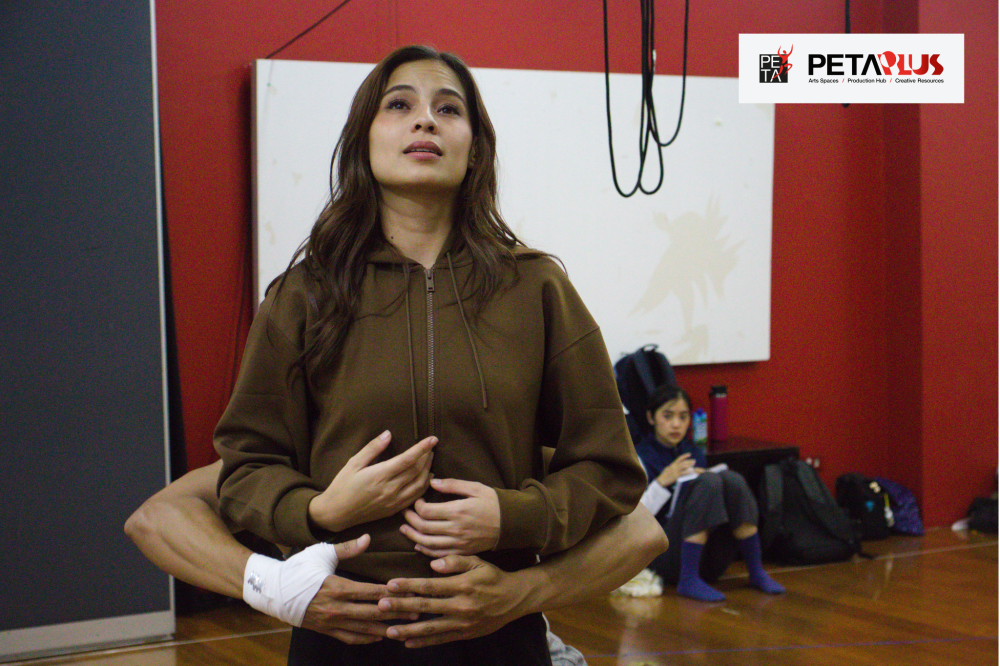
When “Endo”—Jade Castro’s acclaimed film about Filipinos trapped in a cycle of short-term employment—was shown in 2007, the struggle of contractual workers was tied to a specific time frame. After five months and 29 days, the question was: Would you find another job?
But if it’s any consolation—and it’s not—uncertainty had a schedule and a semblance of predictability.
Although this exploitative practice persists, it now exists within a more fragmented and pervasive gig economy. With the rise of digital apps that allow side hustles anytime, anywhere, the strain of instability now comes with the pressure of constant availability. Work hours are muddled and inevitably bleed into the wee hours, because you have ratings to maintain or an algorithm to satisfy. Or simply because, “Sayang ang kita.”
So now, we ask: What does “end of contract” mean in 2026? I’m working non-stop and juggling so many jobs—but why am I getting nowhere? Can love blossom, and can we build a life, in a space that wouldn’t even allow us to breathe?
The algorithm as validation
These are the questions that PETA Plus and Ticket2Me’s stage adaptation of “Endo”—running from April 10 to May 10 at the PETA Theater Center—aim to address.
“Validation is determined by an algorithm. Intimacy and the opportunity to build—and to actually live—a life are always interrupted by a text message and a booking notification. You wonder, ‘[if] I don’t take this now, will I still be relevant tomorrow?’” assistant director Eric dela Cruz tells Lifestyle Inquirer.
The economic landscape may have changed for this theatrical version, but the story remains one of love and labor between two people dreaming of forever—all while the clock of job insecurity keeps ticking. Adapted by Liza Magtoto, “Endo” follows Leo and Tanya, whose financial hardships unwittingly affect their smallest gestures of love and, ultimately, their outlook on the future.
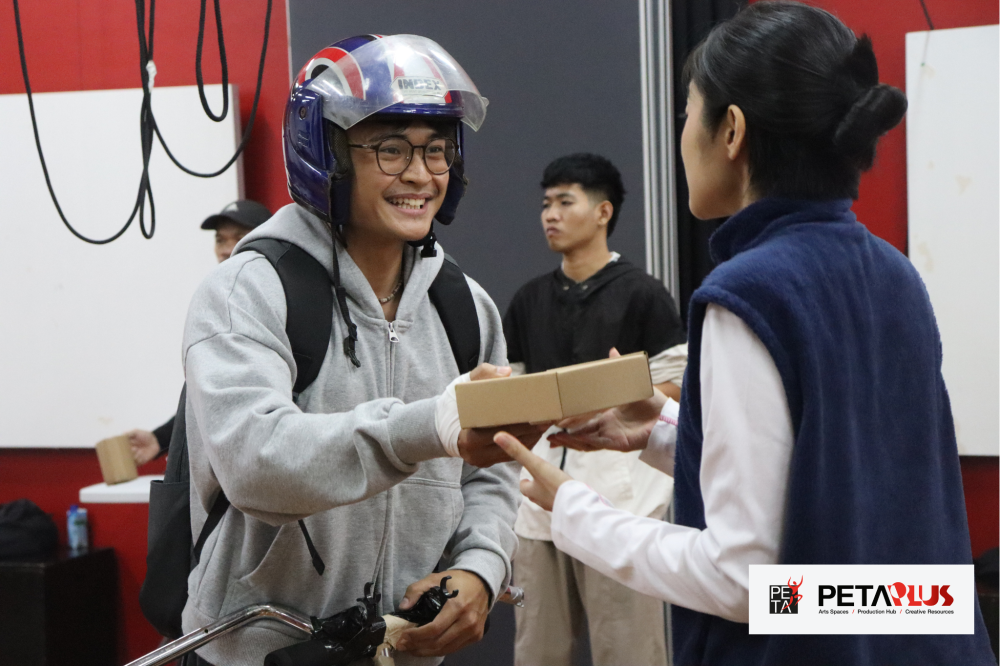
This time, Tanya (Jasmine Curtis-Smith, Rissey Reyes-Robinson)—a shoe saleslady in the film—is a teacher and online seller studying German in hopes of securing a nursing job in Switzerland. Originally a cashier, cook, and everything in between, Leo (Royce Cabrera, Esteban Mara) is now a delivery rider.

Why do we shrink our dreams
In 2007, the experience mostly happened in definite workspaces, whether a mall or a stockroom. The play, on the other hand, shows how people dependent on the gig economy no longer need to physically go to work—the work, for better or worse, finds them.
And it doesn’t matter if you’re in your room sharing an intimate moment with a loved one.
For the more optimistic, like Tanya, the hardships and the blurring of work and life are fuel that drives a clearer future. For Leo, the road is literal, but the career path is a seemingly closed loop. Worn down by the grind, he has become too hesitant and jaded to start anew and dream of something better.
Here lies the conflict. As much as we want to see love as something we can control, our work—or its insecurity—often dictates the kind of relationships we form.
“Walang long-term dream si Leo. But for Tanya, malinaw sa kaniya na she has to improve the quality of her life… that she has the option to work abroad,” director Melvin Lee tells Lifestyle Inquirer. “That’s determined by their economic situation. They love each other, but the situation isn’t sustainable kasi magkaiba sila ng context.”
Indeed, Dela Cruz points out that a human’s common response to instability is to make one’s dreams smaller and fit them to what’s immediately foreseeable. “Kasi ‘di ka sure if may next time pa,” he says.

A common theme
This sentiment resonates with the cast. As theater artists, whose jobs are irregular and not as lucrative as those in other industries, they consider themselves part of the gig economy: “mga raketeros and raketeras.”
They didn’t have to look far to find meaning in this production, because “Endo,” they say, is their story.
“In general, the industry doesn’t pay as much as, say, a corporate, nine-to-five job. And this despite the amount of energy and work you have to put into your craft. As full-time performers, you really need to find other means to earn money,” Reyes-Robinson says. “Lahat ng puwede mong idagdag sa skillset mo, gagawin mo—teaching, directing, choreography. This is a common theme for everyone here.”
Homage to gig workers
The gig economy is often reduced to statistics. But behind those figures are real people trying their best to make life and love co-exist with the sheer need to survive. Through “Endo,” Lee says they hope to pay homage to freelancers and contractual workers; to bring their frustrations to the fore and celebrate their triumphs.
While the show embodies the resilience of Filipinos and their will “to fight through any storm,” it also serves as a “knock on the heart” for those in positions of influence to remind them that people deserve fairer and more dignified working conditions.
“If the system doesn’t allow you to have the life you’re meant to have, survival is still the reality for many of us amid instability, impermanence, and precariousness,” Lee says.
As “Endo” finds new life onstage, its meaning becomes harder to contain. In 2026, “end of contract” is no longer just a looming date on the calendar, but a flurry of alerts that seemingly taunt us and make us wonder if stability will begin at all, or if we’re resigned to a permanent state of the temporary.