





Filipino Chinese chef finds his flow

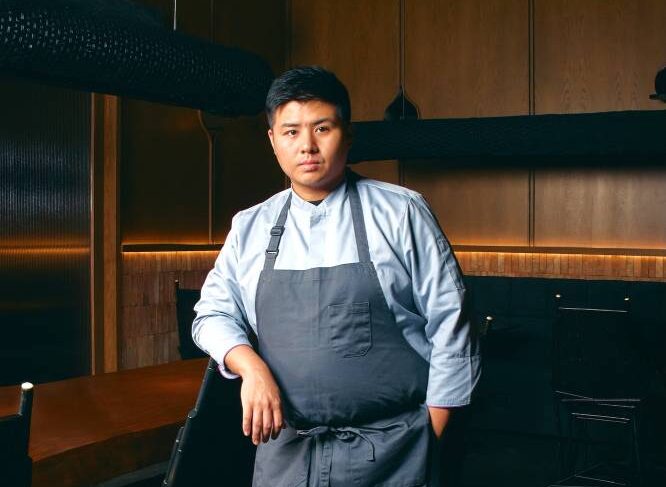
Here’s a flowchart for Kevin Uy’s first restaurant, Flow: On top is a landscape, which then proceeds to flora and fauna, before terminating at love, enclosed in an oval, to reveal the raw insight you can glean from a newbie in the Philippine F&B industry. But the simplicity in my observation belies the complexity that Uy, his partner and fellow executive chef Gato Ong, and the rest of the Flow team want to show us.
This begs the question: Is Uy a neuroscientist or a chef? Because from beginning to end, the Filipino Chinese chef—who spent a total of five years in Peru (four and a half years at Central, six months at Mil in Moray, Cusco)—seems to have achieved the flow state.
So absorbed is Uy on the task at hand—to introduce himself to Manila and characterize Flow as a serious contender in local foodservice—that the father of flow himself, Mihály Csíkszentmihályi, would have been proud of his exploits in the dramatic new restaurant.
Locked in on the landscape
As if to reflect his mental state, Flow’s interiors showcase the sincerity of his connection with the Philippines and Peru.
Artfully designed by Anthony and Rita Nazareno and meticulously curated with Filipino artisans in mind, Flow finds itself poring over nature’s handiwork and brings them to light, literally. The rock door handle and floating concrete slab right outside, soaked in precise accent lighting, is an ambitious arrangement that the Nazarenos flesh out once the curtains are pulled back inside Flow.
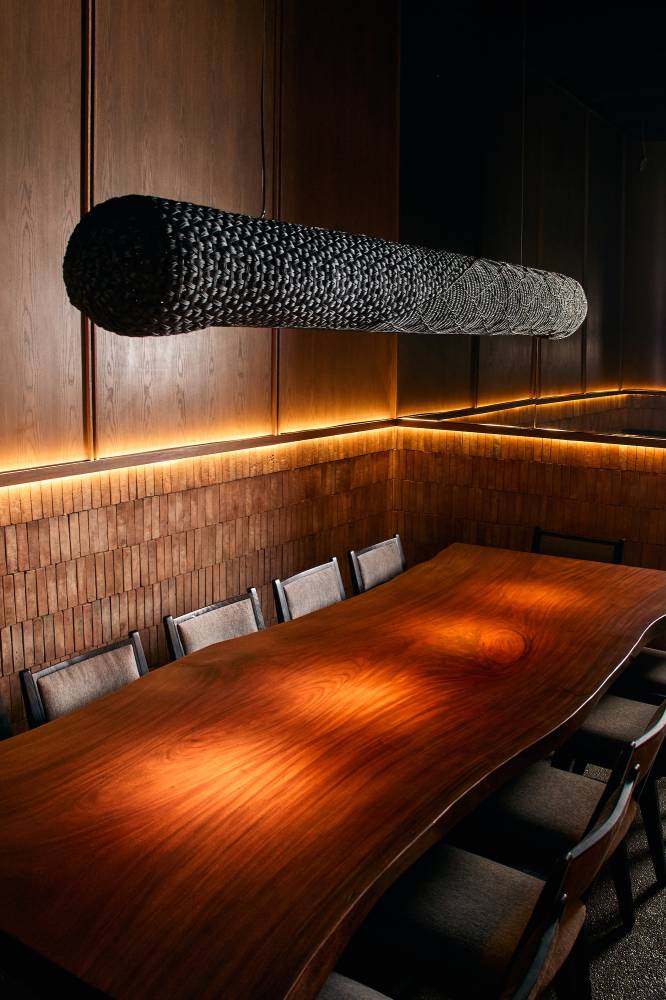
There are wood-lined walls, pebble wash floors, woven overhead lighting, heavy-duty bamboo chairs, brick wall panels, and virinas that hold ingredients currently employed in the menu. “You can see that all of the elements of the place have something to do with natural ingredients,” says Uy.
Throughout the space, you get the sense of Nazareno and Uy’s intentions to highlight the artisan dinnerware to maximum effect. At one point, we see ceramic plates by Pablo Capati III and Aly Kangleon depict the coastline, one undulating like waves, another evoking the vivid cerulean ocean; the next moment, EJ Espiritu of Cornerstone Pottery Farm and Solon Perfecto lay down the vessels of some dazzling dishes.
“I deeply believe that food is a stage for collaboration between disciplines,” Uy says. “I want to provide a unique and interconnected experience where artists can come together, and where everyone gets to experience that beauty right here.”
After all, to create belonging is to connect with stakeholders—from producers to guests—and they certainly do that here.
Deep into the flora and fauna
Uy’s dishes are all about color and flavor. Decadent when it needs it, but overall, glorious interpretations of “culinary biomes” that celebrate the biodiversity of ecosystems, whether in the Philippines, Peru, and the liminal spaces they overlap.
Simply put, Flow’s menu is how Uy imagines Peru’s rainforests and rivers, the craggy Philippine coastlines, the wet markets of Manila, Lima’s gastronomic signatures, and the Andes’ yacon—even the rainbow peaks of Vinicunca.
At nine courses long, both Uy and Ong go from strength to strength. And what makes this partnership strong, despite the time spent apart, is the deep connection between the childhood friends from Xavier School and former blockmates at the École Ducasse Manila at Enderun College. Of course, their professional resumes speak for themselves, with Ong having worked at two- and three- Michelin star restaurants—Alain Ducasse at Morpheus in the City of Dreams, Macau, and Amber at The Landmark Mandarin Oriental, Hong Kong—before becoming head chef at the Tasteless Food Group in Manila.
With that in mind, Uy’s post-Central work dials into his divine flow. He blends the produce of the land and the sea with incisive storytelling and heart-on-his-sleeve sentimentality, which are integral to a successful tasting menu.
The courses are labeled on little postcards according to origin or inspiration, with the maker of the plates also tagged. But it’s never just about identification. The point of these decisions is to understand Flow’s ever-evolving patterns—how they communicate with the customer, how they touch the palate, or the heart, really—and how they depart from perceptions about yet another tasting menu in Manila.
Finding the Central undercurrent that runs through the menu is easy. Like his mentors Virgilio Martinez and Pia Leon, the young chef dips into the ecosystems of the Philippines and Peru “because food doesn’t just exist in kitchens and on tables,” he says. “It comes from the same circle or flow of life. Everything has purpose. And nothing goes to waste.”
The natural flow
Uy also doesn’t waste time letting guests know his methods. The opening trio of courses alone acts like a powerful first strike. The three-piece Coastline course boasts offshore impressions, as he plays with spirulina (turned into a puff and filled with cool algae cream) and seaweed (styled as a salad on a nori cracker in one bite, then pickled and floating in a clear tomato and lato gel), recreating the experience of peering into the surface of the sea and practically tasting the seawater.
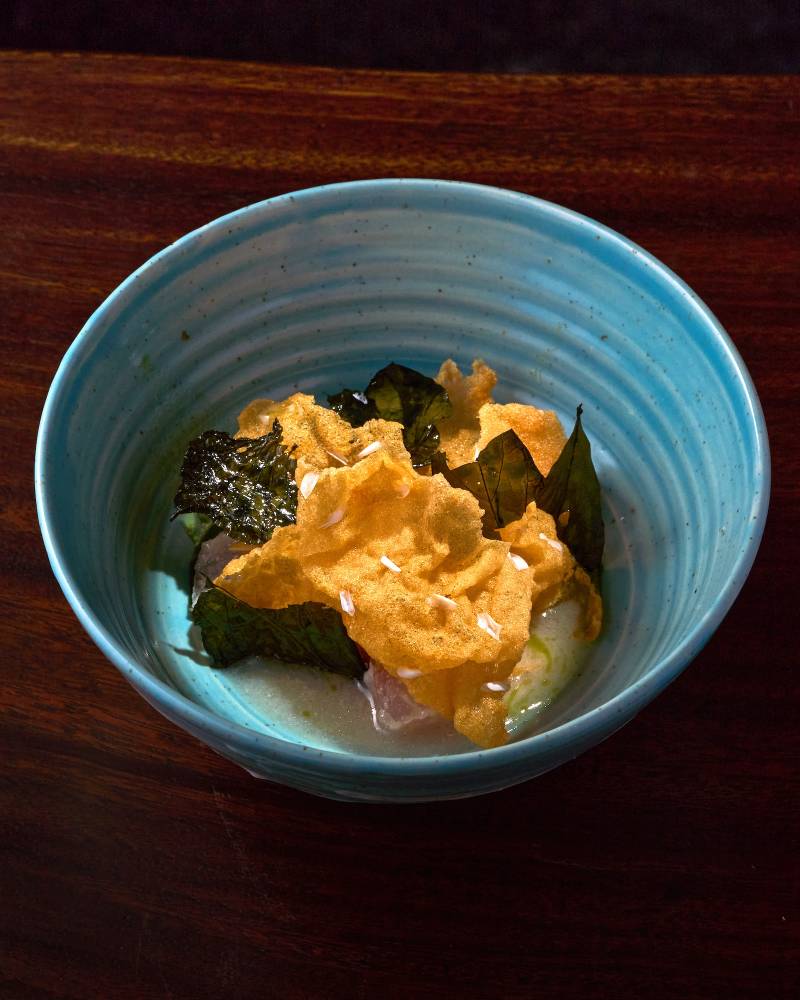
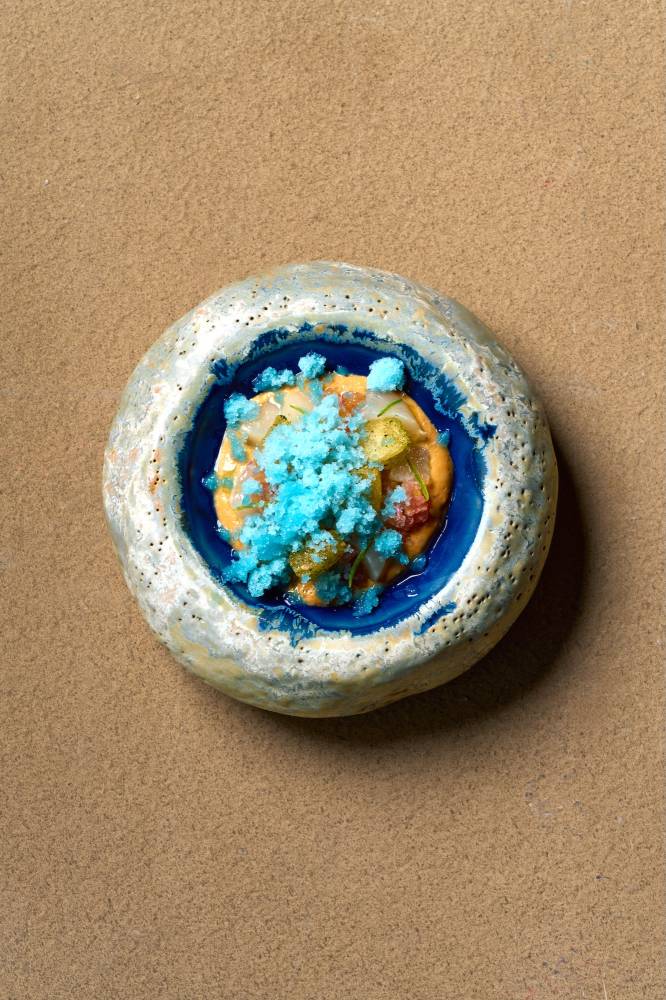
The follow-up is more immediate, and not just because it pays homage to Manila’s palengkes. The electric blue of the plate and the blue spirulina granita (made with kamias and various citruses) are sights to behold, but so are the cubes of fresh scallops and fried cassava sitting on an uni emulsion that, again, tastes like fresh ocean water. It’s one of the standouts of Uy’s menu, owing to his magnificent blend of delicate and umami flavors and textural contrasts on display.
In contrast to the first two dishes’ purified oceanic gestures, River, the third course, is about sifting through a river in Arequipa—Peru’s second largest city—and taking inspiration from chupe de camarones, a popular Peruvian shrimp chowder dubbed one of the best soups in the world.

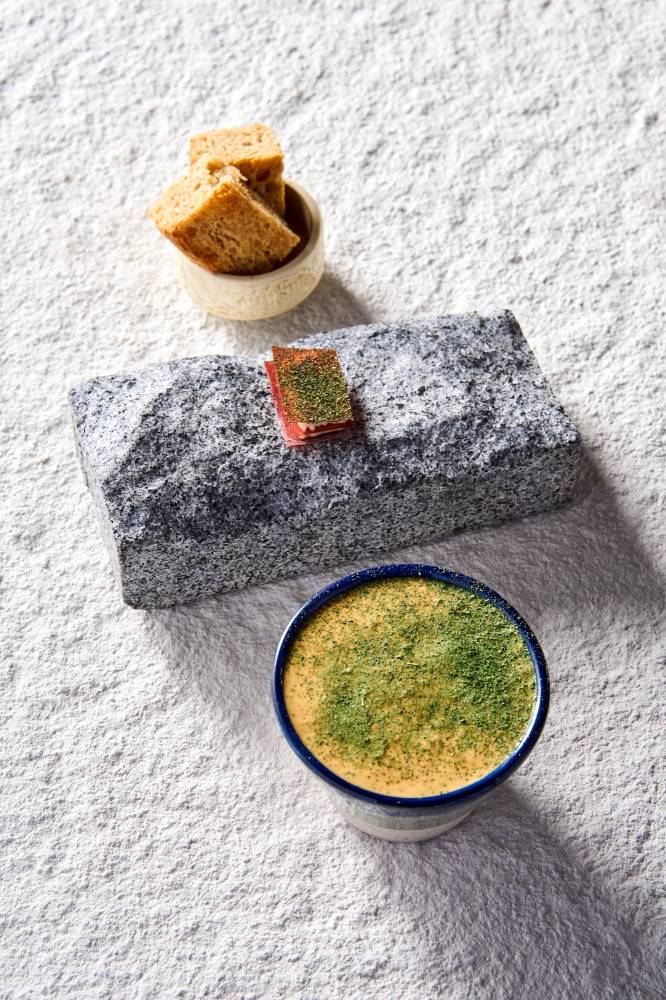
Uy reaches for a juicy ulang and cooks it in tamarillo glaze and fermented chili honey before submerging it under a mildly hot, rich, and aromatic foam. Scoop it all up or eat it with the sweet, spongy pan chuta on the side. The result is one of Flow’s most powerful courses, and it’s through this thick, hearty stew that we feel Uy’s personal experience in Peru—all the clarity, the joy, and the relief of a decision that his parents were initially dismayed at, and even scared about. “I think it is actually the best decision I ever made [choosing to go to Peru],” Uy confesses.
Unafraid to be himself
On these three courses alone, Uy is relentless. There’s no breathing room. Exhilarating, manic, and at breakneck speed. Life flashing before your eyes for the revelations Uy presents, but the finesse is never lost.
The lone snag is that it’s a top-heavy menu. But that’s not to say the succeeding dishes aren’t good—it’s less to do with the flavors and more the high bar Uy set for himself. The Amazon course of kurobuta pork face with a paste of cooked and ground turmeric, for instance, shows deft skill in wielding protein, but can feel too rich the more you consume it. As is the tender slow-cooked beef cheek, which is served with tri-color corn.
He does, however, pick things up again with a beautiful ceviche that pierces with a memorable acidity from guyabano sans lemon or lime juice. “The goal is to showcase how traditional and modern takes on this dish can blend together to represent the flavors found in the Peruvian capital,” states the dish notes.
There is also a wonderful tribute to Martinez: a dessert of cacao fruit—sourced from Marinduque and Bacolod—without turning it into chocolate to “showcase the harvest, versatility, and sustainability of cacao.”
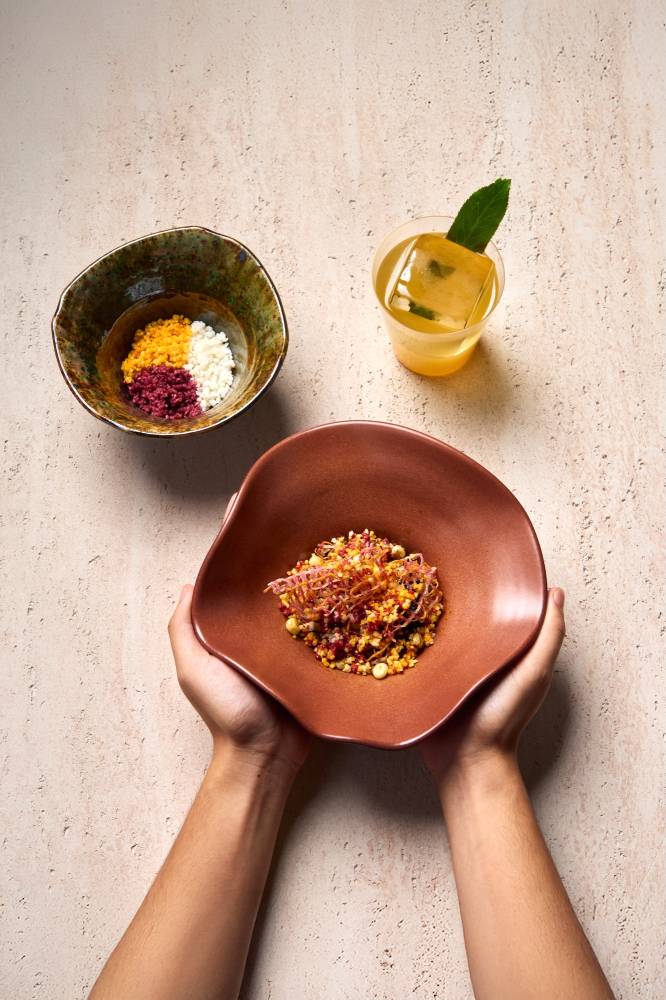
Packed with a sponge cake made from the outer husk then topped with cascara caramel, a mucilage sorbet, candied cacao nibs, and cacao leaf powder, this focus on “keeping cacao alive” (the philosophy of which is seen even on the yacon dessert, Uy’s favorite ingredient to work with in Peru) sends a message that pushing through with your ideas is the only way to earn your place in the restaurant world.
So, where does love exist in Uy’s flow state flowchart? As cheesy as it sounds, the customers themselves feel it. This devotion to the process and an enthusiasm to embrace every possibility—whether for an ingredient or a technique—is a facet of his work that will help define his new era in Manila.
He may look up to Martinez or lean on his learnings from Leon, but one thing is for sure: Uy isn’t afraid to be himself.
Restaurant Flow is now open, with reservations accepted at restaurantflow.ph or (0920) 9043569. For updates, follow at @restaurantflow.mnl on Instagram and Facebook.