










Finding the Filipino in Philippine theater

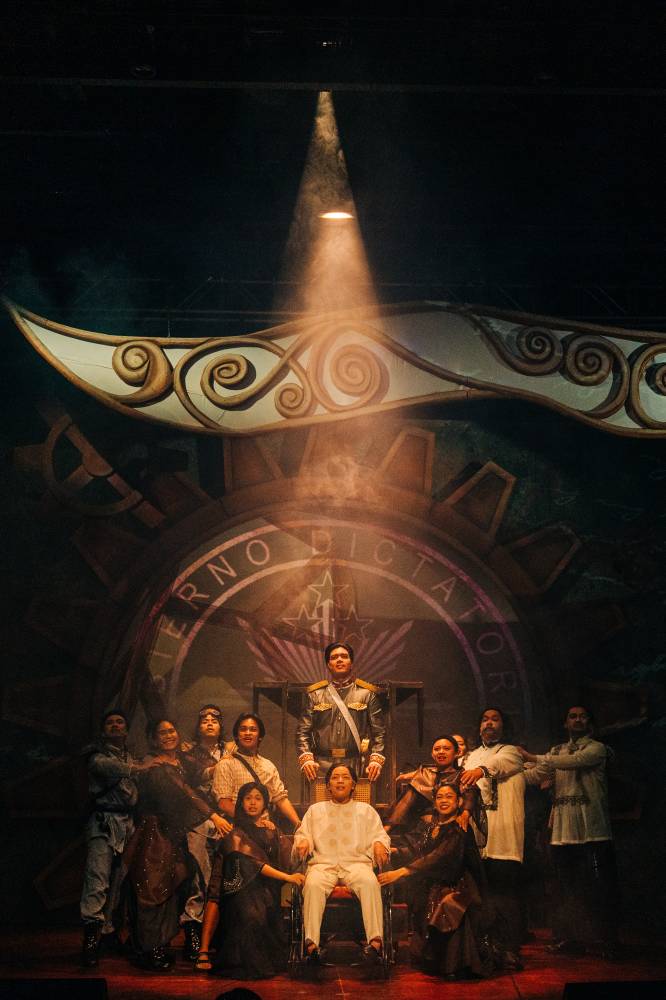
I was able to catch Tanghalan Pilipino’s “Mabining Mandirigma: A Steampunk Musical” on its last weekend at the Tanghalan Ignacio Gimenez Theater, and it was marvelous. The musical, written by Nicanor Tiongson with music by Joed Balsamo and directed by Chris Millado, is a complete theatrical experience. It has extensive musical numbers with great singing and dancing (choreography by Denisa Reyes and Richardson Yadao), intricate and playful set design by Toym Imao, and stunning projections by the late GA Fallarme and JM Jimenez.
“Mabining Mandirigma,” first produced in 2015, is a story about Apolinario Mabini as he navigates through the political challenges and the strife that followed during the Philippine Revolution against Spain and the subsequent Philippine-American War.
And through his story, we bear witness to the ravages of imperialism and how, in landmark moments of our history, the greatest enemy of the Filipino, oftentimes, is the Filipino himself.
A counterpoint to masculinity (and the patriarchy)
The show, with Shaira Opsimar as Mabini, has always cast a woman in the role. On that wheelchair, Opsimar is a commanding presence, and for all intents and purposes within the play, Mabini is a man.
But with Opsimar in his shoes, Mabini has a more caring, nurturing presence that plays counterpoint with all the masculine energy in the play; everyone from Aguinaldo (the show I saw had David Ezra, but Arman Ferrer is an alternate) to the illustrados who formed Aguinaldo’s congress (MC Dela Cruz, Roby Malubay, Jonathan Tadioan, Marco Viana).
There’s an inflection here that pushes against the patriarchy—that the oligarchy that meddled in Aguinaldo’s politics is primarily a masculine affectation, and having Mabini played by a woman provides a stunning counterpoint to this.
A wakeup call
The play is meant to be seen by students and adults alike, but because it’s written for a large audience, it means that the play is more forward with its themes. It doesn’t hold back with its criticism against what is wrong with Philippine politics then and, invariably, Philippine politics today. It also comments against patronage politics, the elite class shaping public policy to protect their own interests, and paints the imperialism of the West as our main enemy.
This is a truly Filipino production with the intention to wake its audience up from its slumber. It’s a call to action that speaks directly to our history and connects this with our present.
What’s more, the stylized “steampunk” aesthetic and tone allow the play to take modern elements in order to retell the past in ways that connect us to our issues today. This is the kind of theater that Gilda Cordero Fernando champions—and one that I really look for when watching a local production: How our shows utilize the medium’s urgency to speak directly to its audience and not just some form of entertainment.
The Filipinization of revivals
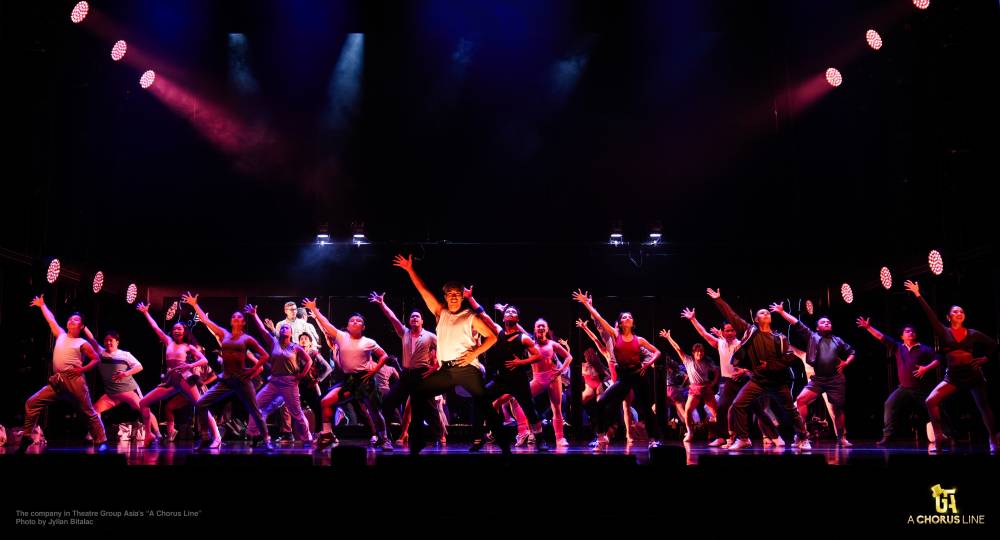
Also in its closing week last week was Theatre Group Asia’s “A Chorus Line.” The multiple Tony award-winning play by Michael Bennett—based on a book by James Kirkwood Jr. and Nicholas Dante, with music by Marvin Hamlisch and lyrics by Edward Kleban—celebrates its 50th anniversary this year. And the only show in the world to stage it (as of this writing) is the one held at the Samsung Performing Arts Theater with a cast composed completely of Filipinos, both here and abroad.
Directed by Emmy award-winning choreographer Karla Puno Garcia, the show is a heartfelt love letter to the ensemble. “A Chorus Line” is set in an empty theater as 17 dancers audition to get a part of a chorus in a new play. The show is demanding of its actors, requiring a high level of dance skills, complex acting portions, and some really beautiful songs to sing.
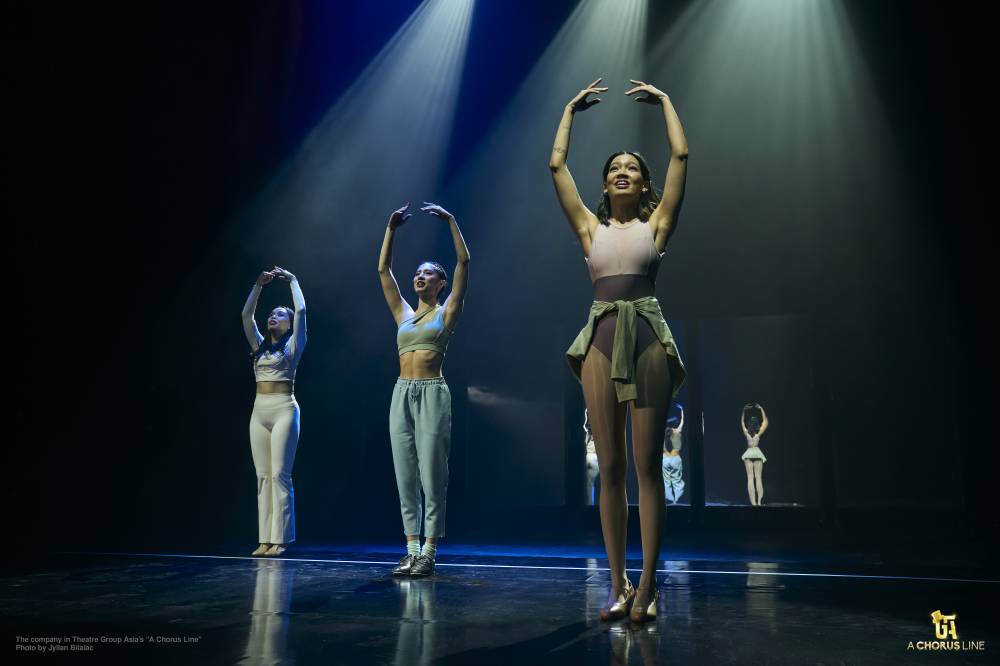
Theatre Group Asia’s production of “A Chorus Line” is a triumph in every sense: great direction, great choreography, and great performances. This is a show I grew up listening to as a kid, so seeing it live is such a treat for me.
But outside that, what good reason would we have to stage “A Chorus Line” in the Philippines other than it being such an entertaining show? This is a show about dancers trying to get into Broadway. How could we relate? How could this show reflect upon our own realities?
What Puno Garcia and her cast lean into is their own backgrounds. The Filipinos in the cast who live and grew up outside the Philippines easily slip into American accents, but when they perform their monologues and mimic their parents’ speech, they give them a Filipino accent. Some exaggerate their eccentricities, leaning into the Filipino campiness that’s prevalent in our social media and our movies and series.

What happens is that, as we watch this revival of “A Chorus Line,” we are seeing Filipinos on the world stage, sacrificing everything to do what they love. We are reminded of how many successful Filipinos have made it on the world stage as actors, dancers, and singers. It’s a very American musical, but by allowing the actors to dig from their own realities, Puno Garcia builds a show that speaks to all our hopes and dreams about making it big somewhere, anywhere.
The universality of theater
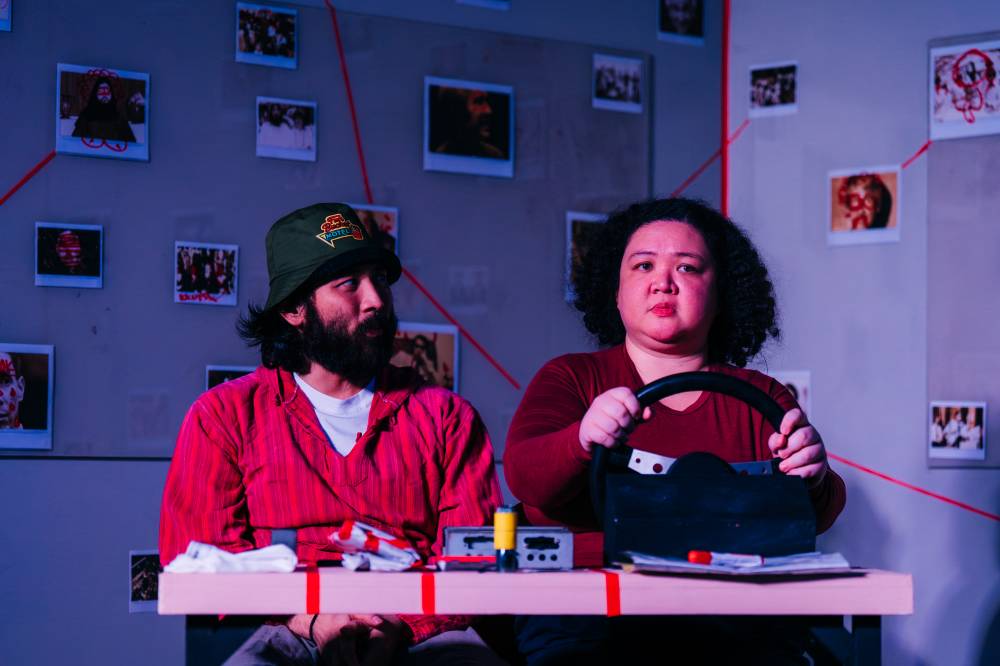
While not an adaptation, Scene Change’s “Linlangan,” directed and translated by Guelan Varela-Luarca, is a staging of New York-based playwright Davis Alianielo’s play “The Farm.” This two-hander, a brother and a sister, happens entirely in New York state in the middle of winter. But what Varela-Luarca does is to just translate all the dialogue into Filipino. He doesn’t adapt it into a Filipino setting or situation; the siblings, Tyler and Sasha, are Americans and try to reconnect after Tyler has separated from a cult. Brian Sy and J-mee Katanyag play Tyler and Sasha, and as they inhabit the siblings, they make this world real: a long drive in the winter, a brother and sister skirting around difficult subject matters, but a love for each other evident in every little gesture or look.
With Varela-Luarca’s translation and Sy and Katanyag’s comfortable delivery of these lines, I kept forgetting that they were playing Americans. What I saw on that simple stage—a table and two chairs meant to approximate the front half of a car—were two Filipino siblings bonding, catching up, taking into account the struggles of their lives. It was when Sasha made a call to Triple A (the car got stuck in the snow), and she delivered the whole dialogue in Filipino that I was taken out of my focus.
I was reminded that this story is set in America. These are Americans. They are only speaking Filipino because it’s a translation. They are not Filipino immigrants. This is not an adaptation.
Varela-Luarca delivers this Western play to us in a language that makes it accessible to us—very much like the Tanghalan Ateneo shows I’ve seen that stage Rolando Tinio’s translations of Shakespeare (again, not adaptations but just translated)—but by doing so, we see that in our tongue, there are similarities between the bonds of siblings with Americans and Filipinos.
It’s the power of theater—whether translated or adapted—that shows us that the lives of people somewhere else are not much different from here.
And for theater to really have an impact that goes beyond making us laugh and making us cry—for entertaining us—it has to take the urgency of the live performance and speak directly to our realities. It’s what I’m always looking for in any stage production.