





Revelation and reinvention in remote islands

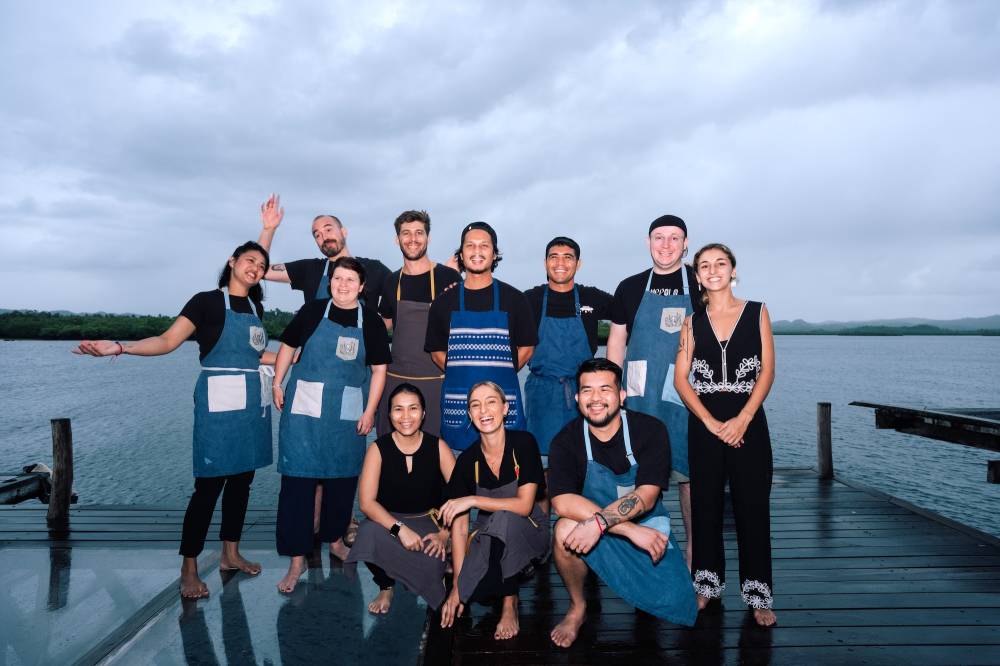
Siargao and the Faroe Islands couldn’t be poles apart from each other. For one, the weather in the North Atlantic swings between 2 and 13 degrees Celsius, a stark contrast to Siargao’s tropical climate all year round. But, as the chefs and creatives of Siargao’s Kaos and Cev and the Faroe Islands’ Roks have shown, there’s plenty of art to be found—and made—in extremes.
“Although the Faroe Islands and Siargao sit on opposite sides of the world, we discovered how deeply alike they are. Both islands are shaped by wind, weather, and season, and by a shared respect for what nature provides,” says Karin Visth, restaurant manager and sommelier at Roks.
An intimate encounter with Faroese cuisine and culture
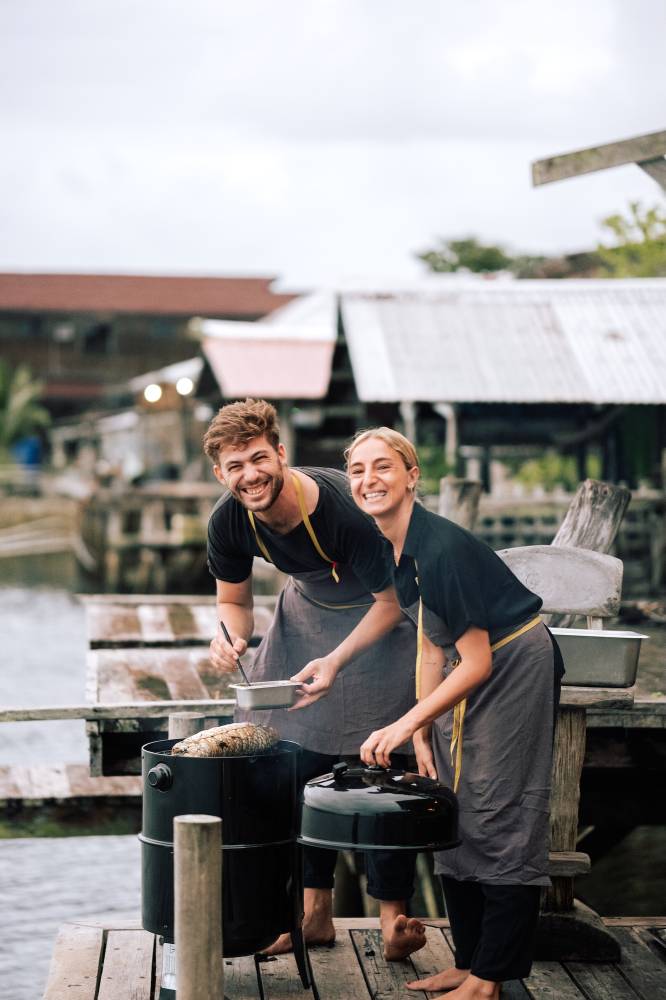
At the group’s one-off collaboration at Maragati Boat House in Siargao’s mangroves, Roks—with its flirtation with Faroese seafood, particularly shellfish—gave a rare look into their gastronomic sensibilities through products transported from their home city.
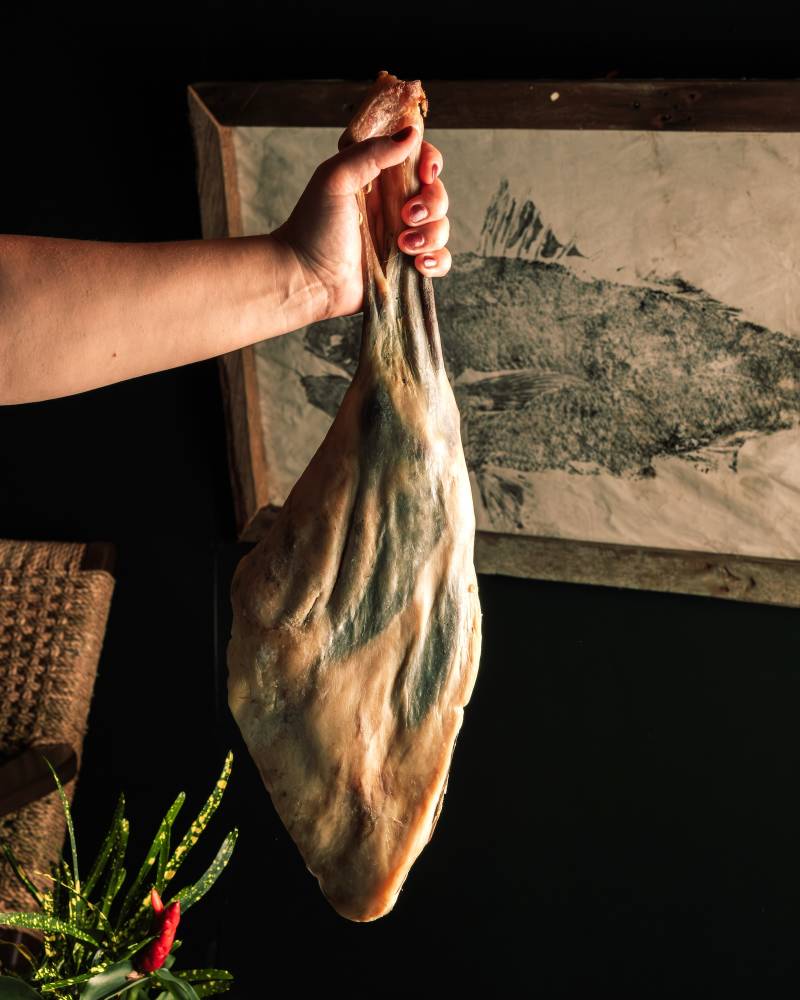
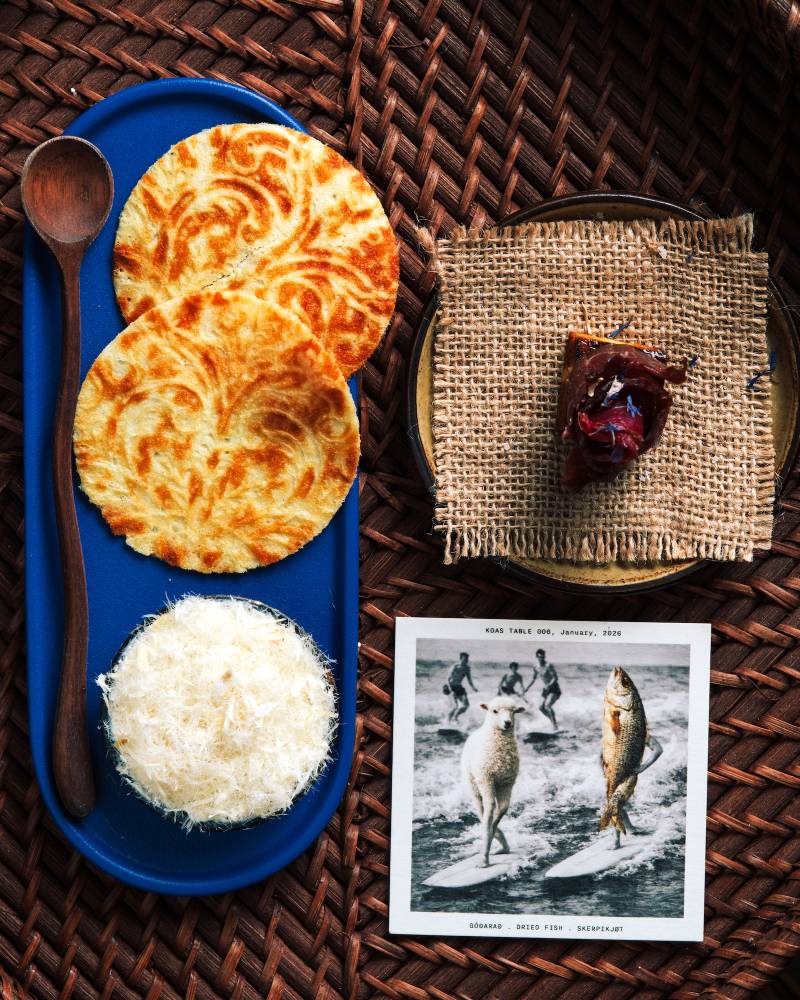
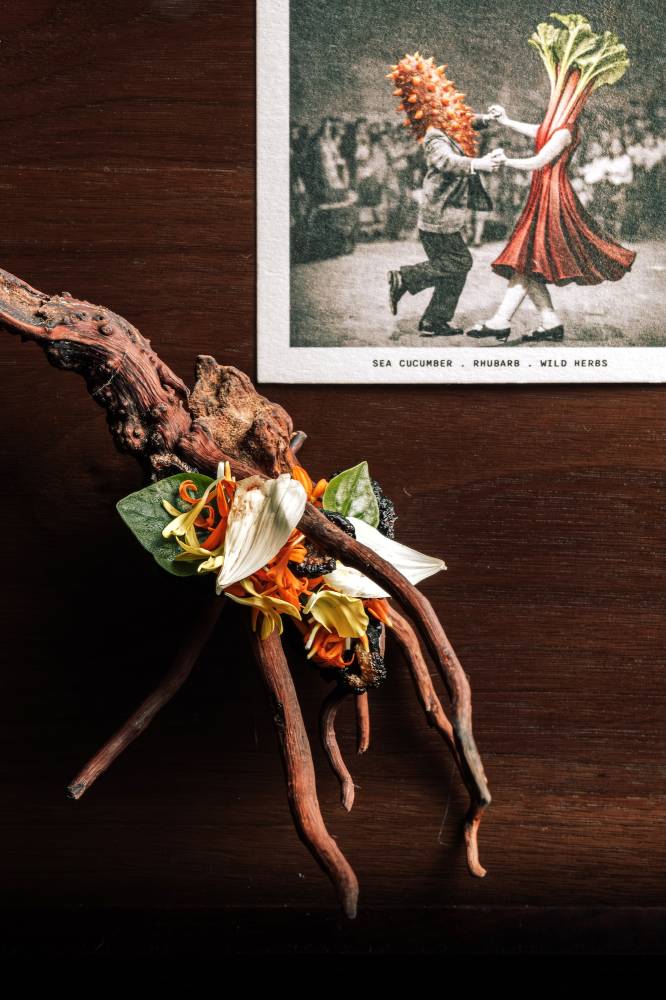
A few centerpieces stood out: skerpikjøt, a fermented lamb leg wind-dried for six months in the northern village of Viðareiði and laden with wild black honey from Siargao; goðarað, a traditional biscuit made savory and served with fermented lamb intestines/fat called garnatálg; and Faroese sea cucumber transformed into chicharon.
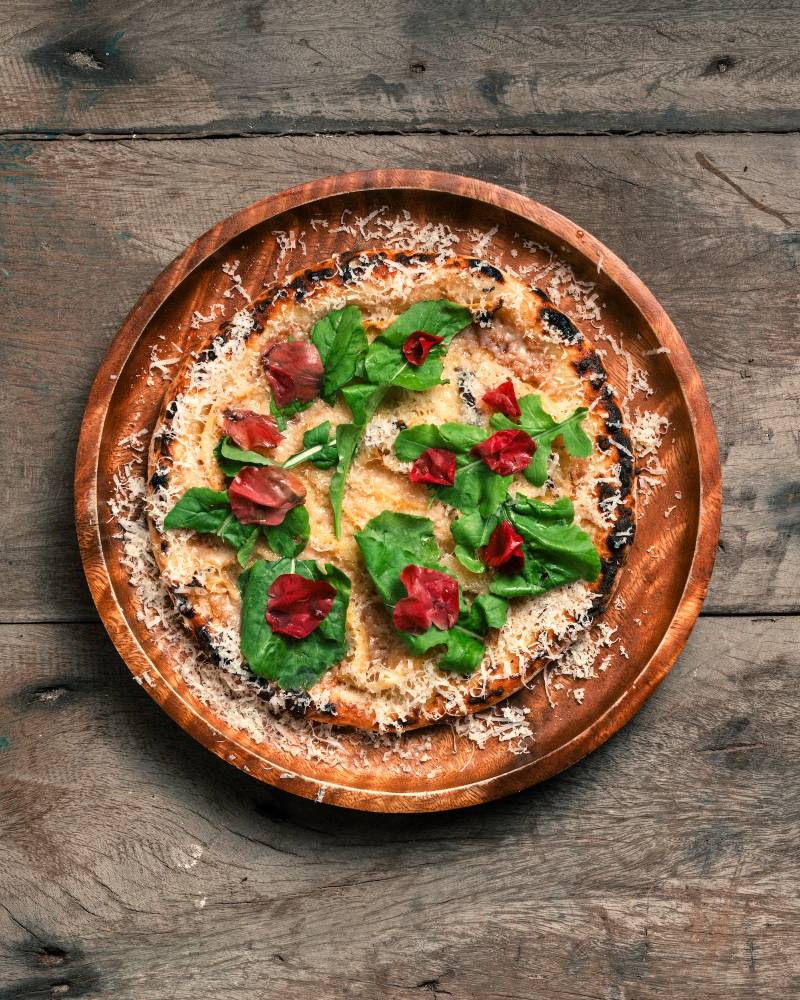
But it simply wasn’t just about traditions. There was also room for pizza made with Faroese ingredients such as rutabaga, pickled rose, and cheese from Múli.
“With the Faroe Islands so distant from Siargao, I never imagined I would encounter Faroese cuisine and culture in such an intimate way,” says David del Rosario, chef and owner of Cev, the Siargao institution known for its inventive takes on ceviche and kinilaw.
“While our climates may be the most striking contrast between our landscapes, witnessing how the Faroese preserve, cook, and honor the ingredients around them was deeply moving.”
Same same but different
For Cev and Kaos—the collective behind Roots, Branch by Roots, and the Kaos Table Series itself—the collaboration presented an opportunity to create a “same same but different” dynamic to their menus. One that cracks open their core, connects their Faroese discoveries, and tightens the screws until the result is equal parts Siargao and Faroe Islands.
Del Rosario thrived on local favorites of sinuglaw and kinilaw, only interpreted their own way, with a pair of rich sauces (aligue and green chili pinakbet), while culinary director and co-founder Filippo Turrini’s tortellini is perhaps the primary example of the Kaos collaboration. He filled the pasta with gamet seaweed ragu, added an infusion of Cordillera porcini mushrooms into the mix, and consolidated seaweeds from both landscapes.
“Kaos Table is about creating experiences where landscapes speak through an interdisciplinary approach,” explains creative director Ines Castañeda. “Our goal was to do that by bringing the Faroe Islands and Siargao together, not in contrast, but in dialogue. It was about recognizing shared values shaped by isolation, seasonality, and a deep respect for nature.”
Despite the distance, all three restaurants came together to create a boundless new landscape that moves between fermentation and freshness, acidity and intimacy.