










This pastry chef plays with Filipino flavors for a serious reason

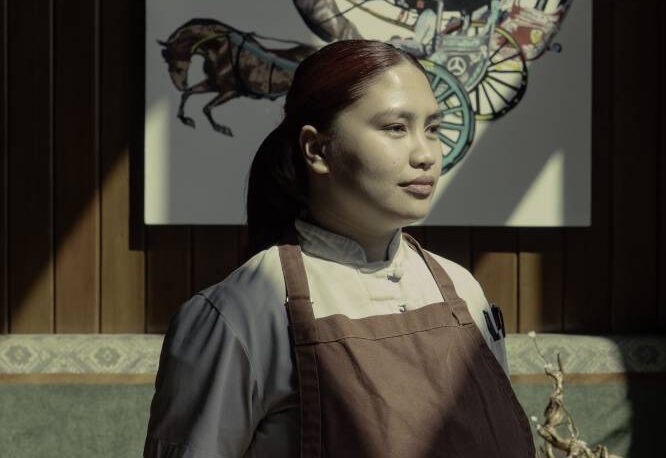
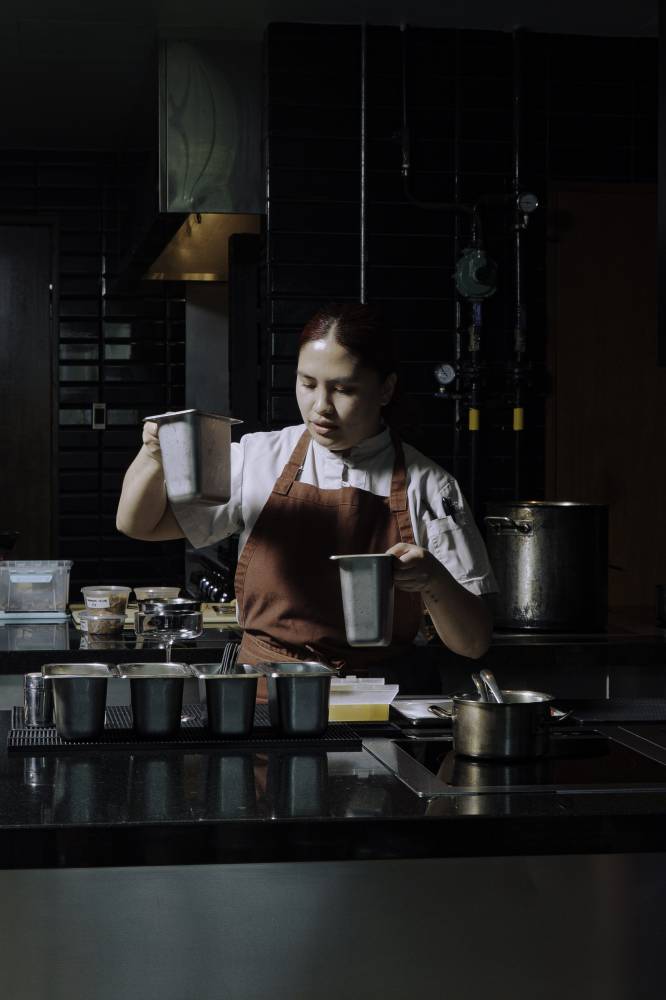
“I love Judy Ann [Santos-Agoncillo],” gushes Sam Singson-Javier, the red-haired pastry chef of Hapag and Ayà, whose sleek ponytail somehow references the hairstyle of Santos-Agoncillo’s iconic ’90s “Mara” character.
“First, because of the movies. I love Filipino movies,” Singson-Javier says, “and then her cooking show. I love it because it’s family-oriented. Her kids are also involved in cooking, and it’s very casual… There was that one time sinabi niya na walang nangyayari that moment, it’s very totoo lang in cooking.”
Respite, however, doesn’t come as often to Singson-Javier in the Hapag and Ayà kitchen as it does at home. But it’s a reality she understands, especially now after both restaurants’ Michelin Star and Selected recognitions. “There’s no pressure on cost or timing, and I can experiment freely,” she says. “On the other hand, at Hapag, everything is more structured and time-sensitive. I have to manage prep schedules, oversee my team, and ensure every detail is perfect for service.”
Not that it’s a problem for the 29-year-old pastry chef.
“Sam in the kitchen is very passionate. She gets into the zone, and she always strives for perfection,” says Erin Recto, Hapag and Ayà’s operations director and sommelier. “But she is unapologetic about her craft, and she doesn’t stop until she feels like it could be the best that it could be.”
A graduate of First Gourmet Academy and Academy of Pastry and Culinary Arts at Treston International College, Singson-Javier possesses baking talent that’s on par with her ambition. “My pastry philosophy is to help push Filipino food forward, especially through desserts.”
But while she started as an intern at Hapag’s Katipunan location back in 2023, her journey from culinary student to pastry chef is gripping, to say the least. “I graduated with a degree in international studies, and initially, I was seriously considering becoming a lawyer or a diplomat. But as I tried out different hobbies and interests (pottery, yoga, and even diving), that’s when I realized those paths weren’t really what I wanted,” she explains.
“When I gave culinary arts a shot, that’s when I realized pastry was what I wanted to pursue.”
And thank goodness, she did. Singson-Javier is emerging as one of the finest creative storytellers today in foodservice. Her desserts slap hard. They tell stories, illustrate characters, and give meaning to their source materials.
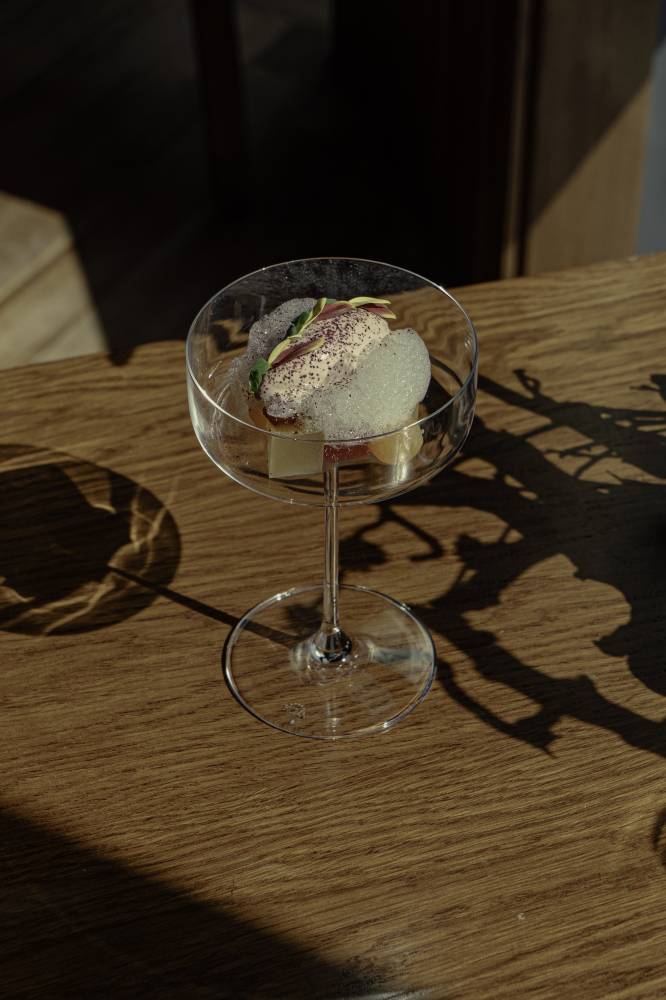
Take, for instance, her knickerbocker for Hapag’s Western Mindanao menu. Mounted on a simple coupe glass, the presentation is simple, but the flavors are fluid, sultry, and tropical to stimulate the senses. It also demonstrates her approach to carrying out her vision of highlighting local ingredients and traditions.
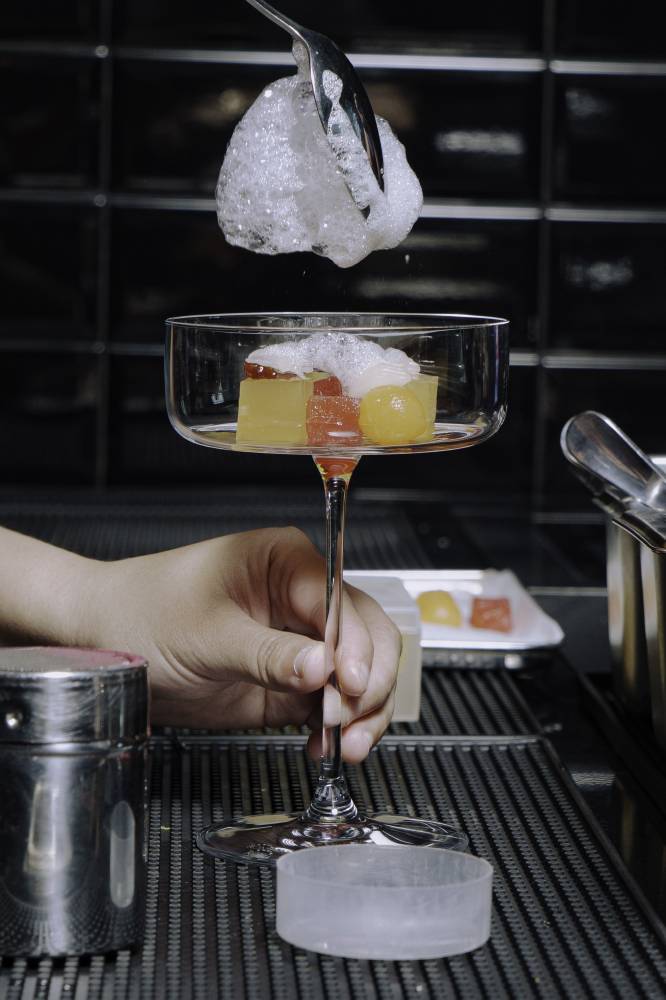
“It’s made with tropical fruits like watermelon and melon, plus lacto-fermented langka jam and pickled longan for acidity,” she explains of the exquisite dessert. “Instead of the usual milk, we use an amazake–pili nut milk foam. It’s light, a bit nutty, and has that subtle, condensed-milk sweetness. We finish it with strawberry ice cream and a dusting of roselle powder for a tangy lift.”
It’s one dessert, among many others, that can hold an audience. But for all her successful experimental streaks, Singson-Javier isn’t immune to failures, especially when it comes to Hapag’s savory family meals. “One time I made sinigang that is sweet because I used sampalok syrup,” she sheepishly admits, using even more than required.
“That’s a year ago, and until now I’m still being haunted by it,” she says with a laugh. “Every time someone makes sinigang for a family meal, they ask, ‘Is that sweet?’”
It may have been too sweet, too syrupy for a savory meal, but it’s a mark of Singson-Javier’s hyperactive willingness to test new things. She doesn’t play it safe, and that’s going to be good for her in the long run. Maybe next time, she and Juday, who herself has cooked up sinigang twists (with lychee and lechon and tinapa rolls, anyone?), can collaborate on a new dish.
Now that would be an iconic collaboration.
What, for you, is the charm of pastry or baking?
The charm [of pastry-making] lies in its science. Every variable you add can change the final product, and that’s what makes it so fascinating. Also, baking has a grounding effect on me. Sometimes, it tests my patience because you can’t rush the process. When something’s in the oven or when you’re perfecting a dessert, it takes time, and that challenge is something I love.
It’s this combination of science and patience that really draws me in and motivates me to continually improve.
Can you tell us about your approach to developing desserts or dishes?
Whenever I develop desserts, I always consider the flow of the menu, especially how each dish feels after the main courses. For this one, my approach was to create something that refreshes and resets, while still tying back to the local ingredients and flavors of Western Mindanao.
I also make it a point to ask chef Thirdy [Dolatre] and chef Nav [John Kevin Navoa] for their input, since it’s always a collaborative process for us at Hapag. At the end of the day, they guide the direction of the menu, and I love being able to build on their ideas through pastry.
What is your pastry philosophy or advocacy?
I love showcasing our local delicacies, not just because they taste amazing, but because each one carries a story and a sense of place.
For example, during our recent trip to Cordillera, one of the farmers told me that the kakanin they make uses heirloom rice. She said something that really stayed with me—that if people stop making and eating those traditional dishes, the farmers will eventually stop producing the rice, too. Nagtatanim sila because may kumakain, pag wala nang kumain, hindi na nila itatanim so mawawala na sa ecosystem. It made me realize how deeply connected food is to culture and community.
That’s my biggest motivation—the fear of losing these traditions and flavors. That’s why I’m passionate about creating desserts that honor our heritage.

What are the top things you’ve learned in the F&B industry?
One of the biggest things for me is how much you learn from people—your teammates, your mentors, and even the people you’re cooking for. It really teaches you how to work together, adapt, and keep your cool when things get hectic.
What I truly love is the full-circle nature of what we do, from R&D to preparation to service, and then seeing the guests enjoy what you’ve created. Sometimes, they even provide feedback on how to improve it, and I really appreciate that process. It’s a wonderful and rewarding industry to be a part of.
What are some of the biggest challenges pastry chefs face?
Pastry is highly sensitive to variables such as temperature, timing, and humidity. And working in a tropical country like the Philippines [means that] these factors can significantly impact the outcome. Even small things, such as brownouts or a hot kitchen, can be tricky to manage.
Another challenge is that in a mixed kitchen—where both pastry and savory dishes are prepared—you must be particularly mindful of how flavors and aromas interact. I literally smell every deli or container I use—like, is that garlic over there?—to make sure nothing will affect the dessert I’m working on. It may seem insignificant, but in a busy kitchen, those details really matter.
What local ingredients do you think Filipinos shouldn’t overlook?
We have a wide variety of delicious local fruits and even nuts, like pili nuts from Bicol, which I really love for their rich, layered flavor.
What trends are you seeing in the coming years?
Honestly, it’s funny to think about trends, but what I’m seeing now is bakeries doing more seasonal degustations, like dessert tasting menus paired with wine. People are really enjoying experiences like that, where it’s not just a pastry you eat, but a whole curated moment.
I also notice a trend toward open, modern bakeries that feel minimalistic and approachable, something that resonates with the younger generation.