











You can have your heirloom rice and buy it, too

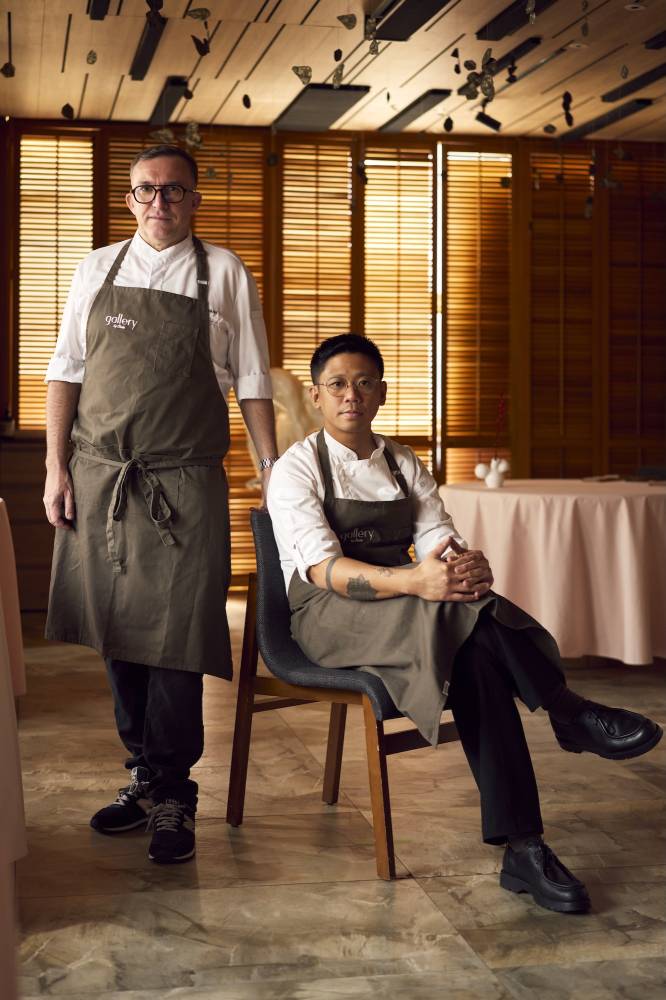
Gallery by Chele has long been recognized for its research into local ingredients and for upholding them through its award-winning cuisine, under the guidance and leadership of Chele Gonzalez and Carlos Villaflor.
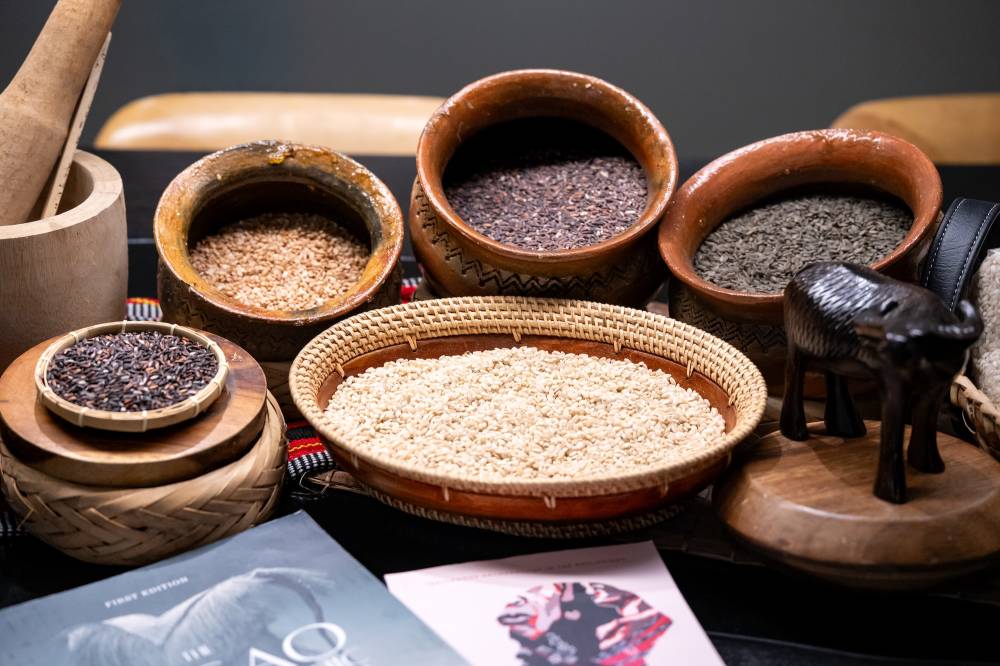
Now, the two have developed a new tasting menu revolving around heirloom rice and its production’s survival. And they’re not just doing it by enriching signature courses with minaangan or roasted rice, or by planting well-produced rice cake innovations into the experience. Gallery by Chele is bringing bags of heirloom rice from Cordillera farmers directly to your table, too.
Blending revenue-expanding retail with dining isn’t new, of course, but Gallery by Chele’s cross-selling approach is greater than just making a sale. “Our role is to highlight these ingredients and convey the stories behind them. If more chefs begin working with heirloom rice, the impact could be much bigger than what one restaurant alone can achieve,” says Gonzalez.
Turning diners into customers
The table is one of the most important places in the restaurant. It is here where the dining experience occurs, and where key customer decisions are made. Hence, tabletop marketing is another notable method to communicate your brand identity even more, subtly reinforce upselling and cross-selling, or simply send a strong statement to customers.
Of course, Gallery by Chele approaches it differently. In the case of The Heirloom Rice Project, the Michelin-starred restaurant employs tabletop marketing to show off all sides of its creativity throughout the dining experience.
A beautiful trifold menu with a parchment paper insert listing the dishes and striking photography of the Cordillera rice terraces sets the tone of the dinner. Then a series of premium paraphernalia asks guests to pay attention to the unique branding elements. Think tree-shaped cards that tell stories, postcards that read like passionate pleas for help in sustaining agricultural traditions that are under threat, photos of farmers and colorful rice varieties, and beautiful watercolor illustrations of rice’s diverse applications in the menu.
It all sounds heavy, but Gonzalez is unencumbered—weightless, even—by the expectations he set himself out to do for the farming communities. And maybe because it’s an endeavor close to his heart since forming relationships with farmers in Kalinga, Banaue, Ifugao, and Benguet in 2016, from whom he directly sources and supports these groups, the best way he knows how.
“To understand heirloom rice, you need to go to the mountains and meet the people who grow it,” Gonzalez says. “In many of these communities, rice is not only food. It is part of their identity and culture, and it is connected to traditions that have existed for centuries.”
“If more people understand the value of these grains, we can help create a stronger market for the farmers who continue to grow them,” adds Villaflor.
Rice is life
Of course, marketing heirloom rice, making it available for purchase after dinner, and ensuring 100 percent of the profits go directly to farmers is just one facet of the project. The new tasting menu centered on these ancient grains is another compelling mechanism.
The 10-course menu is built around rice, obviously, featuring Cordillera varieties like tinawon red and white, deremen, Kalinga unoy, Pasil unoy ginnonaw, black lennagang, and ijampulo. Like most of his menus, Gonzalez channels the best out of the ingredient, cultivating rice into bioproducts like miso, shio garlic, tapuey, buro, and lacto-fermented or roasted koi, and applying them throughout.
This is the genius of Gonzalez: harvesting the very essence of an ingredient to amplify it to a larger audience. “Heirloom rice is one of the Philippines’ most unique products, yet it is still not widely understood,” he says.
“These rice varieties are not just ingredients,” adds Villaflor. “They represent generations of knowledge and a living agricultural tradition that still shapes the culture of the Cordillera.”
The Heirloom Rice Project is fundamentally a refraction of heirloom rice. The journey follows a familiar template featuring a few familiar courses freshened up with rice details, such as the wagyu A5 paired with a minaangan cracker. But the self-aware Gonzalez neither overemphasizes nor overplays it, delivering rice in spades albeit with glorious restraint.
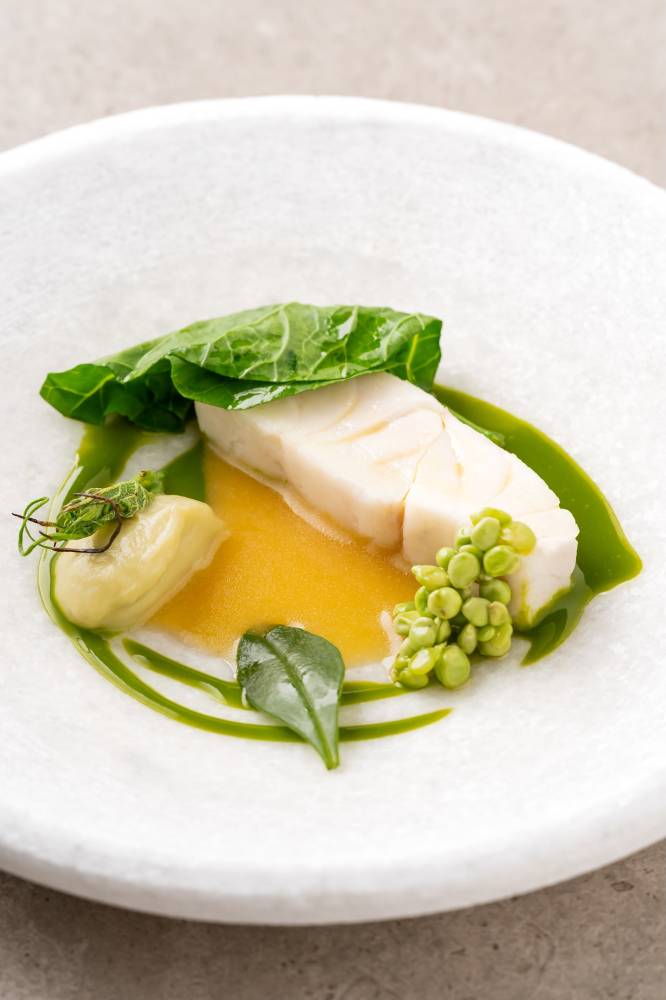
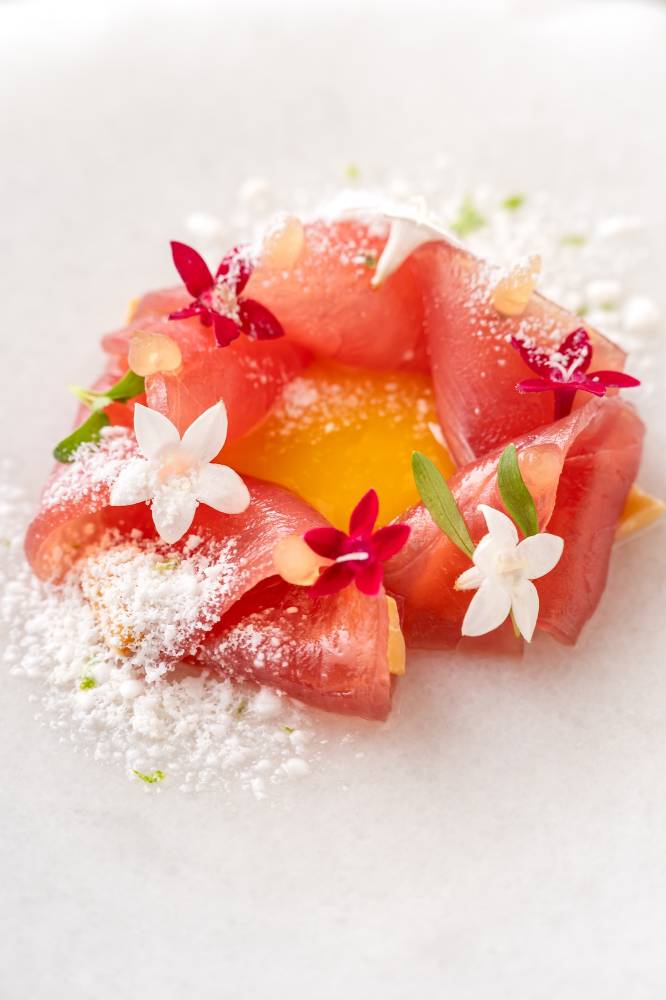
It gleams as rice vinegar in the signature pulpo plate, it revels as mirin in a tuna mango kinilaw opener, it shimmers as tapuey and white miso over the creamy acidity of a perfectly cooked grouper, and it congeals into fermented ice cream with crab meat and aligue emulsion.
On rare occasions, though, the styling can also overpower the palate. The abalone arroz caldo is perhaps burdened by the extra intense smokiness from the broth (made from lobster, chicken, and pork) and the cured kiniing.

Making grains
But it’s on the dishes that put rice front and center, where Gonzalez hurls you into a whole new dimension.
In the Stvdio Lab, they conceived a fermented mango using bubod, a traditional starter commonly used in local rice wine, to extract a ruffled texture and feathery mouthfeel, complementing the sweet fruit. Depending on how you see it—a dusting of snow, a fuzzy carpet—it’s impeccably experimental.
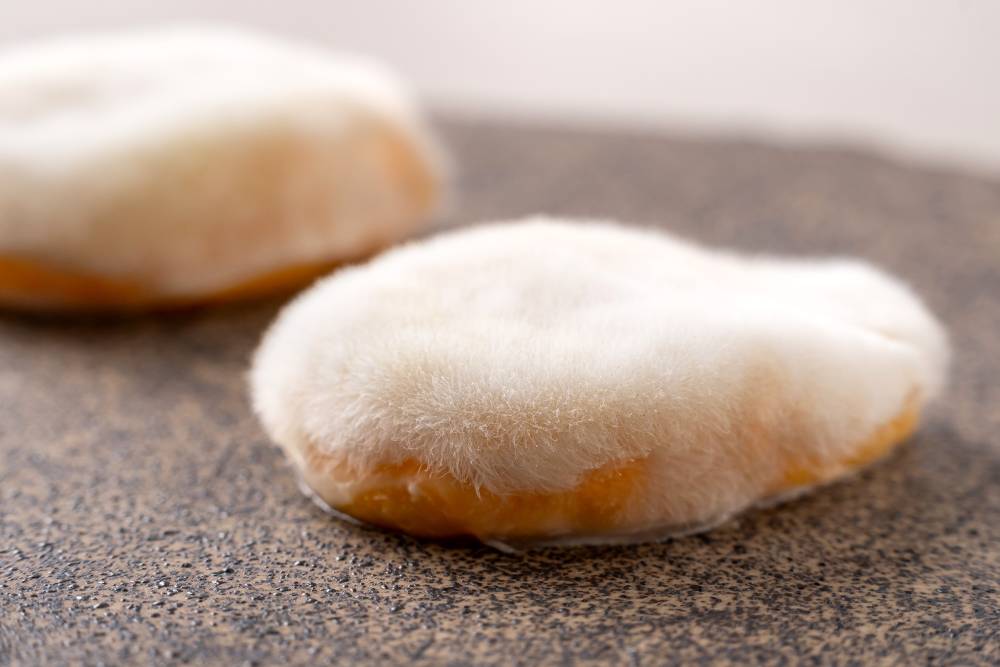
What follows is an even more enthralling exploration of rice’s numerous possibilities. The rice cake innovation, in particular, is spectacular in its simplicity. “The glutinous rice texture is something we don’t have in the Western world,” shares Gonzalez.
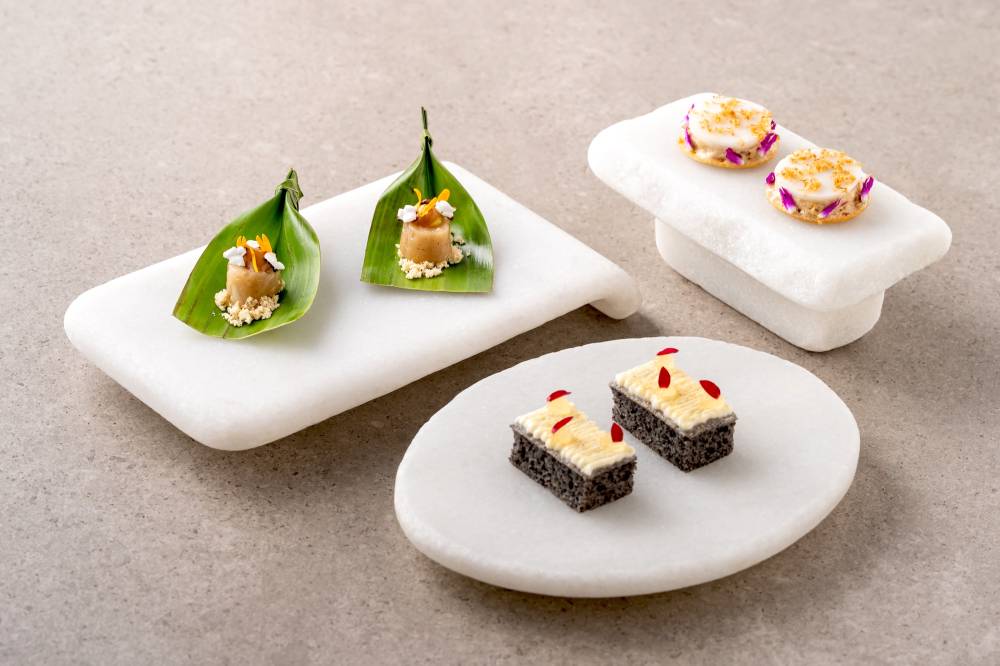
Using three types of glutinous rice from Banawe, Gonzalez goes technical with tradition, recreating tupig (grilled with peanut sauce and rice crumble), puto (steamed Mountain Violet rice topped with local goat cheese mousse and tinapa), and sapin-sapin (coconut, langka, and ube with queso be bola tuille and latik mousse made from red glutinous rice).
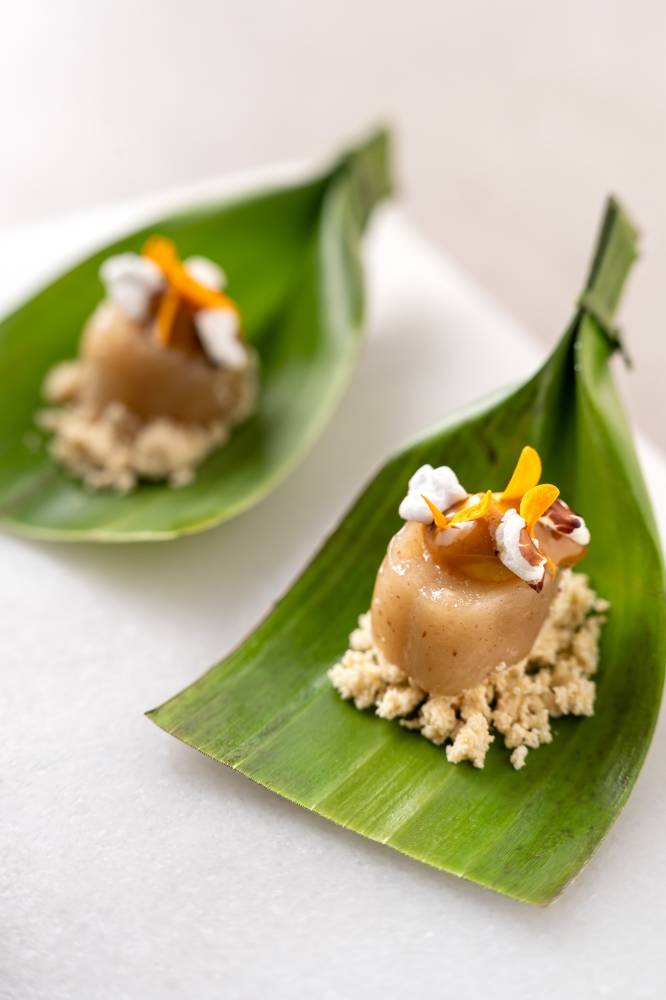
There’s a lot of happiness in these small bites, proof that desire generally equates to rewarding results. “I always wanted to do something with glutinous rice,” says Gonzalez.
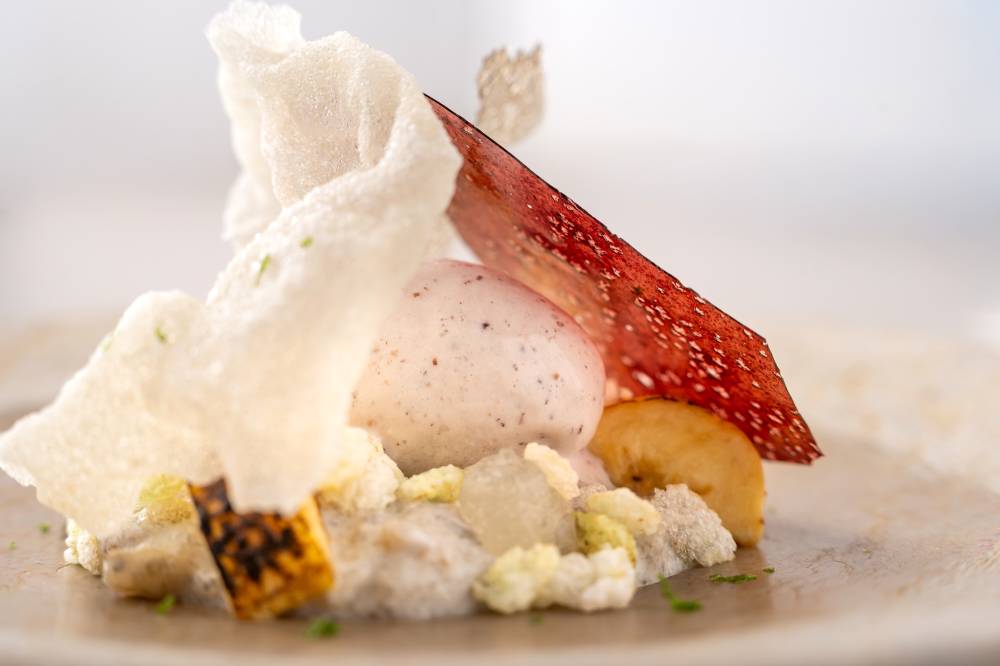
Where he really ramps it up is on his pre-dessert course called Rice Textures, creating arroz con leche from Pangasinan’s deremen, suman ice cream from Visayan tapul, white rice cracker from the grains of Ifugao’s Mayoyao tribe, and sprinklings of pinipig, Mountain Violet rice, and minaangan to complete the course.
It’s as if Gonzalez is reckoning with the reality of heirloom rice’s survival the best way he knows how—carrying his zeal onto a menu that entrusts indigenous rice varieties for an entirely new generation.
The Heirloom Rice Project offers a 10-course tasting menu priced at P7,200++ and a six-course tasting menu at P5,800++. For reservations, visit gallerybychele.com