



Balisacan: Check oil industry for cartel-like behavior

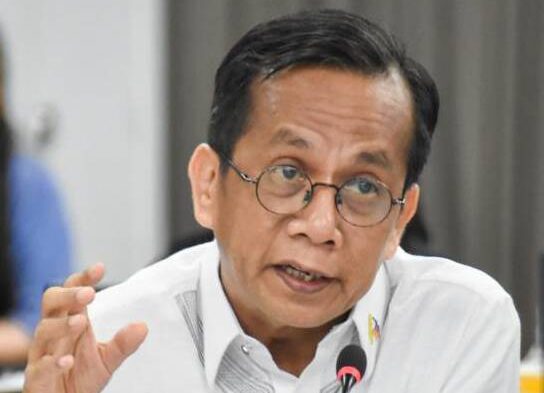
Economic Planning Secretary Arsenio Balisacan said the Philippine Competition Commission (PCC) and the Energy Regulatory Commission (ERC) should look into any possible cartel-like behavior in the oil industry.
Balisacan made the remarks on Wednesday during a hearing called by the Legislative Energy Action Development (LEAD) committee of the House of Representatives where he was asked whether there was enough competition in the petroleum market.
In response, Balisacan said that he had not seen the oil industry up close recently, but it was a matter that was “worth looking into closely.”
He said that both the PCC and ERC had the power to check whether oil companies were engaging in “anticompetitive practices” which lead to connivance and the maintenance of high fuel prices.
“Having come [from] and having served as the founding chair of the [PCC], I am a bit hesitant of going back to the past practice of having one or two players in a sector where potential abuse of dominance in the market is likely,” he said.
Legal tools available
Balisacan said the government had the “laws and the tools to look, review, investigate whether the players in those industries are abusing their dominance.”
He said that what was needed was a “better coordination” between the ERC and the PCC” in enforcing measures to ensure competitive practices in the industry. These agencies can look into high margins and excess profits of oil companies, he added.
According to Balisacan, even if there are many oil players in the market but only a few have a dominant share, anticompetitive practices may prevail.
“I haven’t looked at the market since then but I think that given the seemingly excessive margins during this crisis, I think it’s worth looking into closely,” Balisacan said, referring to oil price surge due to the war in the Middle East.
When there are very few players in the market, and the government asks them to cooperate or coordinate, it is “actually asking a cartel,” he said.
He said he had not closely looked at what the Department of Energy had been doing but “what we do know is that the industry is a highly concentrated industry, there are only a few players.”

“And so, in Economics 101, you know that it’s easier to coordinate when there are only very few big players—even if there are too many players but there are only a few who really control or have a dominant share of the market,” he said.
Balisacan clarified, however, that he was not concluding that a local oil cartel existed, but still, it was worth checking by the PCC and ERC.
Marikina Rep. Miro Quimbo, LEAD committee chair, acknowledged that one issue that the panel was facing may be the cartel-like behavior—noting that the practice of implementing price hikes every Tuesday may have led to a “cartelization” of the oil industry.
Quimbo said that regulating the oil industry again may be a step back, but proper competition between companies must be ensured. “Because if we do not check it, it really brings about a cartelized behavior in our economy, particularly in the petroleum sector,” he said.
On Wednesday, 13 committees of the House held a joint hearing as the LEAD, to discuss measures to address the fuel price crisis and deliberate medium and long-term solutions to energy concerns amid the Middle East conflict.