










SC stops firm’s quarrying in Bulacan forest

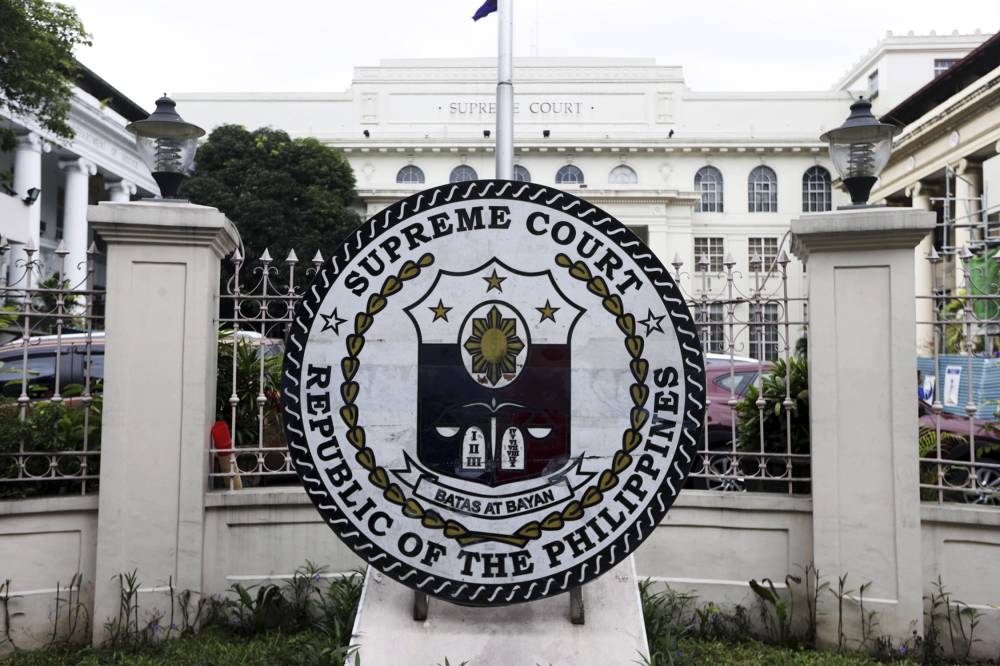
The Supreme Court has ordered a construction company to immediately stop its illegal quarrying operations at the Angat River-Bustos Dam Forest Reserve in Bulacan province for causing destruction to the crops, vegetation and wildlife habitat in the area.
The court, in an en banc session on Wednesday, granted the petition for a writ of kalikasan as well as for a temporary environmental protection order sought by Narciso de Leon against Harley Construction Inc./Harley Construction Co. and its executive Anthony Halili, who are responsible for the quarrying, excavation, earth extraction and other similar activities in the protected forestland.
Created by the Supreme Court in 2010, a writ of kalikasan is a legal remedy unique to Philippine law. it came out with the rules of procedure to help in deciding cases involving environmental damage that threatens life, health and property.
The construction company was also banned from conducting other activities that may cause “additional damage to the environment.”
In 1969, Proclamation No. 573 declared that the parcels of land traversing various barangays in the towns of Norzagaray, Doña Remedios Trinidad and Angat, now known as the Angat-River Bustos Dam, would constitute a permanent forest reserve.
The Angat Dam is a major source of potable water for Metro Manila residents while the broader forest reserve is deemed crucial to the watershed system, including providing irrigation for farms in Bulacan and Pampanga.
Gov’t contractor
Publicly available records show that Harley Construction Inc., which holds office in Sta. Maria, Bulacan, had been a contractor for various government projects, including those of the Department of Public Works and Highways (DPWH) and the Rizal provincial government.
The high court invoked the precautionary principle, which is under the rules of procedure for environmental cases, when it granted the writ of kalikasan. It cited a technical report that found that Harley’s activities “significantly increased surface runoff, erosion, and sedimentation within the watershed system.”
“Reports indicated that these activities have destroyed cultivated crops, vegetation, and fruit-bearing trees that serve as wildlife habitats,” the court said in a statement.
Under the rules, the precautionary principle may be applied to resolve a case when there is still a lack of scientific evidence to link the human acts to the irreparable damage to the environment.

But the “constitutional right of the people to a balanced and healthful ecology shall be given the benefit of the doubt,” the rules noted.
The Supreme Court also explained that any change in the natural features, even if it’s just a portion of a protected area, poses serious risks to people living in the provinces affected by the stability of the Angat River-Bustos Dam.
******
Get real-time news updates: inqnews.net/inqviber


