



DepEd letting school heads decide if classes can resume

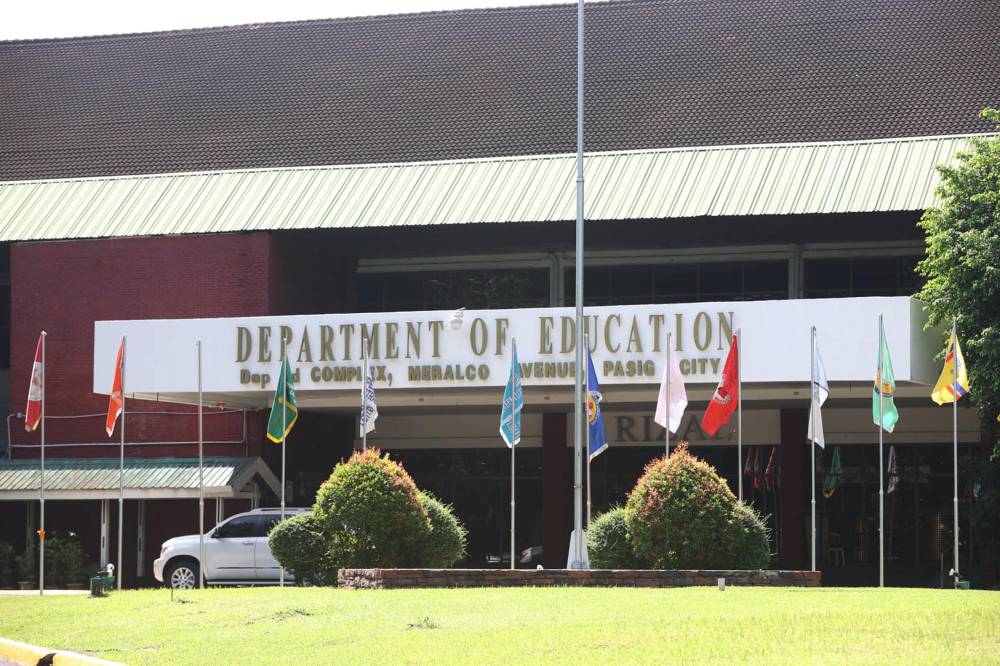
Growing more concerned about successive class suspensions, the Department of Education (DepEd) now wants school heads to decide whether it’s safe to resume face-to-face classes during bad weather in coordination with mayors.
DepEd has submitted a draft executive order (EO) on the matter to President Marcos following three weeks of monsoon rains that triggered massive flooding and landslides and forced thousands of schools to defer classes. In many areas, suspensions have extended to up 10 days.
“While safety will always remain our nonnegotiable priority, we can no longer rely on broad, blanket suspensions where an entire city shuts down even when individual campuses are dry, safe, and ready to teach,” Education Secretary Juan Edgardo Angara said.
“If a school is clear, accessible, and certified safe, our learners should be back in the classroom without delay,” he added.
Under the draft EO, when class suspension is declared in a locality, school heads can initiate class resumptions based on a “documented site-specific assessment,” provided they get the concurrence of their respective mayors.
School division officials and local government officials have a one-hour window to concur upon receiving a school’s safety assessment, it says.
‘Flexible approach’
Private schools, on the other hand, may declare resumptions in coordination with the mayor, it adds.
“According to DepEd, schools prefer a flexible approach based on the actual situation of each school and community, rather than having automatic, uniform class suspensions across an entire province, city or municipality,” Palace press officer Claire Castro said on Wednesday.
Geography, risks and conditions differ from one locality to another, she noted.
“But this does not mean that schools will be left to decide on their own. Coordination and shared responsibility with the local government units are important, along with clear safety assessments, timely communication and accountability before a decision is made,” she added.
According to Angara, class cancellations have severely disrupted basic education especially in the past weeks, which saw many parts of the country getting inundated due to incessant heavy rain spawned by an enhanced southwest monsoon.
“In line with the directive of President Ferdinand Marcos Jr. to protect learner safety while recovering lost learning time, we need a policy that reflects ground realities,” he said.
Class suspensions
In school year 2023-2024 alone, public schools lost up to 53 days out of the 179 teaching days to weather disturbances and other non-instructional interruptions. An average of 20 cyclones hits the archipelago every year.
According to the Second Congressional Commission on Education (Edcom 2) report, between 40 and 50 school days per school year are lost to class suspensions due to typhoons, torrential rains, extreme heat, and other disasters. This constitutes nearly a third of the 180-day school year.
DepEd is optimistic the President will sign before Dec. 31 the draft EO, which is the result of a nationwide consultation among local officials, schools division superintendents, school heads, teachers, parents, and students.
It seeks to update Executive Order No. 66, series of 2012, which governs automatic and localized suspension of classes and government work under certain typhoon signals.

Nuanced framework
But in June, DepEd issued DepEd Order No. 14 to provide a more nuanced framework for school officials when deciding to suspend classes during typhoons, floods, earthquakes, extreme heat, health crises, violence, armed conflict and other emergencies.
In-person classes in kindergarten are automatically suspended under tropical cyclone Signal No. 1 (“Hinay”); classes from kindergarten to junior high school under Signal No. 2; classes in alternative learning systems (ALS) and in all levels under Signal No. 3 (“Hinga”) and No. 4 (“Hinto”).
Classes per level are suspended under yellow warning (rainfall) and alarm water level (flooding) during “Hinay,” at the discretion of the local chief executive.
Under orange warning (rainfall) and critical water level (flooding) during “Hinga,” work, ALS, and in-person classes in all levels are automatically suspended. The same applies to red warning (rainfall) and critical water level (flooding) during “Hinto.”
On Wednesday, 9,009 public schools across 15 regions suspended face-to-face classes, including 2,764 in Metro Manila and 2,659 in Region IV-A, as the southwest monsoon and Tropical Depression “Neneng” continued to dump heavy rain.
At least 29 schools have been turned into evacuation centers for 588 families. —WITH REPORTS FROM INQUIRER RESEARCH AND PNA
******
Get real-time news updates: inqnews.net/inqviber