





House prosecution backs move to hasten VP trial


The House prosecution panel said on Sunday it was ready to revise the schedule of Vice President Sara Duterte’s impeachment trial, trim its witness list and work with the defense, in a bid to hasten the proceedings but not at the expense of due process.
As the impeachment proceedings enter their eighth week, weather disruptions, prolonged witness examinations and disputes between the prosecution and defense threatened to stretch a trial originally allotted 92 hearing days.
Manila Rep. Joel Chua, a member of the prosecution team, said the panel wanted to complete its presentation by September and was open to recalibrating the schedule after a few hearing days were lost to bad weather.
Improve flow of trial
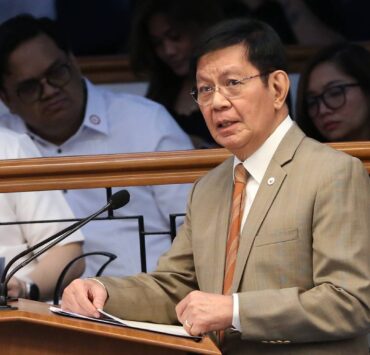
Sen. Panfilo Lacson said on Saturday the Senate majority bloc had agreed to move the trial to the afternoon and hold regular legislative sessions in the morning.
In an interview with dzBB, Chua said “We agree with the proposal of our honorable senator-judges.”
“We also want this to be finished as soon as possible without compromising the justice we are seeking,” he said.
Chua said prosecutors supported holding the trial from 2:30 p.m. to 7:30 p.m., or longer if necessary, to improve the flow of proceedings and avoid delays.
“As we saw now, there were unforeseen events … so our presentation was delayed and we will recalibrate,” he said.
Private prosecutor Lorna Kapunan had earlier proposed a similar adjustment to avoid interruptions in witness testimonies because of the Senate’s regular sessions.
The impeachment court canceled hearings on Aug. 18 and 19 as torrential monsoon rains battered the country, delaying the prosecution’s questioning of Gina Acosta, former special disbursing officer at the Office of the Vice President who had been declared a hostile witness.
Chua said the prosecution could also pare down its witness list, particularly those whose testimony would merely repeat or corroborate evidence already presented.
“If we believe the testimony is already strong enough, then we can cut down,” he said. “We want to speed up the trial but not sacrifice the substance we intend to present.”
The panel had already presented the allegations involving grave threats, dropping several planned witnesses and relying on three National Bureau of Investigation witnesses.
The same approach could be applied to the first impeachment article, which accuses Duterte of misusing P612.5 million in confidential funds in 2022 and 2023.
If prosecutors conclude they have sufficiently established their case, Chua said they could move to the next article, involving allegations of unexplained wealth.
The impeachment court has used 16 of the 92 trial days allotted to the case since proceedings began on July 6.
Duterte called for a speedy trial last week, saying prolonged proceedings could leave the public wondering whether the accusations against her were true.

Manila 3rd District Rep. Joel Chua
HOUSE OF REPRESENTATIVES PHOTO
Call for VP’s attendance
“We simply want to speed up the process because it can’t be allowed to drag on,” she said in a chance interview in Zamboanga City on Wednesday.
House prosecution legal spokesperson Benjamin Tolosa Jr. said on Thursday the panel shared her desire to finish the case quickly.
“We share the desire to complete this process as soon as possible,” Tolosa said in Filipino.
But he stressed that a faster trial should not mean rushing the case or depriving either side of the opportunity to present evidence.
“Speedy disposition of the cases does not mean we should expedite it at the expense of having the opportunity to fully present our case,” he said.
Lanao del Sur Rep. Zia Alonte Adiong, spokesperson for the prosecution panel, likewise said a speedy trial must be balanced with due process.
“We want a speedy trial,” Adiong said. “But promptness and speedy disposition of the court’s decision can go hand in hand with due process.”
Tolosa acknowledged that Duterte may attend the trial personally or through counsel under the rules. But he said her personal appearance remained important to many Filipinos as a sign of respect for the impeachment process.
Adiong renewed the call for her attendance, particularly after Acosta testified that Duterte instructed her to release P125 million in confidential funds to her security chief, Col. Raymund Lachica.
The defense has challenged aspects of Acosta’s testimony and her credibility.
Defense actions
Tolosa said the prosecution recognized that some delays, particularly those caused by bad weather, were beyond either side’s control.
But he also cited actions by the defense that, in the prosecution’s view, contributed to delays.

He pointed to the defense decision to schedule the cross-checking of more than 4,000 acknowledgment receipts on Aug. 14, despite an earlier impeachment court order to complete the exercise before Aug. 10.
“It would be good if we all try to avoid doing anything that could cause an unnecessary delay,” Tolosa said.
Appeal for patience
Senate impeachment court spokesperson Reginald Tongol urged the public not to lose interest simply because hearings had taken longer than expected.
He said the trial was ultimately about examining evidence and determining the truth, even when the process appeared slow.
Tongol likened it to extracting “kakang gata,” or pure coconut cream, from shredded coconut: the mixture has to be squeezed and filtered before the cream comes out.
He urged the public to focus less on the hearing calendar and more on the evidence and legal arguments.
“The discussion over the schedule is such a miniscule matter compared to the issues before the impeachment court,” Tongol said.
He also rejected criticism that presiding officer Sen. Francis Escudero had failed to control the proceedings.
Tongol cited the court’s decision to excuse House Archives Director Marivic Pareja after about 20 minutes on the witness stand on Aug. 17. Pareja had been called to authenticate documents but was allowed to leave after the defense agreed to their authenticity and regularity.
The move avoided hours of repetitive testimony and showed, Tongol said, that the court could expedite proceedings when both sides cooperated.
He stressed, however, that the impeachment court could act only on matters brought before it by the prosecution and defense.
“Shortening and expediting of proceedings depend on both parties,” Tongol said.
******
Get real-time news updates: inqnews.net/inqviber