






Ping: Inducing perjury may bar officials from office

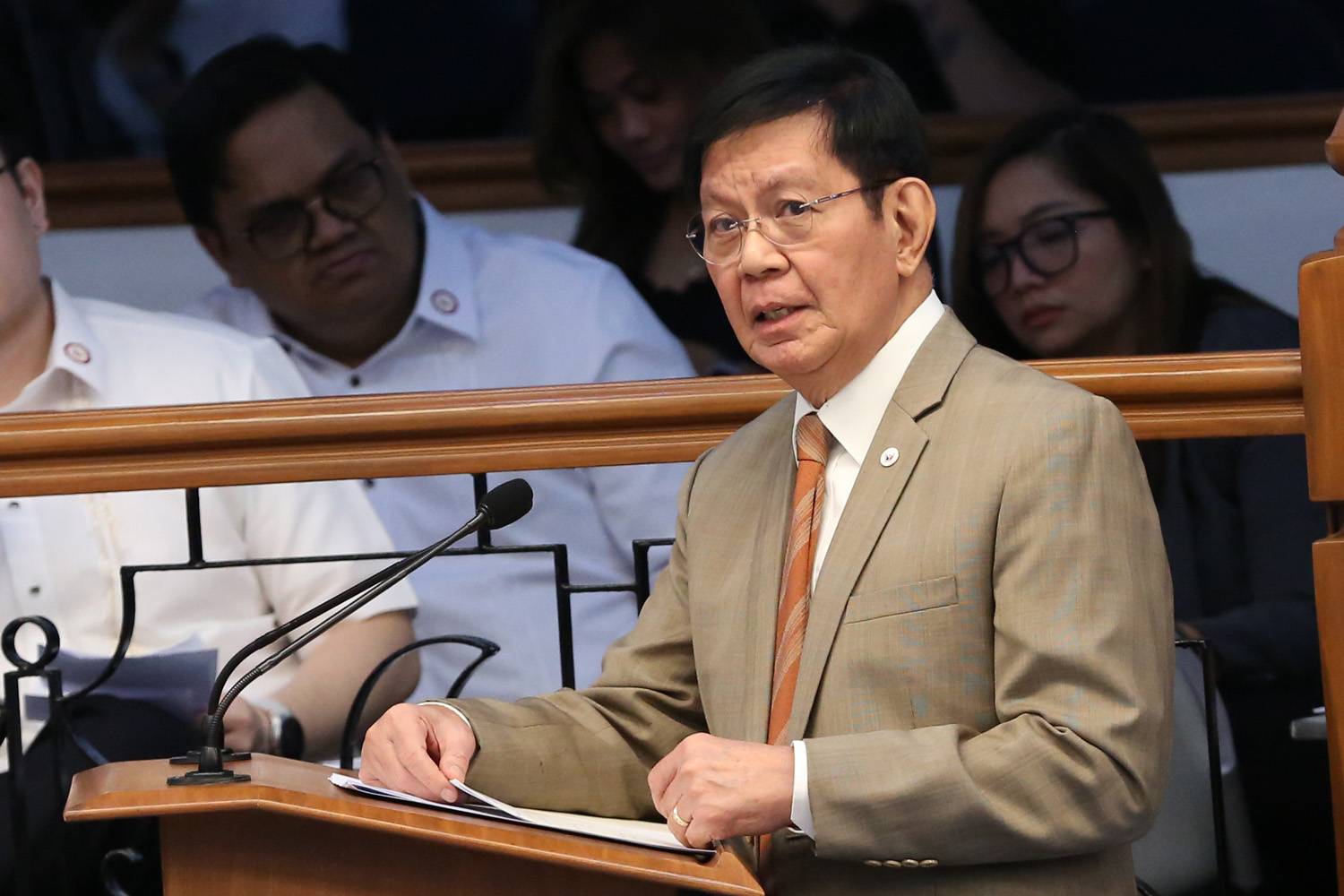
Public officials who induce another person to commit perjury may themselves be treated as principals in the crime and face disqualification from public office, Sen. Panfilo “Ping” Lacson said.
Lacson raised the possibility of imposing the penalty as he said on Saturday that detained Sen. Rodante Marcoleta and former Rep. Michael Defensor could face complaints for allegedly inducing ex-Marine Orly Guteza to give “coached” testimony.
“Subornation of perjury: a public official who induces another person to commit perjury may be treated as a principal under the conspiracy theory (Art. 8 Revised Penal Code) in the commission of the crime and shall also suffer an accessory penalty of perpetual absolute disqualification,” Lacson said in a post on X.
He said he intended to file a bill imposing heavier penalties and fines for subornation of perjury.
Perjury is a felony and a public offense under Article 183 of the Revised Penal Code, as amended by Republic Act No. 11594. Lacson said the offense carries a penalty of prision mayor in its minimum period, or imprisonment of 6 years and 1 day to 8 years.
He cited Article 8 of the Revised Penal Code, which provides that conspiracy exists when two or more persons agree to commit a felony and decide to carry it out.
Under Article 17, those who directly force or induce another person to commit a crime may be considered principals, Lacson said.
He also pointed to Article 25, which classifies perpetual or temporary absolute disqualification as an afflictive penalty. Such penalties may be imposed on principals, he said.
Recanting witness
Lacson said Marcoleta and Defensor may face complaints in connection with the testimony of Guteza, a former security aide to ex-Ako Bicol Rep. Zaldy Co.
He cited records of the Senate blue ribbon committee showing Marcoleta prompting Guteza on what to say in an affidavit during a committee hearing in September 2025.
Guteza had earlier testified in the Senate that he delivered suitcases containing millions of pesos in cash to the residence of former Speaker Martin Romualdez.
He later recanted that testimony.
Guteza subsequently claimed that Marcoleta and Defensor had induced him to give the testimony in exchange for money and scholarships for his children.
The allegations have put the circumstances surrounding Guteza’s original testimony under scrutiny, particularly the extent to which other people may have influenced what he told the Senate.
Subornation of perjury
Lacson said those who may file complaints include the party prejudiced by the alleged perjury, as well as the Department of Justice and the Office of the Ombudsman because perjury is a public offense.
Lacson said the existing provisions of the Revised Penal Code could be applied to those who induce another person to commit perjury, depending on the facts and evidence.

He emphasized that the conspiracy provision does not merely cover people who personally commit a felony. It may also apply when two or more persons agree to commit an offense and decide to carry it out.
The senator said a person who induces another to commit a felony may likewise be treated as a principal under Article 17.
This could carry consequences beyond the criminal penalty, including perpetual absolute disqualification from public office, under the provisions he cited.
Lacson said his proposed legislation would seek to specifically increase the penalties and fines for subornation of perjury.
He said the measure would underscore the seriousness of manipulating testimony, particularly when public officials are involved. INQ public officials are involved.
******
Get real-time news updates: inqnews.net/inqviber