









Practice makes perfect for doable solutions to waste management

(Last of two parts)
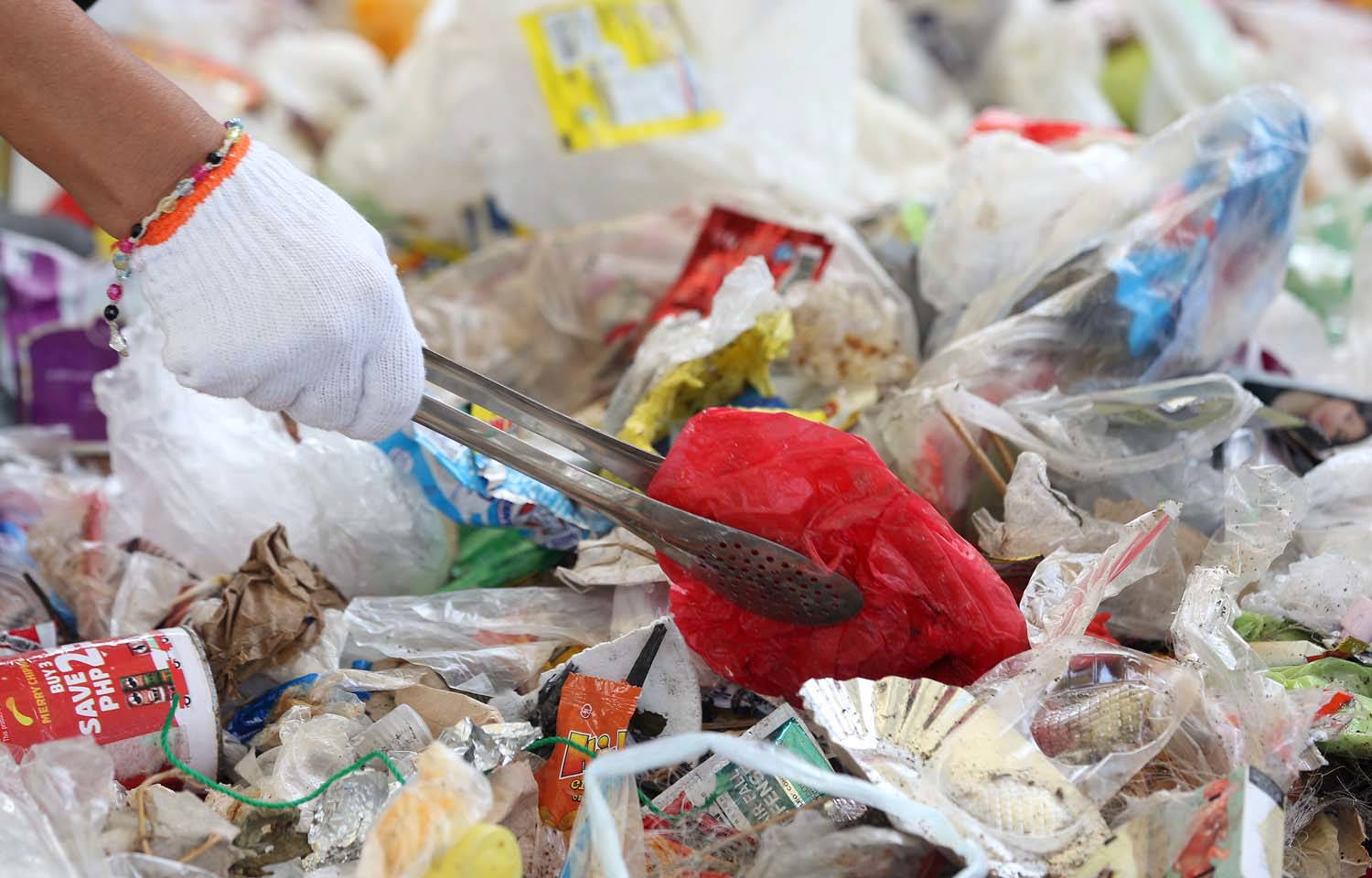
For environmental groups, landfill disasters such as the April 10 fire in Navotas point to deeper systemic failures in the country’s waste management.
Kweyn Tagaduar, campaigner for reuse of EcoWaste Coalition, said this crisis shows the “poor implementation” of Republic Act No. 9003 or the Ecological Solid Waste Management Act of 2000.
Marian Ledesma, zero waste campaigner of Greenpeace Southeast Asia, agreed, saying the law’s provisions have not been followed.
There are more than 300 landfills in the country, Tagaduar said. “But there is still a lack of clear data on how properly regulated these landfills are,” she said in an interview with the Inquirer.
Landfill site an ‘injustice’
Enforcing waste segregation and establishing properly designed material recovery facilities (MRFs) or material recovery systems are among the solutions provided by the law, Tagaduar said.
“Generally, there are limited spaces in barangays, and small LGUs (local government units) [could not afford] building an MRF,” she said, citing a major challenge in local waste management.
“There are also injustices in terms of where landfills are located, whether they are near communities,” she said.
Another neglected aspect is house-to-house collection and how communities should manage waste.
“It all comes back to the most basic segregation,” Tagaduar said. “It seems that both the design and the education on how to segregate waste are very lacking.”
LGUs and segregation
Ledesma said segregation “could really be a game changer, if that had been implemented as designed in the law. But right now we’re seeing that not all local governments are able to implement segregation at source.”
Organic waste—which is combustible because of its release of methane—is still disposed in landfills. She said this practice should be avoided as it contributes to landfill collapse and fires.
“This is why the link between proper waste segregation and waste management is so important. Segregation should be emphasized as a key intervention,” Ledesma said.
Another step that could help manage garbage disposal is reviving the traditional Filipino practices of packaging before plastics became widespread.
But she also pointed out that this and other alternatives are, for now, too expensive for most consumers—which is why sachets and single-use plastics remain the more convenient option.
Business sector’s role
RA 11898 or the Extended Producer Responsibility (EPR) Act requires large companies to take responsibility for plastic packaging and use.
But “while it does try to recover the waste that’s being produced by these large enterprises, [the law] fails to actually solve the root of the problem, which is overproduction of disposable materials,” Ledesma said.
To ensure producer accountability, she said one key approach is for companies to redesign their business models to reduce production and resource use, while investing in reusable alternatives.
“Another is that they have to cut down or reduce the amount of disposable packaging and products that they utilize. And third is that in terms of redesigning their systems, they also have to transition to reuse and refill,” she said.
She pointed out that behavioral change—across all sectors—in the use of plastic will take time.
“So if you try to change a culture in just one day, one month, or even one year, it is really impossible to completely ban plastics because it has already become part of the culture, and changing culture as a national issue is very difficult,” Ledesma said.
Flaws in landfill operations
Both Tagaduar and Ledesma urged the government to release the Non-Environmentally Acceptable Products and Packaging (NEAP) list, as mandated by RA 9003.

“As the EcoWaste Coalition holds a seat at the (National Solid Waste Management Commission) as NGO representative, we consistently advocate and call for the release of the NEAP list, but a series of meetings were not held or if there is, it isn’t being discussed enough,” Tagaduar said.
If a list had been drawn up, the government “wouldn’t need to have stand-alone laws just to ban certain types of single-use plastics. If they were only able to fulfill that mandate, we would have much less waste,” Ledesma said.
Landfill operators should also be [held] accountable and should “comply with the design of their sanitary landfills [with] constant monitoring and the day-to-day implementation or operations,” Ledesma said.
“I think this was one of the impacts that we saw with Navotas, she said, citing changes “from one operator to another and… a lot of fingers being pointed [regarding] who should be accountable.”
“No exit plan or transition plan was properly implemented, [which could have ensured] that while there was a change of hands in the operator, [someone] was actively monitoring the site,” she added.
Ledesma also recalled the Cebu landfill collapse in January, as she noted concerns then over the facility’s structural integrity and waste management practices.
She said “a big earthquake, heavy rains, typhoon—these are all factors that could really affect the structural integrity of a landfill. They also failed to comply with the segregation aspect, which we saw that if you’re able to go to the landfill site, you’ll be able to see that there is mixed waste.”
Green campaign in barangays
A key legislative proposal backed by EcoWaste Coalition is the Magna Carta for Waste Workers—which seeks greater protection for such workers, many of them from the so-called informal sector.
“That is often what gets overlooked,” Tagaduar said. “If the politicians or leaders we elect do not genuinely care about the problems we are facing, then these concerns will not receive the attention they deserve.”
EcoWaste Coalition conducts Green Electoral Agenda Forums ahead of the barangay elections to ensure that environmental concerns and priorities are included in the platforms presented to voters.


