





SC rules ‘nonverbal gesture’ counts as grave threat

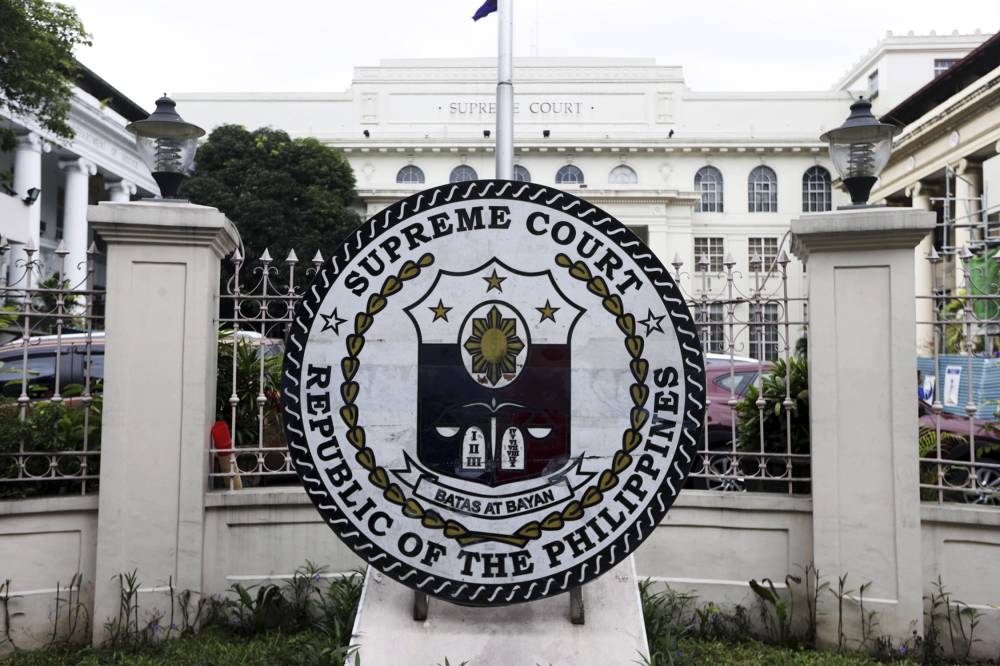
A “nonverbal gesture” done with an intent to commit an offense is itself a criminal act since it qualifies as grave threat, according to the Supreme Court.
The high court’s Third Division clarified the grounds on which an individual can be convicted of the offense in a Nov. 19, 2025, decision that was released on Friday.
The case involved architect Gregory Israel—a Belgian living in Panglao, Bohol—and his compatriots Olivier Denonville and Christine Navez, who accused Israel of making death threats with his gestures during an altercation in June 2017.
According to Denonville and Navez, both former business partners of Israel, he motioned at them with his fingers as if pulling a gun’s trigger and also with his hand across his neck as if to suggest they would be killed.
‘Persistence’ in threats
Navez also said Israel’s gestures caused her “sleepless nights and emotional agony.” She claimed the accused was “very dangerous.”
Israel argued, however, that mens rea—defined in criminal law as the intent to commit a crime—was “absent” when he made those gestures, which he described as mere “expressions of displeasure.”
The Supreme Court agreed with the accused, saying in its 16-page ruling that “threats without ‘persistence’ are not considered grave threat” under Article 282 of the Revised Penal Code (RPC).
“It is not disputed that on the day Israel performed the gestures, he was on his way to the RTC (Regional Trial Court) of Tagbilaran to receive summons in relation to a civil case between him and Navez,” the high court said. “En route to the RTC, Israel and Navez nearly figured in a vehicular collision, and this is where Israel performed the gestures.”
‘Context of gestures’
“Afterwards, he went on his way to the RTC-Tagbilaran to receive the summons as what he originally intended to do,” the court said, adding that “grave threat must be serious in such a way that it is deliberate, and that the offender ‘persists’ in the idea involved in the threats.”
Citing that timeline, the high court said the prosecution failed to prove mens rea in the context of the grave threat accusation against Israel.

Thus there was no “evidence of Israel’s persistence” in his gestures, the court said.
Under the RPC, the elements that should be present to convict an individual of grave threat include actual intent to intimidate as well as the act of verbalizing the threat.
In a statement it also issued on Friday, the Supreme Court said “Article 282 of the RPC does not differentiate between threats conveyed verbally and those expressed through nonverbal gestures. What matters is the communication of a threat intended to intimidate.”
The ruling reverses the 2021 decision of the Court of Appeals and the 2019 ruling of the Tagbilaran RTC.
It noted that both the appellate court and the lower court “precisely failed to fully appreciate the context of Israel’s gestures,” including the events before and after the altercation.


