
Teodoro: Beijing must change conduct before ties can ‘reset’


Defense Secretary Gilberto “Gibo” Teodoro Jr. said Beijing must demonstrate through its actions that it was serious about improving ties with Manila before relations between the Philippines and China could be reset.
In a roundtable discussion with the Inquirer last Wednesday, Teodoro said President Marcos’ wish to “reset” ties with Beijing should not be interpreted as a shift in Philippine policy but as an opportunity for the Asian superpower to show it was prepared to respect international law and improve its conduct toward the Philippines.
“I interpret this this way: the President is giving opportunity for China to behave and to prove that they deserve to be treated this way,” Teodoro said.
Most serious incident
“So, the onus for a reset is the behavior of China. It’s on them, not us, because there is no deficit of good faith, no deficit of strict adherence to diplomatic procedures and international law that we have given. So, it’s all on them.”
President Marcos summoned Chinese Ambassador Jing Quan to Malacañang after the July 20 confrontation between a China Coast Guard (CCG) team and Philippine Navy personnel near Ayungin (Second Thomas) Shoal, leading to two Filipino soldiers suffering injuries. It was the most serious incident at the shoal following a CCG attack on Navy personnel in June 2024 where a Filipino sailor’s finger was severed.
Palace press officer Claire Castro said the July 21 meeting between Mr. Marcos and the Chinese ambassador lasted about an hour and 20 minutes, during which they exchanged views and suggestions on bilateral issues.
“The President wants these incidents not to happen again, and he hopes to reset the relationship between China and the Philippines toward a better engagement,” Castro said then.
Beijing’s recent actions underscore why Manila sees little reason to alter its own approach, Teodoro said.
Military ties cut
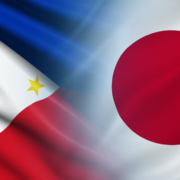
He cited an artificial intelligence (AI)-generated video released by Chinese state media three weeks earlier mocking the Philippines’ South China Sea arbitral award by depicting Filipinos as monkeys controlled by the United States and Japan.
In an earlier statement addressing the video, Teodoro said such actions rationalized the defense department’s policy of having no military engagements with Beijing.
Teodoro said that his decision was made as early as his first year as defense secretary.
He declined to discuss the specific incidents that led to the policy but said he found little value in continuing military-to-military exchanges.
“I decided there is no net benefit to it,” Teodoro said. “Perhaps when we come into a position where they learn how to respect us, then I will agree.”
He said he no longer maintains official or unofficial contact with Chinese counterparts because of what he described as their “misbehavior.”
Exchanges must go on
Last June, Beijing barred Teodoro and his immediate family from entering mainland China, Hong Kong and Macao and prohibited Chinese entities from conducting business with them. It said the ban was imposed on him after he “repeatedly made irresponsible remarks on China,” which it did not specify.
Teodoro told the Inquirer that the sanctions were largely for optics aimed at the Chinese public to show that Beijing was responding to its critics. He said the move would not affect his duties as defense chief.
Despite the suspension of bilateral defense engagements, however, Teodoro said diplomatic exchanges with Beijing “should never be stopped.”
He rejected the notion that defense and diplomacy pursue competing approaches toward China, saying the Department of National Defense (DND) and the Department of Foreign Affairs (DFA) perform different but complementary roles.
Diplomacy needs backup
“The role of the DND is to give more deterrence in order for foreign policy to be led by the President on a basis of closer parity,” Teodoro said. “How can we deal without some backbone?”
The DND, he said, is responsible for strengthening the country’s deterrent capability and helping prevent further incursions into Philippine waters, while the DFA leads negotiations and diplomatic engagement. Though their mandates differ, both agencies ultimately work toward protecting Philippine sovereignty and sovereign rights, he said.

Diplomacy remains essential in managing tensions with China, Teodoro added, but negotiations fall under the DFA while the defense department’s responsibility is to strengthen the country’s leverage through credible defense capabilities.
He acknowledged that differences in institutional mandates can occasionally create friction but said both agencies remain aligned in pursuing the country’s national interest.
Teodoro said strengthening the military is intended to prevent rather than provoke conflict. Diplomacy, he argued, would be most effective when backed by credible defense capabilities, citing Switzerland, a nation known for its neutrality while maintaining a strong military.
“Neutrality is not a dividend. Neutrality is enforced just like peace,” he said.
A stronger defense posture, Teodoro said, allows the Philippines to pursue peace without compromising its sovereignty or territorial integrity while giving its diplomats greater leverage in dealing with external threats.
Beyond maritime tensions, he said the government must also guard against foreign influence operations, particularly online disinformation amplified by AI.
Pro-China views
Asked about Filipinos who openly express pro-China views, Teodoro distinguished between personal political beliefs and foreign-backed influence campaigns, saying citizens are free to hold their own opinions but authorities must remain vigilant against efforts to manipulate public discourse.
He said the spread of AI-generated content and disinformation requires both government and the public to be more discerning in identifying false or misleading narratives.
Teodoro also said foreign governments could seek to influence political developments in the Philippines, although he stressed that he was not alleging that any such operation was currently underway, adding that he was “just placing some logic in the situation.”
Asked whether Manila should take additional steps to improve relations with Beijing despite continuing tensions in the West Philippine Sea, Teodoro returned to the administration’s central message. “The reset is on them, not on us.”