



Truth body: Probe docs over ‘drug war’ death reports


The country’s leading forensic pathologist and member of the Truth Commission that is looking into the brutal drug war on Friday called on the Philippine Medical Association (PMA) and the Professional Regulation Commission (PRC) to investigate at least five doctors for their alleged “miscertification” of the cause of death of some of the victims.
Dr. Raquel Fortun, who conducted forensic examinations on the remains of more than 150 drug war victims, said there were at least 13 death certificates whose listed cause of death did not match her forensic findings.
All of the victims were gunned down, yet they were declared to have died of various illnesses or “natural causes,” Fortun said during a press conference.
“These miscertifications could just be the tip of the iceberg,” the Commission said in a statement.
Corrections in order
“The Commission is also asking the authorities to correct the erroneous certificates so that families have an accurate record of how their relatives died,” it said. “A death certificate is the official record of how a life ended. When it names the wrong cause, it can hide the violence and skew the country’s death statistics.”
The death certificates are being reviewed by the Commission in relation to its inquiry into the drug war killings in Caloocan City and Quezon City. The death certificates pertain to 11 victims who died in 2016 and two in 2018.
Two female doctors each signed five of the flagged records. The three others, all male, signed one each. One of the female doctors, who is now deceased, and one of the male doctors, were medical officers of two local government health departments.
A common cause of death that was written down and certified was severe pneumonia, even though the victims were found to have been shot multiple times in various parts of their bodies, including in the head, Fortun said.
She questioned the interval between the period from the onset of the supposed illness and the immediate cause of death indicated in the death records.
Fortun said four of them wrote that victims suffered acute myocardial infarction, commonly called heart attack, for 20 minutes and died despite the multiple gunshot wounds found in their bodies. Another doctor also declared the victims had struggled with community-acquired severe pneumonia for a week before dying.
“It seems a bit too much,” she said. “To me that is questionable.”
Heart attack, sepsis
Fortun’s frustration also comes from the “tedious process” of initiating the request for correction of the erroneous death certificates, which in her experience, were brought before the courts.
“It is so frustrating for me because every chance I get, I try to ask for help. How do we hold these doctors accountable?” she said.
“If you’re from a poor family, and this is the (situation), would you even bother having it corrected? It’s so difficult,” she added.
In all, pneumonia was listed as the cause of death in six cases and heart attack in four. One died of sepsis, another of high blood pressure and the last one was from a stroke with bleeding, along with high blood pressure, according to the Commission.
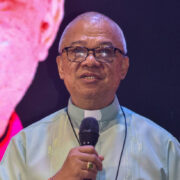
Former International Criminal Court (ICC) judge Raul Pangalangan, chair of the Truth Commission, stressed that a good starting point in bringing justice to the drug war victims was to fix the documentation because if the death certificates were faulty and inaccurate, then “we don’t even have the facts with which to start.”
Human rights lawyer and law professor Theodore Te, a former spokesperson for the Supreme Court, said that the issue needed to be addressed on a systemic level and government bodies like the Justice Sector Coordinating Council (JSCC) should introduce reforms.
The JSCC, composed of the Supreme Court, the Department of Justice and the Department of the Interior and Local Government (DILG), could look at the process internally and make the necessary recommendations, he noted.

“The justice system isn’t just the courts. It involves investigation by the police, it involves documentation of what happened, it involves all of those things that happened even before you get to the court system. Going to court is just a very small part of the justice system,” Te pointed out.
Thousands killed
Philippine authorities have acknowledged over 6,000 people killed in alleged drug busts from 2016 to 2022, during the administration of President Rodrigo Duterte, who launched the war on drugs.
Human rights groups said the number of drug war victims, mostly residents who lived in poverty-stricken communities, could reach 30,000.
Duterte was arrested last year on a warrant from the ICC. His trial in The Hague, the Netherlands, on charges of crimes against humanity of murder and attempted murder is scheduled to start on Nov. 30.
A warrant has been issued by the tribunal for one of his alleged co-perpetrators, Sen. Ronald “Bato” dela Rosa.
The former national police chief and the chief enforcer of the drug war remains at large after he went into hiding in November 2025. The DILG had offered a P50-million reward for his arrest.
******
Get real-time news updates: inqnews.net/inqviber